Maggie Stiefvater books in order: where to start with The Raven Cycle
Start with The Raven Boys and read the Raven Cycle in strict order. This is one of the few young-adult series where that instruction is not a formality: the four books are a single novel split four ways, they end mid-scene as often as not, and the prophecy stated on page one of book one is not resolved until the last chapter of book four. Once you are through it, the Dreamer Trilogy continues one character's story directly and should be read next, not first, even though its covers make it look like a fresh start. Beyond Henrietta there are two other Stiefvaters: the earlier Wolves of Mercy Falls books that made her name, and a set of standalones — of which The Scorpio Races is the one her readers most often name as her best, and the right choice if you only ever read one. This path takes them in the order that makes each series land.
The Raven Cycle, in strict order
BeginnerRead the four-book arc as the single story it is, and understand why none of the books work standing alone
▸ Study plan for this stage
Pace: Four to six weeks. The four books run 455, 448, 391 and 480 pages — about 1,774 pages total — and they are best read close together, because each opens assuming you remember the last chapter of the one before. Blue Lily, Lily Blue ends on the hardest break of the four, so have The Raven King in the
- The prophecy stated in the first chapter of The Raven Boys as the structural spine — everything in four books is arranged around it
- The ley line as the series' one piece of hard machinery: what it does, who can use it, and why the quest depends on it
- Point of view as the series' real engine — each book hands the interior to a different member of the group
- Gansey's search for Glendower as a want that the books gradually reveal to be about Gansey rather than about a king
- Stiefvater's sentence style: fragments, sudden abstraction, and imagery that carries plot information other writers would state
- Why the four books are one novel — no single volume has a complete arc, and three of the four end mid-motion
- What exactly does the prophecy say in chapter one of The Raven Boys, and how does The Raven King satisfy it?
- Whose book is The Dream Thieves, and what does giving that character the interior do to your reading of him in The Raven Boys?
- What are the rules of the ley line as the series states them, and where does Blue Lily, Lily Blue break or bend them?
- Which of the four narrators is Stiefvater least interested in, and what does the series lose by that?
- Is the criticism that The Raven King rushes its ending fair when you set the last fifty pages against the setups planted in books one and two?
- Write the prophecy down verbatim from the opening of The Raven Boys and keep it beside you; check it off clause by clause as The Raven King resolves it.
- Track a single object across all four books — the Camaro, Gansey's Glendower journal, or Blue's mirror-lined room — and note every scene it appears in. Stiefvater plants payoffs an entire volume early.
- Take one chapter from The Raven Boys and one from The Dream Thieves narrated by the same character and compare the sentence lengths and the amount of dialogue. The prose shifts to match whoever is holding the book.
- After finishing The Raven King, reread the first thirty pages of The Raven Boys and list every line that has changed meaning.
Next up: You now have the ending the four books were built toward — which is exactly the point at which Call Down the Hawk becomes readable, because it spoils all of it.
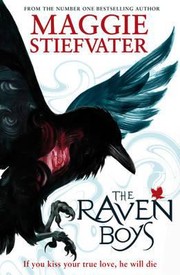
The entry point: a psychic's daughter told she will kill her true love with a kiss, four boys from the local private school, and a search for a sleeping Welsh king in the Virginia hills. It sets up every thread the other three pay off, so start here and nowhere else.

Ronan's book, and the one that converts most sceptical readers — it takes the least likeable character in book one and makes him the centre. Read immediately after; the ending of The Raven Boys is a set-up for this.

The third book, where the ley line plot finally consolidates and the group dynamic that is the real appeal of the series is at its best. It ends on the hardest cliffhanger of the four, so have book four to hand.
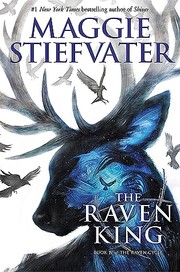
The conclusion, resolving the prophecy from the opening chapter of The Raven Boys. It is divisive — some readers find the ending rushed — but it is the ending, and there is no reading the cycle without it.
The Dreamer Trilogy
BeginnerFollow the direct continuation and see where the Raven Cycle's story actually finishes
▸ Study plan for this stage
Pace: Three to four weeks. Call Down the Hawk is 476 pages, Mister Impossible 480, and Greywaren 352 — about 1,308 pages. Read them straight on from The Raven King; the trilogy picks up months later and assumes the whole of the Raven Cycle. Do not start here even though the covers and marketing invite it.
- Dreaming as a public phenomenon rather than one boy's secret — the change that turns a friendship-group fantasy into a war story
- The Zeds, the Moderators and the hunt: a new faction structure that the Raven Cycle had no need for
- Ronan as a protagonist rather than a supporting figure, and what the change costs the character's mystique
- How Greywaren retroactively completes the Raven Cycle's plot — the seven books are one arc, not four plus three
- Escalation of scale as the trilogy's main formal risk, and where Stiefvater keeps it grounded in one family
- The new viewpoint characters and why the trilogy needs people who did not know Gansey
- What are the stated rules and costs of dreaming as the trilogy defines them, and how do they differ from what The Dream Thieves implied?
- What does Mister Impossible widen the stakes to, and does the widening earn itself?
- In what sense is Greywaren the ending of The Raven Boys rather than the ending of Call Down the Hawk?
- Which Raven Cycle characters does the trilogy decline to use, and is their absence a choice or an evasion?
- Would the trilogy work for a reader who started here, and what precisely would they lose?
- List every fact about dreaming established in The Dream Thieves, then mark which of them Call Down the Hawk keeps, revises or contradicts.
- Read the final chapter of The Raven King and the first chapter of Call Down the Hawk back to back and write down the gap the trilogy expects you to fill in yourself.
- Chart the new point-of-view characters across the three books, noting how many chapters each gets per volume; the distribution shows where Stiefvater's interest moved.
- After Greywaren, write one paragraph stating what the seven-book story was about. Compare it to the same paragraph you would have written after The Raven King.
Next up: With the Henrietta story finished, the earlier Wolves of Mercy Falls books become readable as what they are — the work that came before, in a much more conventional register.

Picks up months after The Raven King with Ronan, and introduces a wider world of dreamers and the people hunting them. Marketed as a new series and readable as one, but it spoils the Raven Cycle comprehensively — read it fifth, not first.

The middle book, darker and more plot-driven than anything in the Raven Cycle, and the one that widens the stakes from a friendship group to something closer to a war. Read directly on from Call Down the Hawk.

The finale, and the actual end of the story that began in The Raven Boys. This is the book that makes the case for reading all seven in sequence rather than treating the trilogy as a spin-off.
The Wolves of Mercy Falls
BeginnerRead the earlier series that built her audience and see how much her prose changed between it and the Raven Cycle
▸ Study plan for this stage
Pace: Four to five weeks. Shiver is 432 pages, Linger 384, Forever 436 and Sinner 368 — about 1,620 pages. The original trilogy is more straightforwardly serialised than the Raven Cycle and reads faster. Forever is a genuine ending, so it is a legitimate place to stop; Sinner was published three years lat
- The temperature-driven werewolf premise as a deliberately literalised metaphor for a finite relationship
- Multiple first-person narrators with chapter headings — the structure Stiefvater used before she learned to switch viewpoints invisibly
- How the paranormal-romance conventions of 2009 shape Shiver, and where Stiefvater is already working against them
- The cure plot: what Linger does to the promise Shiver appears to make, and why the reversal is the trilogy's best idea
- Sinner as the prose test case — the same world written by an author six years further on
- What Stiefvater kept from this series into the Raven Cycle, and what she abandoned
- How does the cold-triggered transformation work as the books state it, and where do they let the rule slide for plot convenience?
- What does Linger add by giving Cole and Isabel narration, and does the four-voice structure hold?
- Is Forever a real ending, and what exactly does Sinner reopen?
- Set a page of Shiver beside a page of The Raven Boys: what specifically changed in the prose?
- If you had read this trilogy first, would you have picked up the Raven Cycle?
- Copy out one paragraph of description from Shiver and one from The Raven Boys and mark the differences in sentence length, abstraction and the amount of information carried by imagery rather than statement.
- Track the stated rules of transformation across all three trilogy books and flag every scene where the plot needs the rule to bend.
- Read Sinner's first chapter, then Shiver's, and note how differently each introduces its narrator.
- Decide in writing whether Sinner belongs in this series or beside The Scorpio Races, using two specific scenes as evidence.
Next up: Having read her two series, the standalones are where you find out what Stiefvater does with a book that owes nothing to a sequel — including the one most of her readers name as her best.
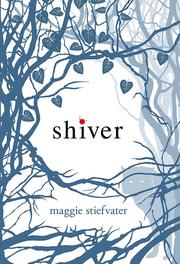
Her breakout, published in 2009 at the height of the paranormal-romance wave, about a girl and a wolf who is a boy in summer. It reads as much more conventional than the Raven Cycle, which is exactly why it is placed after it rather than before.

The second, adding narrators and complicating the cure the first book seemed to promise. Read in sequence — this trilogy is more straightforwardly serialised than the Raven Cycle and does not reward jumping in.
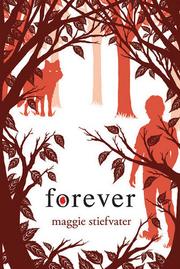
The conclusion of the original trilogy, and a genuine ending. If the wolves are not for you, stop here rather than pushing on to Sinner.
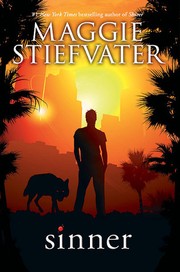
A companion novel about Cole and Isabel in Los Angeles, published three years later and widely rated the best-written book in the Mercy Falls world. It requires the trilogy, so it belongs exactly here.
The standalones
IntermediateRead the books outside any series, including the one her readers most often name as her best
▸ Study plan for this stage
Pace: Three to four weeks. The Scorpio Races is 416 pages, All the Crooked Saints 320 and Bravely 400 — about 1,136 pages, and the three are unconnected, so read them in any order you like. The Scorpio Races is the one to hand a reader who will only ever read one Stiefvater; it is a standalone and needs n
- The Scorpio Races as a compression exercise: two narrators, one island, one November, and a deadline the plot cannot move
- Invented folklore built to feel found — the capaill uisce as a system with rules, prices and local knowledge
- Place as the real subject of the standalone books, in a way the series never quite are
- All the Crooked Saints as the stylistic outlier: magical realism, a third-person voice, and a narrative distance she uses nowhere else
- Writing inside a licensed property — what survives of an authorial voice when the characters belong to Disney
- How a standalone changes an author's obligations: no sequel to set up, nothing held back
- What does the November race cost each of the two narrators in The Scorpio Races, and how does the alternation make you feel both?
- Why does Thisby feel like a real island? Point to three specific pieces of invented practical detail.
- What is All the Crooked Saints attempting formally, and does its narrative voice help or distance you?
- What of the Stiefvater voice survives in Bravely, and what has clearly been imposed from outside?
- Which of these three is the best book, and can you argue it on the page rather than on reputation?
- Read the opening and closing pages of The Scorpio Races together and work out how much of the ending is set up in the first three paragraphs.
- Make a list of the invented rules governing the capaill uisce as the novel gives them, then check whether the race in the final act obeys every one.
- Compare the narrative distance in the first chapter of All the Crooked Saints with the first chapter of The Raven Boys and write down what the shift lets Stiefvater do and what it costs her.
- Read Bravely alongside any one chapter of The Dream Thieves and mark the sentences in Bravely that could only be hers.
Next up: That is the whole working Stiefvater shelf — the two series and the three standalones — and if you want the very beginning, her earliest novels Lament and Ballad are in our catalogue.
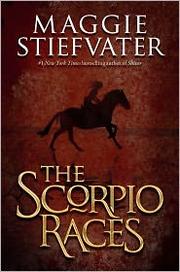
Carnivorous water horses raced on the beach of an invented Irish island every November. Her most acclaimed book, a Printz Honor title, and the one to hand someone who will only read one Stiefvater. It is placed here rather than first only because this path is built around reading orders — as a standalone it needs nothing before it.

A magical-realist novel about a Mexican-American family of miracle workers in 1960s Colorado, and the most stylistically ambitious thing she has written. It drew criticism over cultural representation on publication, which is worth knowing before you open it.

A commissioned Disney novel continuing the story of Merida from Brave, and much better than that description suggests. Read it last, as a curiosity that shows how much of the Stiefvater voice survives inside a licensed property. Her earliest novels, Lament and Ballad, are also in our catalogue if you want the very beginning.