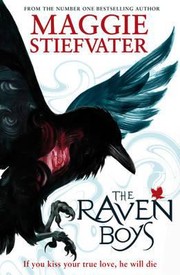
Start with The Raven Boys. It opens the four-book Raven Cycle, and that sequence is both the strongest thing Stiefvater has written and the spine of her bibliography — the Dreamer Trilogy is a direct sequel to it, so a reader who begins elsewhere ends up doubling back.
The obvious alternative is Shiver, the earlier paranormal romance that made her name and sold in far greater numbers. It is a different register: straighter, softer, more conventionally romantic. Most readers who like both prefer the Raven books, and readers who bounce off Shiver frequently love them, so starting with the bestseller risks writing off the wrong author.
The Raven Cycle, in order
The Raven Boys, The Dream Thieves, Blue Lily, Lily Blue, The Raven King. This is one story in four parts and there is no other order.
An honest warning about the first book: it is largely setup. A group of private-school boys are hunting a dead Welsh king along a line of buried energy in rural Virginia, a girl from a family of psychics is told she will kill her true love with a kiss, and for most of the book those pieces move slowly into position. The reputation of the series rests on books two and three. The Dream Thieves shifts most of its weight onto Ronan Lynch and is where a lot of readers decide they are in for the duration.
Content, as plain fact: there is on-page violence and several deaths, drug use, and a central slow-burn romance between two of the boys that develops across books two to four.
The Dreamer Trilogy
Call Down the Hawk, Mister Impossible, Greywaren, in that order, and only after the Raven Cycle. It follows Ronan and assumes you know exactly what happened in the four books before it — it is not an entry point, whatever the standalone-looking covers suggest.
The practical warning: Mister Impossible is a middle book that ends abruptly and unkindly. Have Greywaren in the house before you start it.
Wolves of Mercy Falls
Shiver, Linger, Forever, then Sinner. The first three are a trilogy about a girl, a boy and a temperature-triggered werewolf premise; the fourth follows Cole St. Clair after the trilogy ends and reads as a companion rather than a sequel. It is about addiction and recovery and is much closer in tone to the Raven books than the trilogy that precedes it.
The standalones
The Scorpio Races is the one to read if you only read one. Man-eating water horses are caught from the sea and raced on a windswept island; it is entirely self-contained, and a large share of Stiefvater's readers name it her best novel.
All the Crooked Saints is set among a Mexican-American family performing miracles in 1960s Colorado. It drew criticism on publication over an Anglo author writing that community, and Stiefvater responded publicly. The disagreement is a real one and worth knowing about before you buy.
Bravely is a tie-in novel continuing the story of Merida from the Disney-Pixar film. It stands alone and connects to nothing else here.
What is not in this list
Her earliest novels, Lament and Ballad, are not in our catalogue, and neither is the Raven Cycle novella Opal. None of them is required — Lament and Ballad predate everything above and read as apprentice work — but a reader assembling a complete shelf should know they exist.
Reading these as an adult
All of it is published as young adult, and none of it is written down to anybody. The prose is dense and image-driven, the Raven books in particular are structurally ambitious, and the adult audience for them is large. If you are choosing for a younger reader, the content notes above are the facts to weigh; reading age and interest are not the same question, and you know that reader and we do not.
Follow the full reading path if you want the sequence as a checklist.
Follow the full ordered path here: Maggie Stiefvater books in order: where to start with The Raven Cycle.