Magda Szabo in Order: Where to Start with Hungary's Great Novelist
Szabo's English-language bibliography is not a career, it is an accident: a handful of 1960s translations went out of print, and then NYRB Classics reissued her masterpiece half a century after she wrote it. Reading her in Hungarian publication order therefore starts you in the wrong place. This path starts with the late novel that made her reputation in English, works back through the mature books, and ends with the early translations that show where all of it came from.
The Right First Book
BeginnerUnderstand why The Door, not the earlier novels, is the correct entry point, and meet Szabo's central subject: the impossible obligation between two women who cannot speak to each other honestly.
▸ Study plan for this stage
Pace: Two weeks. The Door is around 260 pages and reads quickly, but it should not be rushed — 20 pages a sitting is right, and the last forty pages deserve to be read in one uninterrupted stretch. Many readers reread the opening chapter immediately on finishing; budget for that.
- The confession frame: the narrator opens by telling you she killed Emerence, and the whole novel is the account of how that is and is not true
- Emerence's door as the literal centre of the book — a threshold nobody is allowed to cross, and the one act of crossing it that the novel exists to explain
- The employer-servant relation as Szabo's chosen ground for a moral argument, with class, education and gratitude all in play at once
- The narrator as a writer, which makes her self-justification a professional skill and the reader's problem
- Twenty years of failing to understand a person one sees daily, presented as an ordinary rather than an exceptional failure
- Emerence's wartime past, released in fragments and never assembled by the narrator into an account she is willing to sit with
- Viola the dog as the only relationship in the book that works, and what the novel means by that
- Why this late novel is the correct entry point despite coming near the end of the Hungarian sequence: it is Szabo at full strength, and everything else is read against it
- The narrator says at the outset that she killed Emerence. By the end, what did she actually do, and is her word for it the right one?
- Why does Emerence keep the door shut? Assemble her reasons from what she says and what she does, and note where you are supplying them yourself.
- The narrator is a writer by profession. How does that shape the confession, and can you catch her constructing a sentence rather than remembering one?
- What does the novel think gratitude is? Follow every occasion on which someone is thanked or refuses to be.
- Is Emerence's judgement of the narrator correct? The book gives you enough to answer and declines to do it for you.
- Read the first chapter again immediately after finishing. Write 200 words on what has changed — this is the single most productive thing to do with this novel.
- List every fact you learn about Emerence's past and the page it arrives on. The scattering is deliberate and seeing it laid out is instructive.
- Write 300 words arguing that the narrator is guilty, then 300 arguing she is not. Do not conclude in writing.
- Note that our catalogue's record for The Door lists translators alongside Szabo. The work is her novel; the widely read English version is Len Rix's translation.
Next up: Having seen the two-person version of Szabo's argument at its most concentrated, you can watch her stage the same failure across a family, a street and a school.
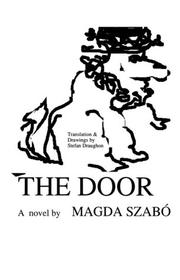
A writer hires a housekeeper and spends twenty years failing to understand her. It is the book that revived Szabo in English and the one that shows her at full strength, so start here even though it comes late in the Hungarian sequence. Everything else you read will be measured against it.
The Core Run
IntermediateRead the three mature novels that carry the same preoccupations as The Door — betrayal inside a family, the moral weight of the war years, the things that go unsaid for decades — and see how differently she stages them.
▸ Study plan for this stage
Pace: Six to seven weeks. Katalin Street is short — a week to ten days, but it needs attention because of the shifting narration. Iza's Ballad takes two weeks. Abigail is the longest and the fastest, two weeks, and it functions as relief between the two harder books. Keep the given order.
- Katalin Street's three families and the single event that ruins all of them, with the Holocaust as the fact around which the whole novel is organised
- Narration partly by the dead, who are neither ghosts nor metaphors in the usual sense but simply continue to be present and to remember
- The nostalgia trap: the survivors' memory of the street before the war is shown to be a way of not looking at what happened on it
- Iza's Ballad's premise — a competent, modern daughter moves her widowed mother to the city and dismantles her — which is Szabo's sharpest treatment of care as control
- Ettie's objects and habits, and the way each small removal of them is presented as a kindness and functions as a bereavement
- That Iza is never made a villain, which is the book's difficulty and its point: everything she does is defensible in isolation
- Abigail's boarding-school plot in 1943, where a spoiled girl gradually understands that the rules she resents are keeping her alive
- The mystery-story machinery of Abigail — the statue that answers notes, the identity question — used to carry material the reader grasps long before the narrator does
- In Katalin Street, what exactly do the survivors refuse to look at? Trace how the novel keeps directing attention elsewhere.
- The dead narrate parts of Katalin Street. What can that voice know or say that a living narrator could not?
- Name three of Iza's decisions and give the reasonable justification for each. Then say what each cost her mother. The gap between the two columns is the novel.
- Is Iza's Ballad a book about a bad daughter or about modernity? Argue both readings from specific scenes.
- In Abigail, when does Gina understand her situation, and how long has the reader known? What does Szabo do with the gap?
- For Katalin Street, build a timeline of the street's residents before, during and after the war. The novel scatters this deliberately and assembling it is what makes the ending land.
- Write 300 words on Iza's Ballad from Iza's point of view, defending her conduct as she would. Doing it honestly is uncomfortable and that is the exercise.
- In Abigail, mark every rule Gina breaks and what it turns out to have been for. The list reads as a plot summary and is a good demonstration of Szabo's construction.
- After all three, write 400 words on what Szabo thinks goes unsaid in families and why, citing one scene from each novel.
Next up: With three mature novels behind you, the early translations become legible as workshop rather than as apprentice failure — you can see what she was building toward.

Three families on one Budapest street, ruined by the Holocaust and the years after it, narrated partly by the dead. Read it second because it takes The Door's theme of unforgivable failure and widens it from two people to a whole street.

A dutiful daughter moves her widowed mother to the city and destroys her with kindness. The closest companion to The Door in subject, and the sharpest thing Szabo wrote about how care becomes control.
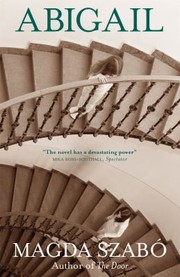
A spoiled girl is sent to a strict provincial boarding school in 1943 and slowly grasps what is happening outside it. The most-read novel in Hungary and by far her most accessible, which is why it works as a break between the two hardest books.
The Early Translations
IntermediateGo back to the 1960s English editions almost nobody reads, and see the mature novels' machinery being assembled — the unreliable self-justifying narrator, the buried wartime shame, the domestic scene that turns out to be a trial.
▸ Study plan for this stage
Pace: Four to six weeks, and the schedule depends more on acquisition than on reading. The Fawn is short and takes a week. Night of the Pig-Killing is out of print and may take longer to find than to read; allow a week once it arrives. Tell Sally is optional and short. Do not start this stage until the pr
- The Fawn as a single sustained monologue by an actress addressing a man, in which the reader assembles the truth from what she chooses to justify
- The childhood hatred at its centre, held for decades and rehearsed rather than examined, which is the prototype for The Door's narrator
- The self-justifying narrator as Szabo's signature instrument, visible here in its first English form and much cruder than in the late work
- Buried wartime and class shame surfacing through what a narrator will not discuss, a technique consistent across her whole career
- Night of the Pig-Killing's ensemble structure — a family gathered for a slaughter and settling old accounts — which is the bridge between the monologue novels and Katalin Street
- The domestic occasion staged as a trial, where an ordinary gathering supplies the pressure a courtroom would in another writer
- That the English bibliography is an accident of rights and reissues rather than a career shape, which is why publication order is the wrong reading order for her
- Tell Sally as a completist's book, and the honest test for whether to read it
- In The Fawn, what is Eszter actually confessing to, and what does she believe she is confessing to?
- Compare The Fawn's narrator with the narrator of The Door. What did Szabo learn to do in the intervening years?
- Night of the Pig-Killing gathers a family around an occasion. How does the occasion function structurally, and where does Katalin Street reuse the device?
- Reading the early books last, does anything in the late novels look different? Name one thing in The Door you now read differently.
- Was the accidental English order in fact the better one? Argue it, having now read both ends of her career.
- Read The Fawn in as few sittings as possible. It is a monologue and it loses pressure when interrupted, in exactly the way a stage speech would.
- Set the first page of The Fawn beside the first page of The Door and write 200 words on the difference in control.
- Track the grievances aired in Night of the Pig-Killing and note which are ever answered. The proportion is the point.
- Decide in writing whether to seek out Tell Sally, giving your reasons. That is the honest test the stage proposes for any hard-to-find sixth novel, and either answer is legitimate.
Next up: This is the end of the path. The natural next step is outward to Szabo's Central European contemporaries — the Hungarian and Austrian novelists working the same postwar silence — where her particular refusal to let anyone off becomes easier to measure.
A single furious monologue by an actress who has hated one woman since childhood. The first Szabo novel translated into English and the prototype for The Door's narrator, so it reads best once you know what she later built out of it.
A village family gathers for a slaughter and settles old accounts instead. Out of print and hard to find, but it is the missing link between the early monologue novels and the ensemble structure of Katalin Street.
The last of the 1960s translations and a completist's book rather than an essential one. Read it only if the others have made you want everything, which is the honest test for any out-of-print sixth novel.