M.R. James ghost stories in order: where to start
Start with Ghost Stories of an Antiquary and read the four original collections in publication order, 1904 to 1925. That is a slightly unusual recommendation for a short-story writer, because the stories are self-contained and the obvious move is to buy a Collected and dip in. But James invented a formula and then spent twenty years tightening and finally subverting it, and reading forward lets you watch that happen: the early stories explain themselves, the late ones withhold. He was a Cambridge provost and a serious medievalist, and the stories were written to be read aloud to colleagues at Christmas, which is why the narrator is always a mild antiquarian scholar who disturbs something by being curious about it. This path takes the four collections first, adds the one-volume edition worth owning, then the scholarship, then the writers on either side of him — the Victorian tradition he refined and the twentieth-century writers who took it somewhere stranger.
The four collections, in order
BeginnerRead James's entire ghost-story output in publication sequence and be able to name the essential stories and the formula they share
▸ Study plan for this stage
Pace: Three weeks for 155, 120, 106 and 200 pages, read in publication order. These are short stories and the right pace is one a night rather than a collection a sitting — the effects are cumulative within a story and do not survive being read in bulk. Ghost Stories of an Antiquary is the 1904 debut and
- The antiquarian formula: a scholar, an object or a document, curiosity, and a consequence
- The narrator as a mild academic who disturbs something by being interested in it, never by being brave
- Withholding as method — how little of the apparition James ever describes, and how physical the little is
- The stories written to be read aloud to colleagues at Christmas, and what that does to their sentence rhythm
- The trajectory across twenty years: the early stories explain themselves, the late ones refuse to
- James's real career cataloguing medieval manuscripts, visible in the accuracy of the scholarly business
- A Warning to the Curious as the bleakest of the four and the closest he came to writing about the war
- What are the fixed elements of the formula, and which story departs from them first?
- How many words does James spend describing the thing in Oh, Whistle, and I'll Come to You, and what does the brevity buy?
- What changes between the 1904 and the 1925 collections in how much the reader is told?
- Why is Casting the Runes the story other writers keep adapting?
- What does A Warning to the Curious withhold that an earlier James story would have explained?
- Read Oh, Whistle, and I'll Come to You, My Lad aloud; the stories were written for that and the pacing only makes sense out loud.
- Write the formula out as a numbered sequence after the first collection, then test each later story against it and record where it breaks.
- Copy out every sentence in which James actually describes an apparition across all four collections; the whole list is short enough to fit on a page, which is the demonstration.
Next up: With all four collections read in sequence, you can settle which single edition to keep and look at the one James book that is not a ghost story.
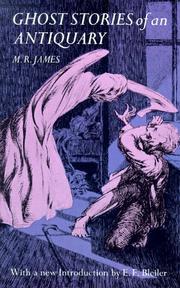
The 1904 debut and the correct place to begin. It contains Canon Alberic's Scrap-Book, Lost Hearts, Number 13 and Oh, Whistle, and I'll Come to You, My Lad — the last of which is the single most anthologised English ghost story and the purest statement of the method.
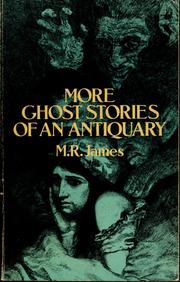
The 1911 sequel, and by most readings the strongest of the four: Casting the Runes, The Tractate Middoth, Count Magnus and The Stalls of Barchester Cathedral. Read it second — the formula is now confident enough that James starts playing against expectation.
The thinner 1919 collection, five stories written across the First World War, and worth reading in place rather than skipping: The Residence at Whitminster and An Episode of Cathedral History show him working the antiquarian machinery harder with less obvious payoff.

The final collection, from 1925, catalogued as A Warning to the Curious and Other Stories. The title story is his bleakest and the closest he came to writing about the war, and A View from a Hill is the one modern writers most often steal. Read it last of the four; it only registers as an ending if you have watched the formula for twenty years.
The volume to own, and the odd one out
BeginnerSettle which single edition to keep on the shelf, and read the one James book that is not a ghost story at all
▸ Study plan for this stage
Pace: Two weeks. Collected Ghost Stories is the 418-page 1931 volume James assembled himself, gathering all four collections plus the later stragglers and his essay on the form — this is the one to own, and having read the collections in order you now need it for the stragglers and the essay rather than f
- The 1931 Collected as James's own final arrangement of his work, and what it includes beyond the four collections
- The late stragglers — the stories written after 1925 — and how they sit against the four collections
- James's own essay on the ghost story and the rules he says he was following
- The edition question in practice: one complete volume versus annotated selections, and what notes are worth
- The Five Jars as the same voice and the same antiquarian delight with the dread removed
- What The Five Jars proves about how deliberate the dread in the ghost stories was
- What rules does James set out in his own essay, and does his fiction obey them?
- Which of the later stragglers would you place among his best, and which read as exercises?
- Do the annotated Penguin and Oxford selections add anything you needed, having read the collections whole?
- What is present in The Five Jars that is also in the ghost stories, and what has been removed?
- Having seen the machinery working without horror, what do you now think the horror was doing?
- Read James's own essay on the ghost story and score each of his stated rules against three stories of your choice, marking obedience and breach.
- Read the post-1925 stragglers in the Collected and slot each one into your formula sequence from the last stage.
- Read the first two chapters of The Five Jars immediately after rereading Canon Alberic's Scrap-Book, and list what is identical in voice and what is missing.
Next up: You have the whole body of work in the edition to keep; the scholarship can now tell you about the life behind it and what critics think the formula is doing.

The 1931 volume James assembled himself, gathering all four collections plus the later stragglers and his essay on the form. This is the one to own. If you want editorial notes instead, our catalogue also holds the Penguin selections Count Magnus and Other Ghost Stories and The Haunted Doll's House and Other Ghost Stories, and the Oxford World's Classics Casting the Runes — all three duplicate stories you will have read here.
His only novel-length work, a gentle children's fantasy from 1922 with no horror in it whatsoever. Read it after the ghost stories as a curiosity: it is the same voice and the same antiquarian delight with the dread taken out, which tells you something about how deliberate the dread was.
The scholarship
IntermediateUnderstand the life behind the stories and the critical arguments about what the antiquarian formula is actually doing
▸ Study plan for this stage
Pace: Three weeks for 278 and 340 pages, in this order. Michael Cox's M.R. James is the standard biography, catalogued under the bare name M.R. James, and is strong on the Cambridge and Eton world the stories inhabit and on James's real work cataloguing manuscripts. Warnings to the Curious is a critical a
- James's actual career: provost of King's College and of Eton, and a medievalist cataloguing manuscript collections
- How closely the fictional antiquaries' scholarly business tracks the real work he did
- The Cambridge and Eton milieu as both setting and audience for the stories
- The critical argument about sexuality in the stories, and the range of positions the anthology reprints
- The critical argument about what the stories refuse to explain, and whether the refusal is technique or evasion
- Reading criticism after primary work, and using the stories to test the readings rather than the reverse
- What did James actually do for a living, and how much of it appears in the stories?
- What in Cox's account of the life would you not have guessed from the fiction?
- Which readings in the Joshi and Pardoe anthology are supported by the texts you have read, and which require assumptions the texts do not supply?
- How do the anthology's contributors differ on the sexuality question, and where does each rest their case?
- Does knowing the biography change any story for you, and which one?
- Pick the essay in Warnings to the Curious whose reading you find least convincing and test it against the specific story, sentence by sentence, before rejecting it.
- Take one manuscript or document from Cox's account of James's real cataloguing work and find its fictional counterpart in a story.
- Write down two things Cox establishes about the life, then note which stories you would now read differently and which you would not.
Next up: With the life and the criticism in hand, the last stage places James in the tradition — the Victorian he refined and the writers who took the form further than he would have.
The standard biography, catalogued under the bare name M.R. James. Cox is very good on the Cambridge and Eton world the stories are set in and on James's real scholarly career cataloguing manuscripts, which is the thing most readers do not realise was his actual job.
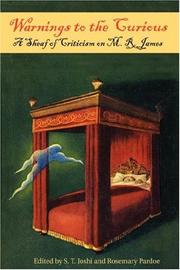
A critical anthology edited by Joshi and Rosemary Pardoe collecting the best essays on James, including the arguments about sexuality, antiquarianism and what the stories refuse to explain. Read it after the biography; it assumes you know the stories well.
Before him and after him
IntermediatePlace James in the English ghost-story tradition — the Victorian writer he refined and the writers who took the form somewhere he would not have gone
▸ Study plan for this stage
Pace: Five weeks for 332, 624, 254 and 504 pages, in this order. Sheridan Le Fanu's In a Glass Darkly is the 1872 collection James himself named as the summit of the form, containing Green Tea and Carmilla. The collected E. F. Benson runs to 624 pages and is best sampled rather than read through. Robert A
- What James took from Le Fanu: the investigating scholar frame and the documentary presentation
- Where James narrowed Le Fanu — dropping the erotic and the psychological for the antiquarian
- Benson as the parallel case: broader, more willing to describe the monster, and often very funny
- Using Benson as a control for judging what James's restraint actually buys
- Aickman's strange story as the endpoint of withholding, where nothing is explained or even named
- The English ghost story as a tradition with a shape, as the Oxford anthology lays it out
- Placing a writer by what he inherited and what his successors did with it
- Which specific devices does James take directly from Le Fanu, and which does he leave behind?
- What does Benson do that James will not, and is the effect stronger or weaker?
- What is Aickman doing that James is not, and is it a development of James's method or a rejection of it?
- Reading the Oxford anthology, where does James sit in the tradition — as a culmination, a narrowing, or a detour?
- Having read across the tradition, what is the single technical thing James does better than anyone around him?
- Read Green Tea immediately before rereading Canon Alberic's Scrap-Book and list the structural elements shared between them.
- Pick one Benson story and one James story with a comparable premise and compare how many lines each spends on the apparition — the count is the whole argument about restraint.
- Read one Aickman story twice and write down what you think happened after each reading; the difference between the two accounts is what he was after.
- Use the Oxford anthology's contents page to build a rough chronology of the English ghost story and mark where each writer on this path falls.
Next up: You have the whole of James in the edition worth owning, the life and the criticism, and the tradition on either side of him — enough to read any ghost story and see immediately whose method it is using.

The 1872 collection James himself named as the summit of the form, containing Green Tea and Carmilla. He edited a Le Fanu selection and borrowed the frame of an investigating scholar directly from him — read this to see what James inherited.

James's near-contemporary and the best of the writers working in parallel with him: broader, more willing to describe the monster, and often very funny. A useful control for judging what James's restraint actually buys.
Aickman called them strange stories rather than ghost stories, and they are the twentieth-century inheritance of James's withholding taken to its limit — nothing is explained and frequently nothing is even named. Read after Benson; it is the sharpest contrast available.

Edited by James's biographer, and the best single survey of the tradition around him — read it last, when you have enough of James in your head to see who was doing what he did and who was doing something else.