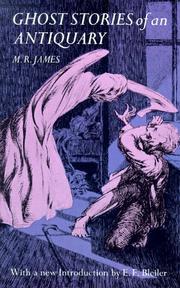
Start with Ghost Stories of an Antiquary. It is the first collection, published in 1904, and it is also the strongest — eight stories including "Canon Alberic's Scrap-book", "Lost Hearts", "The Mezzotint", "Count Magnus" and "Oh, Whistle, and I'll Come to You, My Lad". Very little of what James wrote afterwards improves on it. Read it either as the standalone volume or as the opening section of Collected Ghost Stories, which reprints it whole.
M.R. James ghost stories in order: where to start
August 8, 2026 · 4 min read
The real problem is not order, it is overlap
James wrote about thirty ghost stories, and they have been collected and re-collected for a century, so the difficulty is not deciding what to read next — it is avoiding buying the same stories three times. That applies to this very list. Collected Ghost Stories, assembled in 1931, contains the complete contents of all four of the individual volumes below, plus a handful of later pieces that appear nowhere else here. Five of our records; four of them are inside the fifth.
So the choice is simply this. Buy Collected Ghost Stories alone and you have everything, in publication order, in one book — that is what most readers should do. Buy the four originals instead if you would rather read each volume as James assembled it, which is a real difference with him, since he built each one to be read aloud in sequence. What you should not do is buy both.
The four original collections
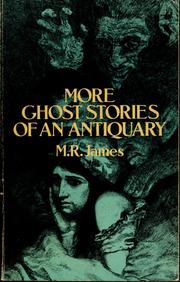
Ghost Stories of an Antiquary (1904), More ghost stories of an antiquary (1911), A thin ghost and others (1919), A warning to the curious and other stories (1925). Roughly eight, seven, five and six stories respectively — and every one of those stories is also in Collected Ghost Stories.
Order matters less here than in almost anything else on this site. There is no continuity, no recurring cast and nothing to spoil. Publication order is still the right way through for one reason: James fixed his method in the first book and spent thirty years varying it, so the later stories read as deliberate departures from something you ought to know already.
The 1911 volume is nearly the equal of the first, and holds "Casting the Runes" — filmed as Night of the Demon — along with "The Tractate Middoth". Most readers find A thin ghost and others the weakest of the four; "An Episode of Cathedral History" is the one to keep from it. The 1925 book is a late recovery and its title story is among the best things he wrote. One further buying warning: modern paperbacks sold as A Warning to the Curious are often selections drawn from across his career rather than the 1925 volume, so check the contents list.
The odd one out
The five jars is not a ghost story collection. It is a children's fantasy from 1922 in which a man drinks from five jars and acquires strange senses. Read it if you are completing James. Do not read it to find out whether you like him.
How to read them
One or two at a sitting, and preferably aloud — James wrote these to be read to friends at Christmas in his rooms at King's College, Cambridge. Read six in a row on the page and the machinery shows: a scholar finds a document or an object, makes one incautious inquiry, and something is felt in the dark before it is ever seen.
The apparatus, and what to read next
M.R. James is Michael Cox's biography, published as M.R. James: An Informal Portrait and still the standard life of a medievalist and manuscript cataloguer who was Provost first of King's and then of Eton, and who wrote the stories as a sideline. Warnings to the curious is a volume of critical essays edited by S.T. Joshi and Rosemary Pardoe — scholarly, and useful only after the fiction.
In a glass darkly is Sheridan Le Fanu's 1872 collection, containing "Green Tea" and "Carmilla". James named Le Fanu as his master and later edited him, and it makes plain how much of the method he inherited rather than invented. The collected ghost stories of E.F. Benson is a contemporary working the same ground more loosely. Cold hand in mine is the deliberate opposite: Robert Aickman called his pieces strange stories and withheld the explanation and the resolution James always supplies. Most readers find him harder and some find him better; read him after James rather than instead. The Oxford book of English ghost stories, edited by Cox with R.A. Gilbert, places all of them in one tradition.
One honest note. James's narrators are Edwardian Cambridge dons and carry that world's assumptions about servants, foreigners and class; a few passages read badly now. He was also, by stated principle, unerotic — he thought sex had no business in a ghost story and said so in print. The M.R. James hub gathers the rest.
Follow the full ordered path here: M.R. James ghost stories in order: where to start.
FAQ
- Do I have to read M.R. James in order?
- No. The stories are standalone, with no recurring characters and nothing to spoil. Publication order is still the best route, because the first collection is the strongest and it establishes the method the later stories play against. Read Ghost Stories of an Antiquary first and take the rest in any order.
- Should I buy the Collected Ghost Stories or the four separate books?
- One or the other, never both — the Collected Ghost Stories contains the entire contents of all four original volumes plus some later pieces, so buying it alongside them means paying twice for the same stories. Take the collected volume unless you specifically want to read each book as James assembled it.
Get the books
- 1Ghost Stories of an AntiquaryAmazon ↗Montague Rhodes James
- 2More ghost stories of an antiquaryAmazon ↗Montague Rhodes James
- 3A thin ghost and othersAmazon ↗Montague Rhodes James
- 4A warning to the curious and other storiesAmazon ↗Montague Rhodes James
- 5Collected Ghost StoriesAmazon ↗Montague Rhodes James
- 6The five jarsAmazon ↗Montague Rhodes James
As an Amazon Associate we earn from qualifying purchases. Some book links are affiliate links; you pay the same price and we may earn a small commission.
Follow the full reading path
M.R. James ghost stories in order: where to start
Beginner12books88 hrs4 stages
Ready to learn something deeply?
Build a reading path — free