Ludwig van Beethoven: The Best Books to Read, in Order
The Beethoven shelf has a peculiar problem: the three standard one-volume lives are all simply called Beethoven, and choosing between them is most of the decision a new reader has to make. This path resolves that by ordering them — a short accessible life first, then Jan Swafford's modern narrative biography, then Maynard Solomon and Lewis Lockwood, who disagree with each other about how much of the music can be read out of the life. From there it moves to the listening guides, because the biographies are far less useful if you cannot hear what they are describing, and finishes with the primary-source and analytical work on the middle-period heroic style and the late quartets. A note on titles: our catalogue displays several of these under the bare surname alone, so each entry below names the published subtitle you should look for.
One life, straight through
BeginnerGet the whole shape of the life once — Bonn, the move to Vienna, the Heiligenstadt Testament and the deafness, the heroic decade, the nephew, the late works — before arguing about any of it
▸ Study plan for this stage
Pace: Six to seven weeks, and the length is almost entirely Swafford. John Suchet's Beethoven: The Man Revealed is 400 readable pages and takes a week; Edmund Morris's Beethoven: The Universal Composer is a short Eminent Lives volume for which our catalogue carries no page count, and it is an afternoon or
- The chronology in one pass: Bonn, the move to Vienna, the aristocratic patrons, the heroic decade, the nephew, the late works
- The Heiligenstadt Testament and what it says, as distinct from what biographers have made of it
- The progression of the deafness and its effect on his performing career before its effect on his composing
- The patronage system Beethoven worked inside and how he changed his position within it
- The custody battle over his nephew Karl as a documented episode rather than an anecdote
- Swafford's compositional emphasis: sketchbooks, revision, and the physical labour of writing the music
- The three-period division of the works, and that it is a later scholarly convenience rather than Beethoven's own
- What is the sequence of Beethoven's patrons and publishers, and how did his income actually work?
- What does the Heiligenstadt Testament state in its own words, and to whom was it addressed?
- When did the deafness begin, when did it end his public performing, and when did it become total?
- What does Swafford show about Beethoven's compositional process that a narrative life cannot?
- Which claims in your first biography are documented and which are inference the author does not flag?
- Build a one-page timeline as you read Swafford — year, city, patron, major works — and keep it; every later book on this path hangs on it.
- Read the Heiligenstadt Testament itself, which Suchet and Swafford both quote, and then note what each biographer builds on it.
- Pick one work Swafford describes through its sketches, listen to it, and mark what he says the sketches show that the finished piece conceals.
Next up: You now have one narrative of the life, which is exactly what you need before reading the two biographers who disagree about whether the life explains the music at all.

The most approachable full-length life in print, written by a broadcaster rather than a musicologist and readable in a week. Start here if you have never read a composer biography; it gives you the chronology and the cast so the heavier books have somewhere to land.
About two hundred pages by a Pulitzer-winning biographer, written for the Eminent Lives series. Read it as the compressed alternative to Suchet if you prefer a stylist to a completist — either one prepares you for Swafford.
The modern standard one-volume life, and the book most people mean when they ask for one Beethoven biography. Swafford is a composer himself and is unusually good on how the music was actually made. Our catalogue displays it as simply Beethoven; it is the 2014 book, roughly a thousand pages, and it is worth the length.
The two lives that disagree
IntermediateSee the central methodological argument in Beethoven scholarship — how far the biography explains the music — argued by its two best-known practitioners
▸ Study plan for this stage
Pace: Four to five weeks for 400 and 468 pages, read in this order and read as a dispute rather than as two biographies. Maynard Solomon's 1977 book identifies the Immortal Beloved as Antonie Brentano and reads the life through psychoanalysis; it is the most interpretively daring of the standard lives and
- The central methodological argument in Beethoven scholarship: how far the biography explains the music
- Solomon's psychoanalytic method, including the family-romance reading of Beethoven's claims about his birth
- The Immortal Beloved letter and the evidentiary case for and against the Brentano identification
- Lockwood's compositional-evidence method, and what a sketchbook can and cannot establish about intention
- The difference between a claim about the man and a claim about a piece, and how easily they are conflated
- Why two careful scholars using the same documents reach different pictures
- What is Solomon's evidence for Antonie Brentano, and what are the standard objections to it?
- Where does Solomon move from documented fact to psychoanalytic interpretation, and does he mark the transition?
- What does Lockwood use instead of biography to explain a given work, and does it explain as much?
- Take one piece both discuss: what does each say about it, and which explanation would survive the other's evidence?
- Is the disagreement about Beethoven, or about what biography is for?
- Find a work discussed by both — the Eroica is the best test case — and write the two accounts of it in parallel columns, marking each line as fact, inference or interpretation.
- Read the Immortal Beloved letter in full, then list Solomon's steps to Brentano and mark the weakest one.
- Take one of Lockwood's sketch discussions and state precisely what the sketch proves and what it merely permits.
Next up: Both biographers keep describing music, and the descriptions are close to useless until you can hear what they are pointing at.
Solomon's 1977 biography, the one that identified the Immortal Beloved as Antonie Brentano and read the life through psychoanalysis. It is the most interpretively daring of the standard lives and the one specialists most often push back on — read it knowing that is the argument you are entering.
Lockwood's counterweight to Solomon, organising the life around the compositional evidence — sketchbooks, revisions, the actual working process — rather than around psychology. Our catalogue displays it under the bare surname; read it directly after Solomon, because the two are best understood as a dispute.
Learning to hear it
IntermediateWork through the four repertoires that matter most — symphonies, piano sonatas and string quartets — with a guide beside the recordings
▸ Study plan for this stage
Pace: Three to four months, because this stage is paced by listening rather than by reading. Antony Hopkins's The Nine Symphonies of Beethoven is 290 pages written explicitly for people who cannot read a score — take one symphony a week with a recording open. Lockwood's Beethoven's Symphonies, subtitled A
- Movement-by-movement listening: following form in real time rather than reading about it afterwards
- Sonata form as Beethoven inherited it and what he does to the recapitulation and the coda
- The nine symphonies as a sequence with a visible break at the Eroica
- Lockwood's placing of each symphony in its compositional and political moment
- The thirty-two piano sonatas as the laboratory, and Rosen's account of what is tried there first
- The sixteen quartets, and the specific difficulty of the late ones that Kerman exists to help with
- The gap between hearing a piece and being able to say what happens in it
- What does Hopkins want you to hear in the first movement of the Eroica, and can you now hear it unaided?
- What does Lockwood add about a symphony that Hopkins's listening guide leaves out?
- Which technical vocabulary do Rosen and Kerman assume, and where can you get it if you lack it?
- What does Rosen say the piano sonatas do before the symphonies do it?
- What specifically is difficult about the late quartets, in Kerman's account, and does his explanation help on a second hearing?
- Work through the nine symphonies at one a week with Hopkins open and the recording playing, stopping the recording wherever he stops; this is the exercise that converts the biographies into listening.
- Take the Eroica first movement and mark on paper where exposition, development, recapitulation and coda fall by the clock on your recording, then check against Hopkins.
- Listen to Opus 131 twice — once cold, once with Kerman's chapter beside you — and write down what the second hearing gave you that the first did not.
- Play or follow one Rosen sonata discussion at the keyboard if you can; if you cannot, use a score-following video, since Rosen's argument is about things you must see as well as hear.
Next up: With the repertoire in your ear, the analytical and primary-source books in the last stage become arguments you can test rather than assertions you must accept.
The classic movement-by-movement listener's guide, written for people who cannot read a score. Take one symphony a week with a recording open; this is the book that turns the biographies from history into listening.

Subtitled An Artistic Vision, and the scholarly companion to Hopkins rather than a replacement — Lockwood sets each symphony in the compositional and political moment that produced it. Read it after you have listened your way through Hopkins.
Rosen was a concert pianist and a formidable analyst, and this short companion is the best single book on the thirty-two sonatas. Third in this stage because it assumes more musical vocabulary than the symphony guides.
The standard study of the sixteen quartets, from 1967 and still unsuperseded. Save it for last in this stage: the late quartets are where most listeners need the most help, and Kerman is the person who gives it.
Sources, style and the late work
IntermediateGo behind the biographies to the primary record, and to the analytical arguments about the heroic style and the late period
▸ Study plan for this stage
Pace: Three to four months, and this is the expert stage. Thayer's Life of Beethoven runs to 1,141 pages in the Elliot Forbes revision and is not a narrative — it is a documentary compilation, read as a source you consult rather than a book you finish. Scott Burnham's Beethoven Hero at 315 pages and Mayna
- Thayer's method: interviewing people who had known Beethoven, and building from documents rather than interpretation
- The layers in the standard edition — Thayer's nineteenth-century work, Krehbiel's and then Forbes's revisions — and reading it aware of them
- Burnham's argument about why the middle-period works feel like heroic narratives, and what that has done to how all music is heard since
- The reception history problem: separating what Beethoven wrote from what the nineteenth century made of it
- Solomon's late-period reading through Beethoven's reading and religious thought in his final years
- Rosen's account of the Classical style as a language, and what Beethoven inherited against what he broke
- Using a documentary source to check a narrative biographer's claim, which is the practical skill this stage teaches
- What kind of evidence does Thayer accept, and what does he refuse to do with it?
- What is Burnham's claim about the Eroica and the Fifth, and what would count as evidence against it?
- How does Solomon's late-period argument relate to the psychoanalytic method of his biography?
- What does Rosen mean by a style being a language, and how does that change what a formal analysis is for?
- Take one anecdote from your first biography: what does Thayer actually record about it?
- After all four, is the heroic Beethoven a fact about the music or a fact about its reception?
- Pick three claims from the biography you read in stage one and trace each back to Thayer, noting which are documented, which are attributed and which have no source.
- Read Burnham with the Eroica and the Fifth well known to you, then listen again and mark whether you can now hear the narrative he describes or only the description of it.
- Read Rosen's chapters on Haydn before his chapters on Beethoven, then relisten to an early Beethoven quartet and identify what is inherited.
- Set Solomon's Late Beethoven beside Kerman on the same late quartet and write out where a biographical reading and a formal reading actually conflict.
Next up: You have the standard lives, the listening repertoire and the primary and analytical literature — enough to read any new Beethoven book and know immediately which argument it is joining.

The nineteenth-century documentary biography, revised by Elliot Forbes, that every later life is built on — Thayer interviewed people who had known Beethoven. Read it as a source rather than a narrative; it is where the modern biographers get their facts.
A short, sharp argument about why the middle-period works feel like heroic narratives and what that has done to the way we hear all music since. It is the best thing to read once you know the Eroica and the Fifth well.
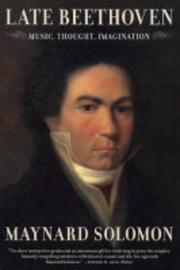
Solomon returning three decades later to the last decade of the life — the Missa Solemnis, the Ninth, the late quartets — through the reading and religious thought of Beethoven's final years. Place it after Kerman, which gives you the music this book interprets.
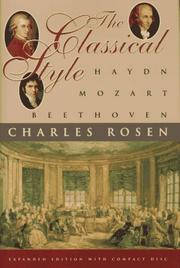
Not a Beethoven book but the frame around one: Rosen on Haydn, Mozart and Beethoven as a single evolving musical language. Read it last, when you have enough Beethoven in your ear to see what he inherited and what he broke.