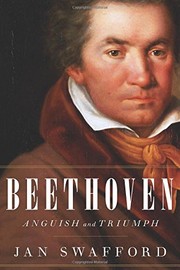
Three of the standard Beethoven biographies are catalogued under the single word Beethoven, and choosing between them is most of the decision a new reader has to make. The short answer: Jan Swafford's, published in 2014 and running past a thousand pages, is the modern one-volume life. Maynard Solomon's, from 1977, is the psychoanalytic reading. Lewis Lockwood's organises the life around the compositional evidence instead.
Order matters here for a second reason. These books spend most of their pages describing music, and they are far less useful if you cannot hear what is being described. So this path puts one readable life first, the two interpretively opposed lives second, the listening guides third, and the documentary sources and analytical books last.
One life, straight through
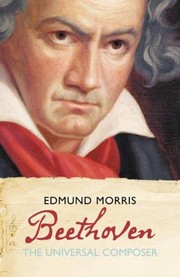
Beethoven: The Man Revealed is John Suchet's 2013 biography, around 400 pages, written by a broadcaster rather than a musicologist. It is the most approachable full-length life in print and the right start if you have never read a book about a composer: it gives you the chronology and the cast, so the heavier books have somewhere to land. Beethoven The Universal Composer is Edmund Morris's contribution to the Eminent Lives series — roughly two hundred pages by a Pulitzer-winning biographer, and the compressed alternative if you would rather have a stylist than a completist. Read one of the two, not both.
Then Swafford. His Beethoven is the book most people mean when they ask for one Beethoven biography. Swafford is a composer himself and is unusually good on how the music was actually made, which is exactly what the shorter lives skim. It is long, and the length is the point.
The two lives that disagree
Solomon's Beethoven is the 1977 biography that identified the Immortal Beloved as Antonie Brentano and read the life through psychoanalysis. It is the most interpretively daring of the standard lives and the one specialists most often push back on. Lockwood's Beethoven is the counterweight — sketchbooks, revisions and the actual working process rather than psychology. Read them consecutively rather than picking one, because they are best understood as a dispute about how much of the music can legitimately be read out of the life.
Learning to hear it
The nine symphonies of Beethoven is Antony Hopkins's movement-by-movement listener's guide from 1981, written specifically for people who cannot read a score. Take one symphony a week with a recording open; this is the book that converts the biographies from history into listening. Beethoven's symphonies is Lockwood again, subtitled An Artistic Vision, and it is a scholarly companion rather than a replacement: he places each symphony in the compositional and political moment that produced it.
Beethoven`s Piano Sonatas is Charles Rosen's short 2001 companion to the thirty-two sonatas. Rosen was a concert pianist as well as an analyst, and this assumes more musical vocabulary than the symphony guides do. The Beethoven quartets is Joseph Kerman's 1967 study of the sixteen quartets, still the standard book on them. Save it for last in this stage — the late quartets are where most listeners need the most help, and Kerman is the person who gives it.
Sources, style and the late work
Thayer's Life of Beethoven is the nineteenth-century documentary biography, revised by Elliot Forbes and running past eleven hundred pages, that every later life is built on; Thayer interviewed people who had known Beethoven. Read it as a source rather than as a narrative. Beethoven Hero is Scott Burnham's short argument about why the middle-period works feel like heroic narratives and what that has done to the way we hear music since — best once you know the Eroica and the Fifth well. Late Beethoven is Solomon returning in 2003 to the Missa Solemnis, the Ninth and the late quartets through Beethoven's reading and religious thought.
The Classical Style closes the path and is not a Beethoven book at all: Rosen on Haydn, Mozart and Beethoven as one evolving musical language. Read it when you have enough Beethoven in your ear to see what he inherited and what he broke.
Two things are missing from this list and worth naming plainly: the collected letters in Emily Anderson's edition, and the conversation books Beethoven used once he was deaf. Both are where a reader goes after Thayer, and neither is in our catalogue.
Follow the full ordered path here: The Best Beethoven Books, in Reading Order.