Best Books on Libertarianism, in Reading Order
Libertarianism is not one doctrine but a family of them, and the arguments between its wings are sharper than the arguments with its opponents. This path begins with plain-language introductions, moves to the twentieth-century classics that made the case politically, then to the philosophical core in Nozick and Rand, then to the anarcho-capitalists who think even the minimal state is illegitimate, and finishes with the movement's own history and its most serious critics.
The case, plainly stated
BeginnerLearn what libertarians actually claim about rights, markets and the state, and be able to distinguish the main internal factions before reading any of them.
▸ Study plan for this stage
Pace: Two to three weeks. Boaz's The Libertarian Mind is 417 pages but written for a general reader and moves at about 30 pages an hour; Brennan's Libertarianism: What Everyone Needs to Know is 213 pages in short question-and-answer sections, so it can be read in a week of evenings. Read them in that orde
- Self-ownership and the non-aggression principle — the two premises nearly every libertarian argument in this path rests on, and the two most worth pressing on later
- The taxonomy of the movement: classical liberals, minarchists, anarcho-capitalists, Objectivists, and the bleeding-heart or left-libertarian wing. Boaz maps them; the rest of the path is those factions arguing
- Consequentialist versus deontological routes to the same conclusion — Friedman gets there because markets work, Nozick because rights forbid the alternative, and the two come apart under pressure
- Spontaneous order: the claim that useful institutions arise without design, which does the heavy lifting in Hayek later and is introduced here in plain form
- The distinction between libertarianism and American conservatism, which Boaz is at pains to make and which Brennan handles more carefully
- Where Brennan is franker than Boaz: on public goods, on externalities, and on what a libertarian order would actually do about the very poor
- State the non-aggression principle in one sentence, then name the hardest case you can think of for it. Does Boaz address that case, and does Brennan?
- What is the difference between a minarchist and an anarcho-capitalist, and which of the two does Boaz's book assume?
- Brennan's format forces him to answer objections directly. Which three objections does he treat as strongest, and does he think any of them succeed?
- Boaz writes from inside the movement and Brennan from an academic distance. Where do their accounts of the same doctrine actually differ, as opposed to differing in tone?
- On the evidence of these two books alone, is libertarianism a claim about what works or a claim about what is permitted? Can it be both?
- Draw the faction map from Boaz as a diagram — axes of your choosing — and place Hayek, Friedman, Nozick, Rand, Rothbard and Huemer on it before you read any of them. Redraw it at the end of the path and compare.
- Take Brennan's answers to three questions and write, in a paragraph each, the strongest reply a social democrat could give. You will need these when you reach Cohen.
- Write 200 words defining self-ownership without using the word 'freedom'. This is harder than it sounds and it exposes how much of the doctrine is carried by a single metaphor about property in one's person.
- List every policy position Boaz endorses that surprised you. Keep the list; Hayek and Friedman will confirm some of them and quietly contradict others.
Next up: With the factions mapped and the core premises stated in plain language, you can now read the two mid-century books that made this case politically respectable — and see how much less doctrinaire they are than their reputation.

The standard movement primer, covering the history, the core principles and the policy positions in one accessible volume. Start here to get the map before the arguments.
A philosopher's question-and-answer survey that is notably fairer to the objections than Boaz. Read it second as the corrective to a book written from inside the movement.
The twentieth-century classics
BeginnerRead the two books that carried classical liberalism through its most unfashionable decades and shaped the politics of the 1980s.
▸ Study plan for this stage
Pace: Three weeks. The Road to Serfdom is 272 pages of wartime polemic and is denser than its length suggests — Hayek is arguing against an intellectual consensus the modern reader cannot see, so allow time to reconstruct what he is replying to. Capitalism and Freedom is 202 pages, plainer prose, and chap
- The knowledge problem — that the information needed to plan an economy exists dispersed among millions of people and cannot be centralised, which is Hayek's real argument and is stronger than the 'planning leads to tyranny' slogan
- Prices as signals rather than as valuations, which is the mechanism underlying everything Friedman proposes
- Hayek's actual position on the welfare state: he explicitly accepts a guaranteed minimum income, health insurance and public provision against catastrophe. Many who cite him do not, and noticing the gap is the point of reading him directly
- Friedman's separability thesis — economic freedom as a necessary but not sufficient condition for political freedom — and the historical cases he uses to support it
- The concrete proposals: school vouchers, the negative income tax, floating exchange rates, occupational licensing repeal. Friedman is doing policy design, not philosophy, and should be judged as such
- The 1944 context of The Road to Serfdom: Hayek is writing against enthusiasm for wartime planning among British intellectuals, not against a modern mixed economy
- What neither book supplies: a theory of rights. Both are consequentialist, which is why the next stage exists
- What exactly is the knowledge problem, and is it an argument against central planning, against large firms, or against both?
- Hayek endorses a substantial safety net in chapter nine. How do you reconcile that with the book's reputation, and what does the discrepancy tell you about how it has been used?
- Friedman argues economic freedom is necessary for political freedom. What counterexamples can you find, and does he anticipate them?
- Which of Friedman's 1962 proposals have since been tried, and what happened? Judge the book on its record, not on its coherence.
- Both books argue from consequences. What would each have to say if central planning turned out to deliver more prosperity, and does that make them vulnerable in a way Nozick will not be?
- Write a one-page summary of the knowledge problem as Hayek states it, then check it against the price-signal argument in Friedman's opening chapters. Where they diverge is where two different libertarianisms begin.
- Extract every policy proposal in Capitalism and Freedom into a list, and mark each as adopted, partly adopted, or rejected in your own country. The exercise turns a 1962 manifesto into a scorecard.
- Find the passages in The Road to Serfdom where Hayek concedes ground to his opponents, and mark them. There are more than the book's reputation implies, and knowing where they are makes you a much harder reader to bluff.
- Write 200 words on what Hayek was actually warning against in 1944, using only the book's own examples. Then write 100 words on whether that warning transfers to a modern regulatory state — and be honest about how much you are extrapolating.
Next up: Hayek and Friedman argue that liberty works; the next stage takes up the much harder claim that redistribution is impermissible even when it works, which is where libertarianism becomes a philosophical position rather than an economic one.

Hayek's 1944 warning that central economic planning erodes political freedom, written against wartime enthusiasm for planning. Note that Hayek accepted a substantial welfare state, which many later admirers do not.
Friedman's compact case that economic freedom is a precondition of political freedom, plus the concrete proposals — school vouchers, a negative income tax, floating exchange rates — that made it influential. More policy-facing than Hayek.
The philosophical core
IntermediateEngage the rights-based argument at full strength, and understand the difference between a Kantian side-constraints libertarianism and an egoist one.
▸ Study plan for this stage
Pace: Four to five weeks. Anarchy, State, and Utopia is 367 pages of analytic philosophy and cannot be skimmed — Nozick argues by thought experiment and the arguments are compressed. Read Part I (the derivation of the minimal state from a state of nature) and Part II (the entitlement theory and the critiq
- Rights as side constraints rather than as goals to be maximised — Nozick's Kantian move, and the reason he can reject even redistributions that would reduce total rights violations
- The invisible-hand derivation of the minimal state: how a dominant protective agency emerges from anarchy without anyone violating anyone's rights, which is Nozick's answer to Rothbard before Rothbard is read
- The entitlement theory of justice — justice in acquisition, in transfer, and in rectification — and its central claim that a distribution is just if it arose justly, regardless of its shape
- The Wilt Chamberlain argument: that any patterned principle of distribution must be continuously violated to be maintained, so liberty upsets patterns. This is the single most discussed page in the book
- The unresolved problem of rectification. Nozick concedes that past injustice may require large redistribution and does not work out what follows, which is the honest gap in his system
- Rand's ethical egoism: rational self-interest as a moral duty, altruism as a vice. This is a different foundation entirely, not a stylistic variant of Nozick
- Why most academic libertarians build on Nozick and not on Rand — and why a fair reading should still identify what Rand's argument gets that Nozick's does not
- Reconstruct the Wilt Chamberlain argument in your own words. Does it refute patterned theories of justice, or only theories that must hold a pattern fixed over time?
- Nozick derives a minimal state without rights violations. Which step of that derivation is weakest, and what would Rothbard say about it?
- What does Nozick's entitlement theory require us to know about the past, and is that knowledge available? Take the rectification problem seriously rather than treating it as a footnote.
- Rand grounds rights in egoism, Nozick in Kantian inviolability. Do the two foundations yield the same politics, and where would they come apart?
- Nozick is answering Rawls directly. What is Rawls's argument as Nozick presents it, and is the presentation fair enough for you to judge it from here?
- Write out the Wilt Chamberlain case in 200 words, then write the best objection to it you can construct. Keep both — Cohen's book in the final stage is essentially a long version of that objection, and comparing yours to his is the most instructive thing in this path.
- Diagram Nozick's state-of-nature derivation as a sequence of steps, marking at each step which right is supposedly not violated. The weak joints become visible immediately when it is on paper.
- Take one Rand essay — 'The Objectivist Ethics' is the load-bearing one — and reduce its argument to numbered premises and a conclusion. Then check whether each premise is argued for or asserted.
- Pick a real redistributive policy in your country and analyse it twice: once under Nozick's entitlement theory, once under Rand's egoism. If they give different verdicts, you have found where the two foundations diverge.
Next up: Nozick stops at the minimal state and thinks he has shown it can be legitimate; the next stage reads the people who think that final step is exactly where the argument goes wrong.

The most important work of libertarian political philosophy, deriving a minimal state from individual rights and attacking patterned theories of justice via the Wilt Chamberlain example. Written as a direct answer to Rawls.
Rand's ethical egoism is the other major foundation people build libertarian conclusions on, and it is philosophically quite different from Nozick's. Read it to see why most academic libertarians take pains to distance themselves from it.
The anarcho-capitalist wing
IntermediateFollow the argument past the minimal state to the claim that no state can be legitimate at all, and see whether the objections to it are decisive.
▸ Study plan for this stage
Pace: Four weeks. For a New Liberty is 346 pages, written as a manifesto, and moves quickly — Rothbard is applying one principle to a long list of institutions, so once you have the principle the chapters are largely independent. The Problem of Political Authority is 393 pages and much harder work: Huemer
- Strict self-ownership carried to its conclusion — Rothbard's method is to admit no exception for the state, and the interest of the book is in watching where that leads
- Private production of law, courts, police and defence: the institutional proposals that distinguish anarcho-capitalism from a thought experiment
- Rothbard's objection to Nozick — that the minimal state is not a legitimate outcome of an invisible hand but a protection racket that won, which is a direct attack on the previous stage's derivation
- Huemer's method: no rights axiom at all, only common-sense moral intuitions that almost everyone already accepts, applied consistently to states and to individuals
- Political authority as two separate claims — the state's right to command and the citizen's duty to obey — and Huemer's demonstration that the standard justifications (social contract, consent, democracy, fairness) fail one or the other
- The problem of scale: both books must explain why private defence agencies do not simply become states, and readers disagree sharply about whether either succeeds
- The difference between arguing that the state is unnecessary and arguing that it is illegitimate. Huemer does the second, which is the more demanding claim
- How would a private legal system handle a dispute between clients of two different agencies, and is Rothbard's answer institutional or hopeful?
- Rothbard says the minimal state cannot be reached without rights violations; Nozick says it can. Set out both derivations side by side and identify the exact step they disagree about.
- Huemer argues that no standard justification of political authority survives contact with ordinary moral intuitions. Which of his four targets — consent, social contract, democratic authority, fairness — do you think he handles least convincingly, and why?
- What stops a dominant protection agency from becoming a state? Answer for Rothbard and for Huemer separately; they do not give the same answer.
- Huemer's method is to appeal only to intuitions his opponents share. Is that a stronger foundation than Nozick's rights axiom, or does it just relocate the disagreement?
- Take one function Rothbard privatises — courts, roads, or national defence — and write two pages arguing that it cannot work, using only Rothbard's own premises. Steelmanning against the author's framework is how you find out whether the framework is doing real work.
- Reconstruct Huemer's central argument as a numbered chain from his opening intuition to his conclusion. It is designed to be reconstructable, and doing so is the fastest way to identify the premise you would reject.
- Write a paragraph applying Huemer's 'ordinary person' test to a law you actually support: would you accept a private individual doing what the state does here? Note honestly whether the test changes your view.
- Compare Rothbard's chapter on defence with Huemer's later chapters on the same problem. One is asserting a solution and one is arguing for it — identify which passages are which.
Next up: Having followed the argument to its most radical end, the final stage does two things it needs: puts these thinkers into the actual movement that carried them, and reads the critics who take self-ownership seriously enough to attack it properly.
The manifesto of anarcho-capitalism, applying strict self-ownership to courts, police, roads and defence. Read it directly after Nozick, whose minimal state Rothbard regards as one theft short of the full apparatus.
The strongest contemporary version of the argument, built entirely from common-sense moral intuitions rather than from a rights axiom. Even critics concede it is the case to beat.
The history, and the critics
IntermediateSituate the ideas in the real movement that carried them, and test them against the best egalitarian objections rather than against caricatures.
▸ Study plan for this stage
Pace: Eight to ten weeks — this is the longest stage by a wide margin, and Doherty's Radicals for Capitalism alone is 741 pages. Do not read the four books in parallel. Order matters: Doherty first for the narrative, then Zwolinski and Tomasi's Individualists (432 pages) as the more critical account of th
- The movement as a social fact — Doherty shows the ideas were carried by specific institutions, funders and feuds, and that the doctrinal splits you have just read about were also personal ones
- Why the factions despise each other: Rand's excommunications, Rothbard's serial alliances and breaks, the Cato and Mises institutional split. Doherty is sympathetic but does not hide it
- Zwolinski and Tomasi's reframing of libertarianism as a nineteenth-century radical movement that later shifted rightward, and their treatment of the uncomfortable episodes — on race, on war, on the paleolibertarian turn — that Doherty handles more gently
- Cohen's attack on self-ownership: that it is either too weak to yield Nozick's conclusions or so strong it licenses conclusions libertarians reject, argued by a Marxist who grants the premise for the sake of argument
- Cohen's specific reply to Wilt Chamberlain — that the argument smuggles in an assumption about what Chamberlain was entitled to before the transaction — which is the objection every serious defence of Nozick must now answer
- Tomasi's market democracy: the claim that Rawlsian social justice is better served by robust economic liberty than by a regulatory state, which is a synthesis rather than a compromise
- The bleeding-heart or left-libertarian position as a live research programme, and the question of whether it is a genuine third option or a concession
- Reading history and philosophy against each other: Doherty and Zwolinski explain why certain arguments were made when they were, which is not the same as showing whether they are sound
- Doherty and Zwolinski and Tomasi tell overlapping stories with different emphases. Where do they actually disagree about facts, as opposed to about what deserves emphasis? Weigh the evidence each offers rather than picking the account you prefer.
- Cohen argues that self-ownership does not do the work Nozick needs. Reconstruct his argument and then reconstruct the best reply available from Anarchy, State, and Utopia — and be willing to leave the dispute open.
- Zwolinski and Tomasi document episodes in the movement's history that its defenders find embarrassing. Does an intellectual tradition's record bear on the soundness of its arguments, and if so, how much?
- Free Market Fairness claims Rawlsian ends are best pursued by libertarian means. Which side of that synthesis is doing more of the work, and would Rawls or Nozick have accepted it?
- After all nine books: is the libertarian-versus-egalitarian framing that organises most of this path the right way to carve up the disagreement, or has Tomasi shown it is not?
- Build a timeline from Doherty covering Mises to Cato, marking each major split with its doctrinal cause and its personal cause. Seeing both columns is the point of reading a movement history at all.
- Read Cohen's chapter on the Wilt Chamberlain argument beside the original pages in Nozick, one after the other in a single sitting. Then write 300 words on which one you think has the better of it, and what evidence would change your mind.
- Compare Doherty's and Zwolinski and Tomasi's accounts of the same episode — the paleolibertarian strategy of the late 1980s is the sharpest test — and write a page on where the two authors' framings diverge and what each leaves out.
- Redraw the faction diagram you made in stage one, now placing all nine authors on it, and write a paragraph on what you got wrong the first time.
- Write a final 500-word statement of your own position, citing at least four of these books, and including one argument from a book you disagree with that you cannot yet answer. Naming the unanswered objection is the mark of having actually read the path.
Next up: This is the end of the path: the doctrine stated, argued at full strength, pushed to its radical conclusion, placed in its real history and tested against its best critics — and the natural next step is Rawls's A Theory of Justice, which every book in the last three stages is either answering or defending.
A sympathetic but candid history of the American libertarian movement from Mises and Rand to the Cato Institute. It explains why the factions you have just read despise each other.

Written with John Tomasi, a recent intellectual history tracing libertarianism's shifts on race, war and property across two centuries. More critical and more scholarly than Doherty, and better on the uncomfortable episodes.
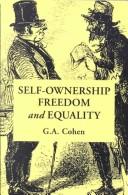
The most respected attack on Nozick, from an analytical Marxist who takes self-ownership seriously enough to dismantle it carefully. Read it immediately after Anarchy, State, and Utopia is still fresh.

Attempts a synthesis: Rawlsian social justice pursued through robust economic liberty. The right final book because it asks whether the whole libertarian-versus-egalitarian framing was necessary.
Discussion
Keep reading
Paths that share books, cover the same subject, or open a related topic.