The mistake most reading lists on this subject make is treating libertarianism as a single position. It is a family of positions that disagree with each other about foundations — rights, consequences, self-ownership, egoism — and reach broadly similar policy conclusions by very different routes. Someone who has read only one book from one wing will misdescribe the others, usually confidently.
So the order here runs from map to argument. Two plain-language introductions establish what is being claimed and by whom, then the twentieth-century classics that carried the ideas politically, then the philosophical core, then the wing that thinks even a minimal state is illegitimate, and finally the movement's own history and the best objections to it.
The map before the arguments
The libertarian mind is the standard movement primer: history, core principles and policy positions in one accessible volume. It is written from inside the movement, and reads that way.
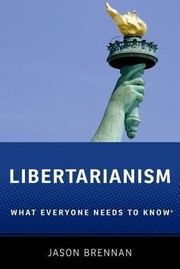
Libertarianism What Everyone Needs To Know is the corrective. Brennan's question-and-answer survey is notably fairer to the objections, and reading it second stops the primer from setting the terms unopposed.
The books that carried it politically
The Road to Serfdom is Hayek's 1944 argument that central economic planning erodes political freedom, written against wartime enthusiasm for planning. It is worth knowing that Hayek himself accepted a substantial welfare state, which a good many of his later admirers do not — the book is regularly cited for a stronger conclusion than it draws.
Capitalism and freedom is more policy-facing: Friedman's compact case that economic freedom is a precondition of political freedom, plus the concrete proposals — school vouchers, a negative income tax, floating exchange rates — that gave it purchase.
The philosophical core
Anarchy, State, and Utopia is the most important work of libertarian political philosophy, deriving a minimal state from individual rights and attacking patterned theories of justice through the Wilt Chamberlain example. It was written as a direct answer to Rawls, and reads best if you know that.
The Virtue of Selfishness is the other foundation people build libertarian conclusions on, and it is philosophically a long way from Nozick. Rand argues from ethical egoism, not from Kantian side constraints. Most academic libertarians take some trouble to distance themselves from her; reading this shows you why, without requiring you to agree with either side of that quarrel.
Past the minimal state
For a New Liberty is the anarcho-capitalist manifesto, applying strict self-ownership to courts, police, roads and defence. It follows Nozick directly, because Rothbard regarded the minimal state as one theft short of the full apparatus.
The Problem of Political Authority is the strongest contemporary version of the same conclusion, built entirely from common-sense moral intuitions rather than from a rights axiom. Critics generally concede it is the case to beat, which is a good reason to read it before deciding the position is unserious.
The movement, and the objections
Radicals for Capitalism is a sympathetic but candid history of American libertarianism from Mises and Rand to the Cato Institute, and it explains why the factions above hold each other in such low regard.
Individualists is the more scholarly counterpart, tracing the tradition's shifts on race, war and property across two centuries. It is franker than Doherty about the uncomfortable episodes, and the two books disagree about how to weigh them.
Self-ownership, freedom, and equality is the most respected attack on Nozick, written by an analytical Marxist who takes self-ownership seriously enough to dismantle it slowly. Read it while Anarchy, State, and Utopia is still fresh.
Free Market Fairness attempts a synthesis — Rawlsian social justice pursued through robust economic liberty — and is the right closing book because it asks whether the libertarian-versus-egalitarian framing was ever necessary. Nothing in this path settles that. It is a live argument among people who have read all of these books, and the reading order exists to let you follow it rather than to end it.
The staged version with study plans is on the full path; Discover has adjacent paths on political philosophy.
Follow the full ordered path here: Best Books on Libertarianism, in Reading Order.