Mary Russell books in order: where to start with Laurie R. King
Laurie R. King's Mary Russell novels give Sherlock Holmes a retirement, an apprentice and eventually a wife, narrated by Russell herself in a voice deliberately unlike Watson's. Publication order is mostly right, with one real exception: O Jerusalem is a flashback to events during the first novel and is best read after the third book rather than in the slot where it was published. This path follows that adjusted order, and flags the pair of books that are really one novel split in two.
Start here
BeginnerRead the novel that establishes the premise and the voice.
▸ Study plan for this stage
Pace: About two weeks for The Beekeeper's Apprentice at 370 pages, roughly 30 a day. The premise is genuinely divisive — a fifteen-year-old orphan becomes Sherlock Holmes's apprentice and, across the series, his wife — and readers who reject it usually do so in the first fifty pages, so give it at least t
- Russell's first-person voice, built deliberately against Watson's: she is a participant and an intellectual equal, not an admiring chronicler
- The apprenticeship structure — Holmes teaching method rather than performing it — and how that changes what a Holmes story can be about
- Russell's Jewish scholarship and theology as working plot material, not decoration
- Holmes's Sussex beekeeping retirement, which King takes as given from the Conan Doyle canon rather than inventing
- The found-manuscript frame King uses to license the whole series and its implied claim about Watson's reliability
- The age gap in this first book, where the relationship is explicitly mentor and pupil, and how King sets up the later change
- What does Russell's narration give you that Watson's cannot, and what does it cost?
- Which facts about Holmes's retirement does King inherit from Conan Doyle, and which are hers?
- How does the book use Russell's biblical and Hebrew scholarship to solve problems Holmes cannot?
- What is the function of the framing device that presents the novels as a recovered manuscript?
- By the end, what specifically has Holmes taught Russell that the plot requires her to know?
- Read Conan Doyle's 'His Last Bow' — the one canonical account of Holmes keeping bees in Sussex — before or alongside chapter one, and list what King takes verbatim against what she adds.
- Keep a running note of every moment Russell corrects or outpaces Holmes; you will use that list to judge whether the partnership in later books is earned or asserted.
- Reread the opening chapter after finishing and mark the details about Russell's family, her scar and her inheritance that the ending reframes.
Next up: With the voice, the apprenticeship and the Sussex setting established, the next two novels can push Russell out of the pupil role and change the relationship permanently.
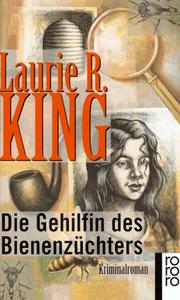
A fifteen-year-old orphan walks onto the Sussex Downs and nearly steps on a retired Holmes. It sets up the apprenticeship, the theology, and the tone; nothing else in the series works without it.
The next two, in publication order
BeginnerFollow Russell from apprentice to partner.
▸ Study plan for this stage
Pace: Three weeks for the two books, 336 and 296 pages. Read them in this order and close together; A Letter of Mary opens on a domestic footing that only reads correctly if A Monstrous Regiment of Women is fresh. A Monstrous Regiment of Women includes drug addiction and the deaths of several young women,
- The shift from apprentice to partner, and the specific event in A Monstrous Regiment of Women that makes it irreversible
- King's use of 1920s feminist and religious movements as more than backdrop — the New Temple in God plot turns on real post-war questions about women's authority
- Russell's Oxford theology work as her independent professional life running parallel to the casework
- How A Letter of Mary uses a first-century papyrus to put Russell's scholarship at the centre of a murder plot
- The series settling into its mature form: two investigators with different methods rather than one detective and an assistant
- Mary Russell's inheritance and financial independence, which the plotting quietly depends on from here forward
- What changes in the Holmes-Russell relationship in A Monstrous Regiment of Women, and at what point in the book?
- How does King handle the age gap once the relationship changes, and does the novel argue for it or simply assert it?
- What is the papyrus in A Letter of Mary supposed to be, and why would its contents matter in 1923?
- In what ways do Russell and Holmes now investigate differently — what does each one see that the other misses?
- How does King use real 1920s religious enthusiasm rather than inventing a cult from nothing?
- Mark the chapter in A Monstrous Regiment of Women where the relationship turns, then reread the corresponding scene in The Beekeeper's Apprentice that set it up, and judge whether the earlier book prepared it.
- Track the division of labour across A Letter of Mary: list which discoveries are Russell's and which are Holmes's, and what kind of knowledge each required.
- Write down the state of the marriage and of Russell's Oxford work at the end of A Letter of Mary — this is the baseline the flashback in the next stage deliberately disturbs.
Next up: A Letter of Mary is the point the publication order stops being the right order, because the next book published is a flashback that has to be read here or not at all.
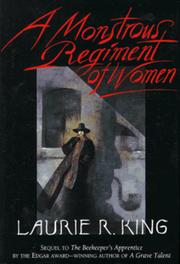
Russell at Oxford, a women's religious movement in London, and the book where the relationship with Holmes changes definitively. Read second.

A first-century papyrus, an archaeologist's murder, and the series settling into its mature form. It is the third book, and the point the goal below refers to.
The flashback, read here
BeginnerGo back to Palestine, then forward again.
▸ Study plan for this stage
Pace: Four to five weeks for the three books, 421, 369 and 352 pages. Read them strictly in this order — the whole reason for the detour is that Justice Hall is a direct sequel to O Jerusalem and collapses without it. O Jerusalem is set in British Mandate Palestine in 1919 and includes torture and sectari
- Why publication order fails here: O Jerusalem was published fifth but is set inside a gap in The Beekeeper's Apprentice
- The specific dependency — two characters introduced in O Jerusalem carry the plot of Justice Hall
- British Mandate Palestine as King's setting, and the choice to have Russell and Holmes travel disguised
- The Moor as a deliberate reply to The Hound of the Baskervilles, and Sabine Baring-Gould as a real historical figure used as a character
- How a flashback novel written years later manages continuity with a book already published
- The English country-house inheritance plot in Justice Hall as the series' turn toward class and the war's aftermath
- Where exactly does O Jerusalem fit inside The Beekeeper's Apprentice, and what would be spoiled by reading it in publication position?
- Which two characters carry over into Justice Hall, and what does that book assume you already know about them?
- What does The Moor take directly from The Hound of the Baskervilles, and where does it deliberately refuse the earlier plot?
- Who was Sabine Baring-Gould, and what does King gain by using a real antiquarian rather than an invented one?
- How does Justice Hall use a wartime execution to make an inheritance mystery into something else?
- Before starting O Jerusalem, find the point in The Beekeeper's Apprentice it flashes back to and mark it; after finishing, check whether the flashback contradicts anything on that page.
- Read The Hound of the Baskervilles, or reread the Dartmoor chapters of it, before The Moor, and list the three or four set-pieces King is answering.
- Keep the two O Jerusalem characters' names and histories on a card while reading Justice Hall, and note each time the novel relies on that history without restating it.
Next up: With the Palestine material and the country-house plot settled, the series leaves England properly, and the middle books become travel novels with a mystery attached.

Published fifth but set during a gap in The Beekeeper's Apprentice, in British Mandate Palestine. Read it after A Letter of Mary: earlier and it interrupts the first novel, later and Justice Hall no longer makes sense.

Dartmoor, Baring-Gould, and a deliberate answer to The Hound of the Baskervilles. Chronologically the fourth novel; read it after O Jerusalem so the Palestine material is fresh.
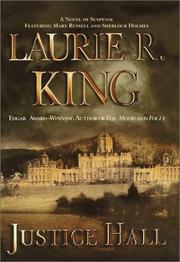
A direct sequel to O Jerusalem, bringing two characters from that book into an English country-house inheritance case. This is the specific reason the flashback has to be read before it.
Travelling
IntermediateThe middle run, in which the series leaves England.
▸ Study plan for this stage
Pace: Four to five weeks for 384, 416 and 353 pages. The Game and Locked Rooms are the substantial ones; Pirate King is short and comic and is placed after Locked Rooms deliberately. Locked Rooms deals with Russell's family's deaths, an earthquake, and recovered memory, and it is the book that most change
- The series' shift to travel: each middle novel takes its shape from a place rather than from a client
- The Game as an explicit crossover with Kipling's Kim, and what it assumes you know about it
- Locked Rooms as a rereading of the narrator: Russell's account of her own past is shown to be unreliable
- The 1906 San Francisco earthquake as the buried event under Russell's biography
- Holmes narrating sections himself in Locked Rooms, and why King breaks the single-viewpoint rule there
- Pirate King as deliberate tonal relief, and the risk a comic instalment runs in a series this serious
- What does The Game borrow from Kim, and can the novel be read by someone who has not read Kipling?
- What in Locked Rooms turns out to be false in Russell's earlier accounts of herself, and where was it first stated?
- Why does King hand narration to Holmes in Locked Rooms, and what could not be shown from Russell's viewpoint?
- How does Pirate King's comedy function after Locked Rooms — as relief, as evasion, or as something else?
- Do the overseas settings serve the mysteries, or do the mysteries serve the settings?
- Read Kipling's Kim, or at least its opening chapters, before The Game, and mark the specific characters and situations King picks up.
- After Locked Rooms, go back to Russell's account of her family in The Beekeeper's Apprentice and annotate every sentence the later book contradicts or reframes.
- Rank the three books by how much the plot depends on the setting, and defend the ranking in a paragraph — it is the clearest way to see what the travel format costs.
Next up: Locked Rooms has taught you that the narrator can be wrong about herself, which is exactly the ground the final three books stand on.

India, and an explicit crossover with Kipling's Kim. The first of the extended overseas books and the most successful.
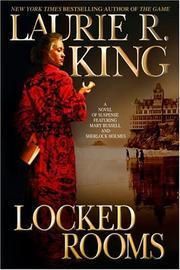
San Francisco and Russell's own suppressed memory of her family's deaths. The most psychologically serious book in the series and the one that revises what you thought you knew about the narrator.
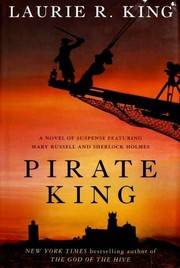
A silent film company shooting a Gilbert and Sullivan adaptation in Portugal and Morocco. Comic, slight, and a deliberate breather after Locked Rooms.
The two-part turn, and the origin story
IntermediateFinish with the pair that must be read together, and the book that goes back to the beginning.
▸ Study plan for this stage
Pace: About five weeks for 468, 388 and 417 pages. Do not begin The Language of Bees without The God of the Hive already on the shelf — the first stops mid-crisis and was written as half a novel. The Murder of Mary Russell can then be read on its own schedule. The Language of Bees and The God of the Hive
- The two-part structure: The God of the Hive resumes within the same hour The Language of Bees ends
- Holmes's adult son as the series' most consequential addition, and what it forces the marriage to absorb
- How King uses a cult plot to bring the 1920s occult revival into a series built on scholarship
- The Murder of Mary Russell as an origin story for Mrs Hudson rather than the book its title promises
- Recontextualisation as a series technique: the same move Locked Rooms made on Russell, now made on the household
- Why placing the Mrs Hudson book last converts a good standalone mystery into a payoff
- What is unresolved at the end of The Language of Bees, and how quickly does The God of the Hive pick it up?
- What does the arrival of Holmes's son change about the Holmes the earlier books established?
- In The Murder of Mary Russell, which scenes from earlier novels are retrospectively altered by what you learn about Mrs Hudson?
- Is the title of The Murder of Mary Russell fair to the reader, and does the book earn the trick?
- Looking back across all eleven books, at what point did the series stop being about Holmes?
- Read The Language of Bees and The God of the Hive back to back over a single fortnight and note where the seam falls; then judge whether it was ever really two books.
- After The Murder of Mary Russell, reread the Mrs Hudson scenes in The Beekeeper's Apprentice and A Letter of Mary and mark every line that now reads differently.
- Write out the full reading order this path used and the reason for each departure from publication order — it is the single most useful thing to hand another reader starting the series.
Next up: You now have the whole shape of the series, including the books that only work in sequence, and can decide whether to continue with the later novels this path stops short of.

Holmes's son, a cult and an unresolved ending. It is the first half of one story and stops mid-crisis — do not start it without the next book to hand.

The second half, picking up in the same hour The Language of Bees ends. Together they are the most consequential event in the series.

A late novel that turns out to be the origin story of Mrs Hudson, and it recontextualises every book above. Deliberately placed last: read out of order it is merely a good mystery, read here it is the payoff.