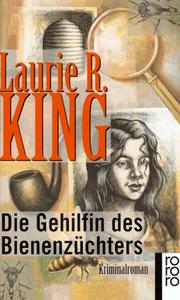
Start with The Beekeeper's Apprentice. It is the first Mary Russell novel and the only sensible door into the series, because it does the one job none of the later books repeat: it establishes how a fifteen-year-old American girl comes to be apprenticed to a retired Sherlock Holmes on the Sussex Downs in 1915, and it takes its time about it.
That premise is genuinely divisive, and it is worth knowing before you buy. Russell is not a Watson substitute — she is Holmes's intellectual equal by the end of the first book, and in the second she marries him, in her early twenties, to his fifties. Some readers regard these as the best Holmes continuation anyone has written; others regard the marriage as incompatible with the character Conan Doyle wrote, and no amount of craft reconciles them to it. Readers who give up on the series almost always give up there rather than on the prose.
The first four
The Beekeeper's Apprentice, then A Monstrous Regiment of Women, then A Letter of Mary, then The Moor.
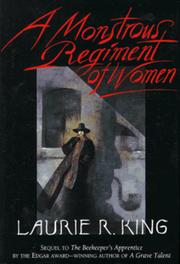
One honest warning about the opener: its first third is episodic — a sequence of lessons and small cases rather than a plot — and the actual case arrives late. A Monstrous Regiment of Women takes its title from John Knox's 1558 tract and drops Russell into a women's religious movement in 1921 London; it is where the relationship changes and it is the tighter novel. A Letter of Mary turns on a first-century papyrus that may have been written by Mary Magdalene. The Moor sends them to Dartmoor in the explicit shadow of The Hound of the Baskervilles, with the real Sabine Baring-Gould as a character; most readers find it the slowest of the early books.
O Jerusalem and Justice Hall belong together
O Jerusalem was published fifth but is set inside a gap in the first novel — three months in British Mandate Palestine in the winter of 1918. You can read it in publication position or immediately after The Beekeeper's Apprentice; both work. What you cannot do is read Justice Hall first, because Justice Hall is a direct sequel that brings two characters from O Jerusalem into an English country house, and its central reveal is flat without them.
The middle, and the two-parter you must not split
The Game goes to India and borrows Kipling's Kim as an adult. Locked rooms goes to San Francisco and to Russell's own suppressed history; it is the most personal book in the sequence.
Then The Language of Bees and The God of the Hive. These are one story in two volumes, and the first stops mid-crisis rather than ending. Do not begin The Language of Bees without the second book to hand. Pirate King — a silent film company shooting The Pirates of Penzance in Portugal and Morocco — was published after both, despite where it sits on our list, so read it third of the three. It is the lightest thing King has written and the easiest to skip if you are impatient.
Where to stop, and what is missing
The Murder of Mary Russell turns aside to Mrs Hudson's past. It is a strong late entry and a terrible entry point — the title is a trap and the book spoils a good deal of what precedes it. Read it in place.
Six novels are absent from our catalogue: Garment of Shadows, Dreaming Spies, Island of the Mad, Riviera Gold, Castle Shade and The Lantern's Dance. The first of those matters, because Garment of Shadows picks up directly from the end of Pirate King.
Her other work is separate. The Kate Martinelli books (A Grave Talent onward) are contemporary San Francisco police procedurals — one of them, The Art of Detection, crosses the two series. Touchstone and The Bones of Paris are a third, darker sequence. Folly and Califia's Daughters stand alone. None of them need the Russell books, and none of them read like them. The Laurie R. King hub collects what else on the site sits nearby.
Follow the full ordered path here: Mary Russell books in order: where to start with Laurie R. King.
Ready to learn something deeply?
Build a reading path — free