Keigo Higashino Reading Order: Where to Start with Japan's Best-Selling Crime Writer
Higashino has written more than ninety novels and the English translations arrived out of order, across two unconnected detective series, with a standalone in the middle. Reading them by publication date in English is close to random. This path starts with the book that made his name in English, keeps each series together, and puts the enormous standalone last.
Start here: the Detective Galileo case that works as a first book
BeginnerMeet the inverted-mystery structure Higashino is best at — you know who did it, and the pleasure is watching the proof assemble.
▸ Study plan for this stage
Pace: Four or five days, 298 pages. The Devotion of Suspect X is the fastest read on this path — short chapters, plain translation, and a structure that pulls. Two or three sittings is normal. Read the last forty pages in one go.
- The inverted mystery: you watch the killing in the first chapter, so the question is never who but how the alibi was built
- Ishigami, a mathematics teacher of frustrated brilliance, and Yasuko, the neighbour he covers for
- Manabu Yukawa, the physicist nicknamed Detective Galileo, and Kusanagi, the police contact who brings him problems
- Ishigami and Yukawa as university contemporaries — the case is a contest between two kinds of mind that already know each other
- The mathematical analogy that gives the book its solution: the difference between an unsolvable problem and a problem misstated
- Higashino's plainness — the prose is functional and the architecture carries everything, which is also true of the Japanese
- The Naoki Prize and the fact that this is the book that made him translatable, whatever the internal series order says
- You see the crime happen. Where does the novel first make you doubt that you saw what you saw?
- What is Ishigami's actual insight, and can you state it without describing the plot?
- Yukawa solves this by knowing a person rather than by knowing physics. Does that make him a weaker detective or a different kind?
- The novel asks you to feel for a man who has done something monstrous. Does it earn that, and by what means?
- This is the third Galileo book in Japanese but the first in English. Does anything in it depend on the earlier ones?
- Write down, at the halfway point, exactly what you think the alibi trick is. Higashino plays fair and this is the single best exercise the book supports.
- After the reveal, go back to the opening chapter and reread it line by line. Every sentence in it is doing two jobs and it only shows on the second pass.
- Note every time Ishigami's mathematics is mentioned and mark which mentions are characterisation and which are clue. The proportion is deliberate.
- Read the last exchange between Ishigami and Yukawa twice, once for information and once for what neither of them says.
Next up: You now know the Galileo formula — a physical impossibility, a personal motive, and a detective who is a friend of the police rather than a member of them — which is exactly what the next two books vary.
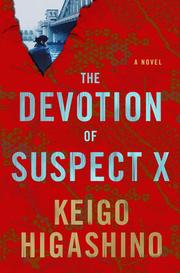
The novel that broke him in English, and the right entry point regardless of series order. A mathematician helps his neighbour cover up a killing, and the puzzle is not who but how.
The rest of Detective Galileo
BeginnerContinue the Yukawa books in their English sequence.
▸ Study plan for this stage
Pace: Two to three weeks. Salvation of a Saint is 377 pages and A Midsummer's Equation 358, both easy reading at forty or fifty pages a sitting. Read them in this order — Salvation of a Saint is the second Galileo novel in English and A Midsummer's Equation the third, and the second introduces the detecti
- Salvation of a Saint's impossible poisoning: the prime suspect was hundreds of miles away and the method is the entire book
- Utsumi Kaoru, the young detective who brings Yukawa in, and the friction between her instinct and Kusanagi's procedure
- The solution's famous implausibility — readers divide sharply on whether the method is ingenious or absurd, and it is worth forming a view
- A Midsummer's Equation's shift of setting: Hari Cove, a declining seaside resort, and an undersea mining dispute
- Yukawa's relationship with a child in the third book, which is the warmest writing Higashino does and the reason it is many readers' favourite
- Environment and community decline as social material — Higashino is a social novelist as much as a puzzle-maker, which is easy to miss under the plainness
- How the formula bends across the three: the impossibility gets softer and the human material gets heavier
- Is Salvation of a Saint's method physically plausible? Decide, and note that your answer determines whether you think the book works.
- Utsumi and Kusanagi read the same evidence differently. What is Higashino claiming about intuition and procedure?
- A Midsummer's Equation has the weakest impossibility of the three. Does the book suffer, or has Higashino traded up?
- How does Yukawa change across the three novels — and does he change, or does the framing around him change?
- Both books hinge on a long-past crime resurfacing. Is that a habit, or the same idea explored twice?
- For Salvation of a Saint, write down the method as you understand it after the reveal, then decide whether you could have deduced it. Compare that verdict with the one you reached for Suspect X.
- Track Utsumi's contributions in both books and mark which of her conclusions turn out to be right. The tally is Higashino's argument about her.
- In A Midsummer's Equation, list every scene between Yukawa and the boy. Read them consecutively and they form a short story of their own.
- Note the social problem at the centre of each of the three Galileo books — domestic isolation, marriage and childlessness, environmental decline. Higashino attaches one to each puzzle and the pattern is the series' actual subject.
Next up: With one detective's method fully learned, switching to Kaga shows how differently Higashino can build a case when his investigator works by patience rather than by physics.

An impossible poisoning, and the second Galileo novel in English.

Yukawa at a seaside resort, and the warmest book in the series.
The Kaga series
IntermediateSwitch detectives — Kaga works by patience and social observation where Yukawa works by physics.
▸ Study plan for this stage
Pace: Two to three weeks. Malice is 288 pages and reads very fast — its structure of alternating documents keeps pulling — so two or three sittings. Newcomer is 336 pages in nine near-standalone episodes; read one or two episodes a sitting over a week and resist the urge to hunt for the through-line early
- Kaga Kyoichiro, who solves by patience, social observation and re-interviewing, where Yukawa solves by physics
- Malice's construction from documents — the suspect's notebook and the detective's notes, alternating — so the reader is reading two accounts of the same events
- The whydunit: the killer is identified early and the entire second half is about motive, which is where the book's reputation comes from
- Unreliable narration as the mechanism rather than as an atmosphere; the record itself is the murder weapon
- Newcomer's episodic shape: nine small mysteries in a Nihonbashi neighbourhood, each apparently trivial, all belonging to one case
- Kaga as a figure who repairs the neighbourhood while investigating it, which is unlike anything else on this path
- Translation note: Newcomer is Giles Murray's, most of the others Alexander O. Smith's, and the voices differ audibly
- In Malice, when do you first distrust the notebook, and what specifically triggers it?
- The motive, when it arrives, is disproportionate to the act. Is that a flaw or the point?
- Kaga and Yukawa are given the same kind of case in different books. What can Kaga do that Yukawa cannot?
- Newcomer's episodes each resolve a small domestic mystery. What does the structure gain by making the murder secondary?
- Is Newcomer a crime novel or a neighbourhood portrait wearing one? Argue from the structure.
- Read Malice's first notebook section, then stop and write down everything you believe. Keep the note; the second half exists to falsify it.
- In Newcomer, list the nine episodes and what small mystery each resolves. Then mark which of the nine contributes evidence to the murder. The proportion is the book's argument.
- Compare Kaga's first interview technique with Yukawa's first appearance in Suspect X. Two detectives, one author, and the difference is entirely in what each thinks a question is for.
- Note where Malice's documents disagree with each other and mark the pages. The disagreements are the clue trail and they are easy to read past.
Next up: Both series are now familiar, which is exactly what the standalone needs — it has no detective to hold on to, and it assumes a reader who no longer requires one.
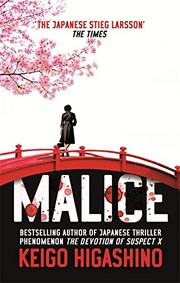
A writer is murdered and the case turns on why rather than how. The best-constructed of his novels and the one crime readers argue for hardest.

Kaga in a Tokyo neighbourhood, solving small domestic mysteries that turn out to be one large one. Structurally unlike anything else on this path.
The standalone
IntermediateFinish with the long one, which needs the others behind it.
▸ Study plan for this stage
Pace: Four to five weeks. Journey Under the Midnight Sun is by far the longest thing on this path — nineteen years, dozens of viewpoint characters, and thirteen chapters that each jump forward in time. Read one chapter at a sitting and do not read it in fragments on a commute; the connections between chap
- A pawnbroker's murder in 1973, unsolved, and nineteen years of consequences told through people who are mostly not detectives
- Ryoji and Yukiho, the two figures at the centre, who almost never appear together and are almost never given an interior
- The withheld point of view as the central technique: the two protagonists are seen only from outside, for six hundred pages
- The chapter-jump structure — each chapter is set years later, with a new cast, and the connection to the previous one has to be inferred
- The Japanese title, Byakuyakō, meaning a white-night road, and the image of a life lived in a light that is not daylight
- Social change across two decades — the bubble economy, early computing, the shifting position of women — carried by the intervals between chapters
- Why it goes last: it is his most ambitious novel and the worst possible introduction, since it withholds everything the other five books supply
- The absence of a detective at the centre, and what replaces the pleasure of watching one work
- Higashino never enters Ryoji's or Yukiho's head. What does that refusal buy, and what does it cost?
- Each chapter jumps years forward. How do you work out what has happened in the gaps, and does the novel ever tell you outright?
- Is this a crime novel, a social novel, or a tragedy? Defend the label with the structure rather than the plot.
- Compare the withheld interiority here with Malice's over-supplied one. Both are ways of hiding a motive; which is more effective?
- Having read all six, which is the best book and which is the best introduction — and are they the same?
- This path deliberately ignores English publication dates. Having followed it, would you reorder it?
- Keep a running chart as you read: chapter number, year, viewpoint character, and one line on how they connect to anyone previous. At this length the chart is not optional.
- After chapter three, write down what you think Ryoji and Yukiho are doing. Then check it at the end. The gap between the two is the novel's whole method working on you.
- Reread the first chapter after finishing. It is a conventional police investigation and it reads as an entirely different book once you know what it was the beginning of.
- Set the ending beside the ending of The Devotion of Suspect X. Both close on an act of self-erasure by someone protecting another person; note which one the novel asks you to forgive.
- Write a one-paragraph reading order for a friend who has read no Higashino, naming which of the six you would cut if they only had time for three. That paragraph is the practical output of the whole path.
Next up: With both series and the major standalone read, the wider translated shelf — the rest of the Galileo books, Under the Midnight Sun's companions, the Naoki-era standalones — opens up with the two detectives' methods already in hand.

Nineteen years, dozens of viewpoints, and no detective at the centre. It is his most ambitious book and the least like an introduction, which is why it goes last.
Discussion
Keep reading
Paths that share books, cover the same subject, or open a related topic.