Karen Blixen in Order: Where to Start with the Author Who Wrote as Isak Dinesen
Blixen published her fiction as Isak Dinesen and her memoirs under her own name, so her tales and her Africa books sit under two different names in most catalogues and readers routinely meet only one half. Our catalogue files nearly all of it under Dinesen. This path reads both halves as one body of work.
Start here: Africa
IntermediateBegin with the memoir, and read it knowing what it leaves out.
▸ Study plan for this stage
Pace: Three weeks. Out of Africa is 389 pages and is not a narrative — it is five loosely-joined books of sketches, and it collapses if you read it looking for a plot. Twenty pages a sitting over a fortnight is right. Shadows on the Grass is 149 pages and can be read in two sittings; save it for the end o
- The coffee farm in the Ngong Hills outside Nairobi, and the sixteen years Blixen spent failing to make it pay
- The book's structure: five parts of episodes, portraits and reflections rather than a chronological memoir
- The prose, which is the reason for the book's reputation among writers — formal, cadenced, closer to saga than to modern autobiography
- It is also a colonist's account of colonised people, affectionate and proprietary at once. Reading with that in view, rather than around it, is the only honest way to take it
- The silences: the marriage, the syphilis, the finances and Denys Finch Hatton's place in her life are all largely absent
- Shadows on the Grass as the late, shorter return — four essays written near the end of her life, revisiting the same servants and the same farm
- The pen-name problem: our catalogue files both books under Isak Dinesen, though the memoirs appeared under Blixen in Danish
- Ngũgĩ wa Thiong'o and other Kenyan writers have argued against the book directly, and knowing that argument exists changes how you read the portraits
- What does Out of Africa omit, and how much of the book's serenity depends on those omissions?
- How does Blixen describe Kamante, Farah and the other people on the farm — as individuals, as types, or as both at different moments?
- The prose is deliberately archaic in places. What is that formality doing, and who is it for?
- Where does the book acknowledge that the land was not hers to lose?
- Shadows on the Grass revisits the same people thirty years on. What has changed in the telling — the facts, the tone, or only the distance?
- Read the opening paragraph aloud. Its rhythm is the whole case for Blixen as a prose writer and it is settled in four sentences.
- Keep a list of every named African character and note what the book tells you about each one's inner life. The list is short and the result is the honest measure of the book's limits.
- Read Shadows on the Grass immediately after Out of Africa and mark every episode that appears in both. The variations between the two tellings are the most interesting thing about the later book.
- Read a short piece of Kenyan criticism of Out of Africa — Ngũgĩ's objections are the best known — then reread one portrait chapter. Do this after you have formed your own view, not before.
Next up: The memoirs are the half of Blixen most readers know; the tales are the half that writers care about, and they were written first.
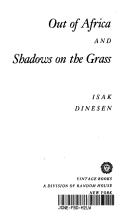
Her coffee farm in the Ngong Hills. The prose is extraordinary and the book is also a colonist's account of colonised people, affectionate and proprietary at once — worth reading with that in view rather than around it. Filed under Isak Dinesen.

The much later, shorter return to the same material, written near the end of her life.
The tales
IntermediateMove to the fiction, which is where her reputation among writers rests.
▸ Study plan for this stage
Pace: Five to six weeks. Seven Gothic Tales is 420 pages of seven long stories, several of which contain stories inside them — read one tale a week and do not attempt two in a sitting; the nesting is disorienting when rushed. Winter's Tales is 313 pages and eleven much shorter stories, so two or three a s
- Seven Gothic Tales as the book that made her, published in the United States in 1934 under the name Isak Dinesen with her identity concealed
- Deliberate anachronism: the tales are set in the early nineteenth century and written as if by someone of that period, in 1934
- Nested narration — a character begins a story, a character in that story begins another, and the frame is the form rather than a device
- Aristocratic, theatrical, fatalistic material at a moment when literary fashion was social realism
- Winter's Tales, written under German occupation and smuggled out of Denmark to reach English-language publishers
- The change in register: Winter's Tales is plainer, shorter and more Danish, and many readers prefer it outright
- Blixen writing in English first and translating herself into Danish, which is unusual and audible in the sentences
- Her own account of storytelling as an art older than the novel, which the nesting is designed to demonstrate
- In 'The Deluge at Norderney', who is telling the story at any given point, and does Blixen intend you to be able to answer?
- Why write in 1934 as if it were 1834? What does the anachronism protect the tales from?
- Which of the seven Gothic tales is the most conventional, and does it suffer for it?
- Winter's Tales is plainer. Is that a wartime pressure, a maturing, or a deliberate change of audience?
- 'Sorrow-Acre' is the most anthologised thing Blixen wrote. What is its argument about the old order, and does the story endorse it?
- Take one tale and one chapter of Out of Africa. Are they written by the same hand, or has she two styles?
- For 'The Deluge at Norderney', draw the nesting as a diagram — who tells what, inside whose telling. It takes ten minutes and it makes the rest of Seven Gothic Tales readable.
- Read 'Sorrow-Acre' twice: once for the story, once tracking every reference to the old lord's authority. The story is an argument and the second reading is where it shows.
- Read one Gothic tale and one Winter's tale on the same evening. The contrast between 1934 and 1942 is much clearer in a direct comparison than across weeks.
- Note every story that ends with a reversal or a revealed identity. Blixen returns to the device constantly and the tally is the beginning of understanding why.
- Look up when and how Winter's Tales reached its English publishers during the occupation. The circumstances are part of the book's meaning and they are rarely printed with it.
Next up: You now read Blixen's tales fluently, which is what the most famous of them needs — it is a very simple story doing something the earlier collections were rehearsing.

The book that made her — nested, artificial, deliberately old-fashioned stories that no one else was writing in 1934.

Written under German occupation and smuggled out. Plainer than the Gothic tales and, for many readers, better.
The famous story
BeginnerThe one most people have met, in the collection that carries it.
▸ Study plan for this stage
Pace: One week. Our record is Babette's Feast and Other Anecdotes of Destiny, 244 pages, which is the collection the story lives in — 'Babette's Feast' itself is around forty pages and can be read in an evening. Read it first, then take the other anecdotes at one a sitting across the rest of the week; the
- A French refugee cooks one meal for an austere Norwegian sect that has decided not to enjoy it
- Babette's past as a Communard and a great Paris chef, disclosed late, and what the disclosure does to the meal
- Art and grace as the story's twinned subject: the meal is presented as both an artist's only possible act and an unearned gift
- The precise menu, which is real and researched, and functions as the story's argument in courses
- The other anecdotes in the collection — 'The Immortal Story', 'The Ring', 'Tempests', 'The Diver' — which share a preoccupation with people who insist that a story come true
- Gabriel Axel's 1987 film, which won the foreign-language Oscar and is unusually faithful, and how a story this reticent survives being filmed
- Reading it after Winter's Tales rather than cold, so that the plainness registers as achievement rather than as simplicity
- What exactly does Babette spend her money on, and why does she not tell the sisters in advance?
- The sect resolves not to comment on the food. Is that resolution defeated, honoured, or transcended?
- Is this a religious story? Point to the sentence that decides it for you.
- 'The Immortal Story' is about forcing a story to happen in reality. How does that sit next to 'Babette's Feast', where a story is offered rather than imposed?
- The story is often called simple. Having read Seven Gothic Tales, is it?
- Write out Babette's menu course by course from the text. Then read the meal scene again with the menu beside you; the structure of the story is the structure of the dinner.
- Read 'Babette's Feast' and then 'The Immortal Story' back to back. They are the collection's two poles on the same question and the pairing is deliberate.
- Watch the 1987 film after reading, and note the one thing the film must externalise that the story keeps internal.
- Compare Babette's silence about her past with the withholdings in Out of Africa. Blixen's characters and Blixen herself use the same technique, and noticing it joins the two halves of the shelf.
Next up: One collection remains, and it is the one Blixen thought her most serious — the place to stop, and the hardest reading here.

A French refugee cooks one meal for an austere Norwegian sect. Our record is the collection Anecdotes of Destiny, which is where the story lives.
The late tales
IntermediateFinish with the final collection.
▸ Study plan for this stage
Pace: Four to five weeks, 341 pages. Last Tales is the least accessible book on this path: several pieces are fragments of an abandoned novel, Albondocani, and they do not resolve. One tale a sitting with days between, and accept that some will not close.
- The three groupings: the Albondocani chapters, the 'New Gothic Tales' and the 'New Winter's Tales' — Blixen consciously returning to both earlier modes
- Albondocani as an unfinished novel-in-tales, so several pieces here are chapters of a book that does not exist
- 'The Cardinal's First Tale' and its statement about the difference between the story and the novel, which is as close to a manifesto as she wrote
- 'Echoes' as a late return to Pellegrina Leoni from Seven Gothic Tales, twenty-three years on
- Density and allusion at their thickest: the late tales assume the earlier ones
- Blixen's declining health and the persona she had by then constructed publicly, and the difficulty of separating the two
- Why this is the place to stop rather than the place to be dazzled
- What does the Cardinal say a story is, and does Last Tales practise it?
- 'Echoes' revisits a character from Seven Gothic Tales. What has changed — the character, the author, or the method?
- Some pieces here are chapters of an unwritten novel. Does knowing that improve or excuse them?
- Having read the whole shelf, is the division between Blixen the memoirist and Dinesen the teller a real one or a marketing accident?
- Which of these six books would you hand to someone who has read none of her, and has that answer changed since stage one?
- The path claims the tales and the Africa books are one body of work. On the evidence, is that true?
- Read 'The Cardinal's First Tale' first rather than in sequence, and treat its statement about story versus novel as a key to the rest of the collection.
- Reread 'The Dreamers' in Seven Gothic Tales immediately before 'Echoes'. The two are separated by twenty-three years and the same character walks between them.
- Mark every tale in Last Tales that ends without resolution and check which of those belongs to the Albondocani group. The correlation explains most of the collection's reputation for difficulty.
- Write a one-page reading order of your own for these six books, arguing against this path wherever you now disagree — in particular, whether Out of Africa or Seven Gothic Tales is the better opening.
- Search for further Blixen under both names. Nearly everything here is catalogued as Isak Dinesen, and a bookshop or library will split her shelf between the two.
Next up: With both halves of the work behind you, the remaining Blixen — Ehrengard, Carnival, the letters from Africa — reads as extension rather than as a separate writer.
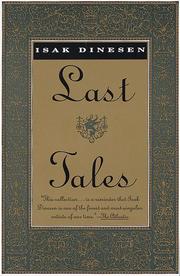
The most elaborate and least accessible of the story collections, and the place to stop.