Kamila Shamsie Reading Order: Where to Start with Her Novels
Shamsie's early Karachi novels and her later international ones read almost like two different writers, which makes strict publication order a poor introduction. This path starts with the most acclaimed book, works back to the Karachi novels once you trust her, and ends with the recent work.
Start here
BeginnerRead the novel that won the Women's Prize and is her most controlled.
▸ Study plan for this stage
Pace: One week, 288 pages. Home Fire is divided into five sections, each belonging to one character, and the natural reading unit is a section a night. Do not read the last section in pieces — it runs to the end without a break and the pace is the point.
- Antigone relocated to a British Muslim family: Isma, Aneeka, Parvaiz, and a Home Secretary's son
- The five-part rotating structure, in which each section belongs to a different character and none of them corrects the others
- Sophocles mapped precisely — the unburied brother, the sister who defies the state, the ruler destroyed by his own edict — and Shamsie's decision to keep the shape rather than gesture at it
- Karamat Lone as Creon: a British Pakistani Home Secretary who has built a career on distancing himself from his own community
- Citizenship-stripping and the deprivation powers that make the plot legally plausible rather than symbolic
- Parvaiz's radicalisation written as a grooming rather than as a conversion, and the sound-recording detail that carries it
- The Women's Prize for Fiction in 2018, and the wave of readers who came to Shamsie through this book
- Which of the five narrators is Shamsie least sympathetic to, and how can you tell when none of them is authorially corrected?
- Antigone's argument is about burial. What does Home Fire make burial mean in a British counter-terror context?
- Parvaiz's section is the one most readers find hardest to accept. What does Shamsie do to make the recruitment plausible, and does it work?
- Karamat Lone is not a caricature. Where is he strongest, and does the novel ever let him win an argument?
- The last twenty pages depart sharply in register. Is the ending operatic, and does the Greek source earn it?
- Read a plot summary of Sophocles' Antigone before you start — half an hour — then mark each character's Greek counterpart as they appear. The correspondence is exact and knowing it changes what you watch for.
- After each of the five sections, write one sentence stating what that narrator believes the central conflict is. The five sentences do not agree, which is the novel's design.
- Track the sound and listening motif through Parvaiz's section — headphones, recordings, his father's absence. It is the most sustained image in the book.
- Read the final chapter twice, once for plot and once for sentence rhythm, then decide whether you would have chosen that ending.
Next up: Home Fire is Shamsie at her most controlled and most compressed; the international novels show the same historical instincts working at four times the span.

Antigone relocated to a British Muslim family and a Home Secretary's son. The reworking is exact and the last twenty pages are the best thing she has written.
The international novels
BeginnerContinue with the two large historical books.
▸ Study plan for this stage
Pace: Four to five weeks. Burnt Shadows is 384 pages across four settings and sixty years — two and a half weeks at twenty-five pages a day. A God in Every Stone is 359 pages and moves between two timelines, so allow two weeks and expect to reread the opening once the second strand arrives. Read Burnt Sha
- Burnt Shadows' four movements: Nagasaki in August 1945, Delhi in 1947, Karachi in the early 1980s, New York and Afghanistan after 2001
- Hiroko Tanaka as the connecting figure, and the burns on her back as an image the novel returns to across all four sections
- The claim the structure makes — that these four catastrophes belong to one chain — and whether the novel proves it or asserts it
- Two families, the Weiss-Burtons and the Ashrafs, whose entanglement carries the historical argument
- A God in Every Stone's double strand: Vivian Rose Spencer, an English archaeologist, and Najeeb, a Pashtun boy, around Peshawar
- The Scylax circlet as the object the archaeological plot turns on, and antiquity as a claim on the present
- The Qissa Khwani Bazaar massacre of 1930, in which British Indian Army troops fired on unarmed Khudai Khidmatgar demonstrators — an episode most readers will not know and which the novel exists partly to record
- The First World War as experienced by Indian troops, which is the other silence the book fills
- Does Burnt Shadows' chain of catastrophes hold as an argument, or does the novel rely on Hiroko's presence to make the links feel inevitable?
- The Nagasaki section is short and everything after refers to it. Why not give it more space?
- In A God in Every Stone, what does the archaeology plot contribute beyond metaphor? Point to a scene where it drives events.
- Shamsie is writing about a massacre most British readers have never heard of. How much does she assume, and how much does she teach?
- Both novels are structured around a coincidence of connection. Is that a weakness of the historical-panorama form, or something Shamsie is doing deliberately with it?
- Draw the family tree for Burnt Shadows as you read, with dates and locations. The novel spans sixty years and two families and the tree makes the last section's ironies visible rather than merely felt.
- Read the Nagasaki opening, then reread it after finishing the novel. It is under fifty pages and it is the key to every later section.
- Look up the Qissa Khwani Bazaar massacre before you finish A God in Every Stone, and note the difference between the historical record and Shamsie's rendering of it. The comparison is the point of a historical novel.
- In A God in Every Stone, list every scene where the two timelines touch. There are fewer than you expect, and the restraint is the craft.
- Compare the ending of Burnt Shadows with the ending of Home Fire. Both close on a single decisive act; note which one the preceding pages had earned better.
Next up: With the large historical books read, the early Karachi novels can be read for what they are — a more intimate and more local writer, not an apprentice version of this one.

Nagasaki to Delhi to Karachi to New York across sixty years. Her most ambitious structure.

Archaeology, the First World War and the 1930 Qissa Khwani massacre in Peshawar — an episode most readers will not know.
Back to Karachi
IntermediateRead the early novels, which are more intimate and more local.
▸ Study plan for this stage
Pace: Five to six weeks. Kartography is 305 pages, Salt and Saffron 252 and Broken Verses 352. These are lighter reading than the historical novels but there are three of them; two weeks each is comfortable. Read Kartography first — it is the strongest — then Salt and Saffron, then Broken Verses, which po
- Kartography's premise: Raheen and Karim, two young people in Karachi, with a swap between their parents in the 1971 war lying underneath the friendship
- The 1971 war and the creation of Bangladesh as the buried event, and the Muhajir-Bengali fault line it opened in Karachi
- Mapping as the novel's controlling metaphor — Karim's obsession with charting a city that resists being charted
- The ethnic violence of 1980s and 1990s Karachi as lived background rather than as explained history
- Salt and Saffron's Dard-e-Dil family and its 'not-quite-twins' legend: a comic novel about how a family narrates itself
- Class and servants in Salt and Saffron, which is sharper than the light tone first suggests
- Broken Verses' Aasmaani, her disappeared activist mother Samina, and the Poet — the coded correspondence that may or may not mean her mother is alive
- Broken Verses as the bridge: Zia-era political repression handled with the historical seriousness of the later books and the intimacy of the earlier ones
- Kartography withholds what happened in 1971 for a long time. What does the delay accomplish that a chronological telling would not?
- Is Karim's mapmaking a genuine plot device or an idea the novel keeps restating? Defend your answer with a scene.
- Salt and Saffron is comic and Broken Verses is not. Is the comedy a lesser mode for Shamsie, or a different set of tools?
- What does Salt and Saffron say about who is permitted to appear in a family's story about itself?
- In Broken Verses, does the question of whether the Poet is alive matter, or is the coded correspondence entirely about Aasmaani?
- These three are set in Karachi and the previous two span continents. Which mode gets more out of Shamsie?
- Read a short account of the 1971 war and the fall of Dhaka before starting Kartography. Shamsie assumes it, and the novel is materially better if you are not reconstructing it as you go.
- In Kartography, mark every point where the narration shifts to the parents' generation. Read those sections consecutively at the end — they are a short second novel and they carry the actual crime.
- Track the food in Salt and Saffron. The title is not decorative, and the meals are where the class material is placed.
- In Broken Verses, keep the coded letters as you meet them and attempt the code yourself before Aasmaani cracks it. Shamsie plays fair with it.
- Compare the mother-daughter relationship in Broken Verses with the sibling bond in Home Fire. Fifteen years apart, and the same interest in loyalty that outruns judgement.
Next up: You now have both halves of the career; the last novel deliberately joins them, running from 1980s Karachi to contemporary London in a single book.

Two young people in Karachi with the 1971 war in their parents' past. The best of the early books.
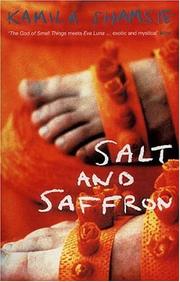
An aristocratic Karachi family and its stories about itself. Light, and sharper than it first appears.
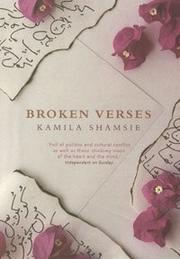
A missing poet, a dead activist mother, and a coded correspondence. The bridge between the two halves of her career.
The latest
IntermediateFinish with the recent novel.
▸ Study plan for this stage
Pace: One week, 288 pages. Best of Friends is split cleanly into two halves — Karachi in 1988 and London decades later — and reading each half in two or three sittings preserves the jolt between them.
- Maryam and Zahra, fourteen in Karachi in 1988, the year of Benazir Bhutto's return and Zia's death
- The structural gamble: a long first half of adolescence, then a jump of thirty years into the two women's public lives in London
- Surveillance technology and civil liberties as the adult conflict, with one friend building the systems and the other opposing them
- Friendship as a political relation — what the novel claims politics finally does to intimacy
- The single night in Karachi that both women carry differently, and the withheld disagreement about what happened
- Slighter than Home Fire by common consent, including in reviews, and the natural stopping point for this path rather than its summit
- Karachi and London as the two poles the whole career has run between, put in one book
- Does the thirty-year jump work, or does the second half read as a different novel bolted to the first?
- The two women disagree about a night neither has forgotten. Whose account does the novel believe, and does it have to choose?
- Shamsie is writing about surveillance and free speech in the present. Does the contemporary material date the book or ground it?
- Compare Maryam and Zahra with Raheen and Karim in Kartography — the same structure of a friendship carrying a political fault line, twenty years apart. What has changed in the handling?
- Having read all seven, which would you hand to a first-time reader, and has that answer changed since stage one?
- Read the Karachi half, then stop and write down what you expect the two women to become. Then read the London half and mark where Shamsie confirmed and where she surprised you.
- Set the closing pages of Best of Friends beside the closing pages of Home Fire. Both end on a rupture between people bound by history; note which ending the book had built for.
- List the seven books in publication order and then in this path's order, and write one line justifying each place where the two lists differ. That justification is the whole argument of a reading-order path.
- Look up the political context of Karachi in 1988 — Zia's death, Benazir's return — and note how much of it Shamsie states outright versus assumes. She assumes more here than in Burnt Shadows, and the difference is worth naming.
Next up: With the full shelf read, Shamsie's essays and her earliest novel In the City by the Sea become readable as origin rather than as background.

A friendship from 1980s Karachi to contemporary London, and what politics does to it. Slighter than Home Fire and the natural stopping point.
Discussion
Keep reading
Paths that share books, cover the same subject, or open a related topic.