John Cheever Reading Order: Stories First, Then the Novels
Cheever's reputation rests almost entirely on the stories, but most readers meet him through a novel, find it uneven, and never go back. The order matters more for him than for almost any American writer of his generation. This path starts with the big red collected stories, moves to the two Wapshot novels as a pair, then to the late novels where the drinking and the double life stopped being hidden, and ends with the journals and a biography that recast everything before them.
Start With the Stories, Not a Novel
BeginnerRead the book Cheever's reputation actually rests on, and learn the move he built a career from: a comic suburban surface that opens, in one sentence, onto something desolate.
▸ Study plan for this stage
Pace: Eight to ten weeks. The collected stories run to roughly 690 pages across sixty-one stories, and the wrong way to read them is in long sittings — two or three stories an evening, three or four evenings a week, keeps each one distinct. Read straight through in the order printed: the arrangement is ch
- The Cheever move, and the reason to read him: a comic, sociable, closely observed suburban surface that opens in a single sentence onto something desolate. The turn is usually one clause long and it is never announced.
- The Swimmer is the extreme case — a man swims home across his neighbours' pools and the seasons, his standing and his marriage all quietly collapse under him while the story's tone stays level. Notice that the story never tells you what has happened.
- The Enormous Radio takes a single fantastic premise into a realist marriage and uses it to expose the wife rather than the neighbours. Cheever's supernatural elements are always diagnostic instruments, not plot devices.
- Goodbye, My Brother establishes the family material — brothers, New England, the sea, an inherited sense of ruin — that the Wapshot novels will later try to sustain at length.
- The Country Husband is the fullest version of the suburban story: an aeroplane crash survived in the first pages, and nobody at home willing to hear about it. Cheever's subject is often the unreportable experience.
- Because the collection is chronological, you can watch the early stories' New York apartments and wartime settings give way to the Westchester commuter world, and watch the prose get stranger and more elevated as it goes.
- The endings are frequently a lift into a heightened register — light, weather, water, an incantatory list. That rhetorical move is the most imitated thing about him and the easiest to do badly.
- This is the only Cheever book that is unarguable. Everything later on this path is judged against it, including by him.
- In The Swimmer, where is the first sentence that cannot be reconciled with a single afternoon? What does Cheever gain by refusing to explain it?
- The Enormous Radio has a fantastic premise; The Country Husband does not. What do the two stories have in common at the level of what is being exposed?
- Reading chronologically, at roughly which point does the prose change? Name two stories that mark the boundary, and say what specifically is different.
- Cheever's endings often rise into a lyrical register. Pick one that earns it and one that does not, and identify what makes the difference.
- Which recurring situation shows up most often across the sixty-one — the party, the commute, the brother, the swimming pool? What is he using it to get at?
- Having read the collection, what would you predict a Cheever novel would be bad at, and what would you expect it to do well?
- Read The Swimmer twice in one evening, and on the second pass mark every detail that indicates elapsed time. Write 200 words on how the passage of time is smuggled in.
- Keep a one-line note on each story as you finish it — situation, and the sentence where it turns. By the end you will have a map of the technique.
- Take the last paragraph of three different stories and copy them out. Compare the sentence rhythms; the family resemblance is the thing to see.
- Pick a story from the first hundred pages and one from the last hundred with a similar situation, and write a page on what changed in between.
- Choose the story you found weakest and write 200 words on why it fails, in Cheever's own terms rather than general ones.
Next up: Knowing exactly what the story method does, you can now watch him try to stretch it across a family saga and see precisely where it holds and where it tears.
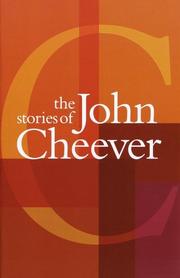
Sixty-one stories including The Swimmer, The Enormous Radio, Goodbye, My Brother and The Country Husband. It won the Pulitzer and it is the only Cheever book that is unarguable. Read it first and in order: the collection is arranged chronologically, so you watch the style acquire its strangeness in real time.
The Wapshots, as a Pair
IntermediateRead the two Wapshot novels together and see what happens when Cheever tries to sustain a story writer's method across a family saga — the seams show, and they are interesting.
▸ Study plan for this stage
Pace: Four to five weeks for two novels of roughly 305 pages each. Read them back to back with no gap — the second one is a rebuttal of the first and loses most of its force if the first has faded. Two weeks each, at 25 pages a sitting.
- The Wapshot Chronicle is warm, episodic and structurally closer to linked stories than to a novel — St Botolphs, Leander's journals, the two sons sent out into the world. The looseness is Cheever's story instinct operating at length.
- Leander Wapshot's fragmentary journal entries, written in clipped telegraphic prose, are a different voice from the surrounding narration and are the book's most memorable formal move.
- The Chronicle's affection for its New England town is genuine and also elegiac: the place is already finished when the book opens, and the plot is about what happens to people who leave it.
- The Wapshot Scandal takes the same family into supermarkets, suburbs, air travel and a missile installation, and the affection curdles almost immediately. Read as a pair, the two books are a before and after of postwar American life.
- The Scandal is technically stranger — more fragmented, more willing to break tone — and is the point where Cheever's despair stops being a shadow inside a comic novel and becomes the novel's subject.
- The seams are visible in both: chapters that work as self-contained stories, subplots that do not connect, a narrator who steps forward and disappears. That is the interesting problem of Cheever's long fiction, not a defect to read past.
- What holds the books together is not plot but a recurring cadence and a set of images — water, light, ceremony, decay. Recognising that the unity is tonal rather than structural changes how frustrating they are.
- Reading them consecutively also shows you how fast his sense of America changed between them, which is the biographical fact underneath the tonal shift.
- Where in the Chronicle does a chapter work as a standalone story? List them, and ask whether the novel would survive their removal.
- What does Leander's journal voice do that the main narration cannot? Why does Cheever need two registers?
- The Scandal is darker within a few pages. What specific choices — setting, incident, tone — produce that shift so fast?
- Is the Wapshot pair a novel and a sequel, or one long book split in two? Argue it from structure rather than publication.
- Which parts of the story method survive the move to novel length, and which do not? Be specific about at least two of each.
- St Botolphs is treated as already lost. What is Cheever nostalgic for, exactly, and does the second book let him keep it?
- Read the two novels with no gap between them, and write 300 words immediately after finishing the Scandal on how it retroactively changes the Chronicle.
- Extract Leander's journal entries and read them consecutively. Write a paragraph on what kind of book they would make on their own.
- Identify three chapters in the Chronicle that could stand as stories and compare each to a comparable story in the collected volume. Note what novel context adds or removes.
- List every image that recurs across both novels — water, light, ceremony — and mark where each one changes meaning between the two books.
- Write 200 words arguing that the Wapshot books are a failed novel and 200 arguing they are a successful non-novel. Decide which you believe.
Next up: The Scandal is where the comedy stops covering; the next stage follows Cheever past that point into the books his readers still split over.
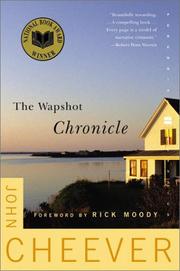
A New England family in decline, warm and episodic and closer to a set of linked stories than a novel. His first novel and his National Book Award winner, and the friendliest way into the long fiction.
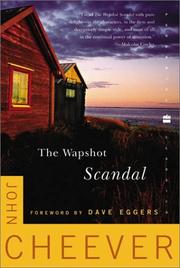
The sequel, and much darker: the same family scattered into suburbs, supermarkets and a missile installation. Read it immediately after the Chronicle, because the whole point is how quickly the affection curdles.
The Late Novels
IntermediateFollow Cheever past the point where the comedy stopped covering for the despair, and judge the two books that split his readers most sharply.
▸ Study plan for this stage
Pace: Four to five weeks for about 555 pages, and the shortness is deceptive — Bullet Park at around 245 pages and Falconer at around 210 are both far denser than the Wapshots. Two weeks for Bullet Park, one to two for Falconer, and read Oh What a Paradise It Seems, under 100 pages, in a single sitting at
- Bullet Park sets two suburban neighbours against each other — Hammer and Nailles, a joke Cheever makes and then takes entirely seriously — and builds to one deciding to murder the other's son on a church altar.
- The book's structure is its most contested feature: a long first section from one man's point of view, an abrupt switch, then a compressed ending that many first readers find perfunctory. It was savaged on publication and has been steadily reappraised since.
- Bullet Park is the clearest demonstration of Cheever weaponising a pleasant surface: the prose stays courteous and observant while the plot moves toward an atrocity, and the mismatch is deliberate.
- Falconer puts a professor in prison for killing his brother, kicking heroin, and falling in love with another inmate. Written after Cheever's own detox, it is the best of the novels and the one that put in public what the journals had been recording privately for decades.
- Falconer's prison is a real and specific place, not a metaphor, and the book's plainness about addiction, sex and the body is a break from everything preceding it on this path.
- The brother-killing in Falconer connects directly back to Goodbye, My Brother in the collected stories. Thirty years of fratricidal material finally arrives at the literal act.
- Oh What a Paradise It Seems is a hundred-page novella about an old man, a polluted pond and a late love affair, published shortly before his death. Slight taken alone; read after Falconer it functions as a coda, and its ecological concern is genuinely new.
- The three books together show a writer who has stopped protecting himself, and it is worth asking whether the late candour improved the prose or only changed the subject.
- Is Bullet Park's ending a failure of construction or a deliberate refusal? Argue it from the text rather than from the reviews.
- Cheever names his antagonists Hammer and Nailles. Is the joke a weakness, a signal, or a dare?
- Falconer is widely called his best novel. What can it do that the Wapshot books cannot, and does that come from technique or from candour?
- Trace the brother material from Goodbye, My Brother through the Wapshots to Falconer. What changes each time it recurs?
- Oh What a Paradise It Seems is slight. Does it earn its place as a coda, and what would be missing if the path ended at Falconer?
- Cheever's late fiction is much franker about sexuality and addiction. Does the frankness sharpen the prose or replace something the earlier work had?
- Diagram Bullet Park's structure by section and point of view, marking the switch. Write 300 words on what the switch costs and what it buys.
- Read the final twenty pages of Bullet Park twice, then write the strongest defence of the ending you can manage in one page.
- Take one page of Falconer describing prison routine and one page of a Westchester party from the collected stories. Compare the sentences — what is identical, and what has been stripped out?
- Read Oh What a Paradise It Seems in one sitting immediately after Falconer, and write 200 words on whether it reads as a summing-up or as a fragment.
- List the specific things Falconer says out loud that earlier Cheever only implied, and find the earlier story or novel where each was implied.
Next up: You have now read all the fiction; the last stage brings in the suppressed early work, the private record and a biography, and asks how much any of it should be allowed to change what you have read.
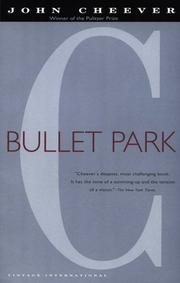
Two suburban neighbours, one of whom decides to murder the other's son on an altar. It was savaged on publication and has been steadily reappraised since; read it third because you now know how deliberately Cheever weaponises the pleasant surface.
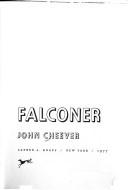
A professor imprisoned for killing his brother, kicking heroin and falling in love with another inmate. Written after his own detox, it is the best of the novels and the one that finally admitted in public what the journals had been recording for decades.

A hundred-page novella about an old man, a polluted pond and a late love affair, published months before his death. Slight on its own; read last among the fiction, it works as a coda.
The Completist Tail
IntermediateRead the early collections, the journals and a biography, and decide for yourself how much the private life should be allowed to change the stories.
▸ Study plan for this stage
Pace: Ten to twelve weeks for roughly 1,680 pages, and the order inside the stage matters. The two early collections run to about 250 and 235 pages and go quickly; the journals are around 400 pages and should be rationed — thirty or forty pages a sitting, not more, because they are relentless. The biograp
- The Way Some People Live is Cheever's first collection, which he later disowned and deliberately kept out of the big volume. Reading it is an exercise in seeing what a writer chooses to suppress, and why — the stories are competent and generic, and the strangeness has not arrived.
- The Enormous Radio and Other Stories is the collection that established him, and nearly all of it is reprinted in the collected volume. Treat it as a period artefact — the shape of a working writer's mid-career book — rather than as new reading, and skip it if you object to buying the same stories t
- The journals cover thirty-five years of alcoholism, bisexuality, self-loathing and, throughout, prose as good as anything he published. They were published after his death by his son.
- The journals are the most powerful book with his name on it and the most damaging to read early. They will retrospectively colonise every story if you meet them first, which is exactly why they sit here.
- The central interpretive question this stage poses: how much should a private record be allowed to change a public work? The Swimmer does not become a different story because you know what the diaries say, but it becomes very hard to read as though you do not.
- Blake Bailey's biography — catalogued here under the bare surname, usually listed as Cheever: A Life — is the definitive account and the sane framework for what the journals deliver unsorted and undated.
- A biography built on a subject's own journals inherits their emphases. Notice where Bailey is corroborating from other sources and where he is essentially paraphrasing the diaries.
- Reading the suppressed first collection and the journals together makes one point unusually clear: Cheever's public and private writing were separated by an act of will that lasted his whole career.
- What is missing from The Way Some People Live that the mature stories have? Name it technically, not just as a matter of quality.
- Cheever excluded that collection from the big volume. Was the judgement right, on the evidence?
- Having read the journals, which stories do you now read differently — and is the difference an insight or an intrusion?
- The journals are extraordinary prose. Does that make them literature, a source, or both, and does it matter that he did not publish them?
- Where does Bailey rely on the journals for a scene and where does he corroborate independently? Find one instance of each.
- Final question of the path: is Cheever a great story writer who wrote uneven novels, or a novelist whose best work happens to be short? Cite specific books.
- Read The Way Some People Live first and write 200 words on what he was right to suppress and anything he was wrong to.
- Ration the journals to thirty or forty pages a sitting and keep a note of every entry that is recognisably the raw material of a published story.
- After the journals, reread The Swimmer and Goodbye, My Brother and write 300 words on what changed and whether the change is an improvement in understanding.
- Working through Bailey, build a timeline that marks each book against what was happening when it was written. Then check it against your reading notes from stage one.
- Take three claims Bailey makes about a specific work and find the journal entries behind them. Judge whether the interpretation follows.
- Write a final one-page verdict on how much of the private life you think belongs in a reading of the fiction, and be specific about which stories you would apply it to.
Next up: This closes the path: you have read the stories, the novels, the suppressed beginning and the private record, and can decide for yourself which Cheever the reputation should rest on.
His first collection, from 1943, which he later disowned and kept out of the big volume. Worth reading only here, for the evidence of what he chose to suppress.
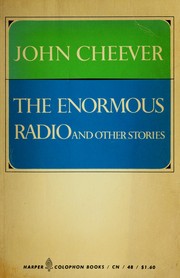
The 1953 collection that established him. Nearly everything in it is reprinted in The Stories of John Cheever, so treat it as a period artefact rather than new reading, and skip it if you object to buying the same stories twice.
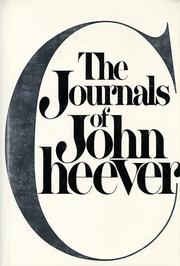
Thirty-five years of alcoholism, bisexuality, self-loathing and staggering prose, published after his death by his son. It is the most powerful book with his name on it and the most damaging to read early, which is exactly why it sits here.

The definitive biography, and the sane framework for everything the journals dump on you unsorted. Catalogued under the bare surname; it is the book usually listed as Cheever: A Life.