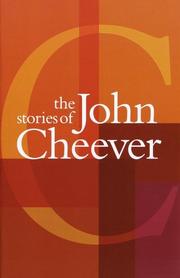
Start with The stories of John Cheever, the big collected volume with the red jacket. Sixty-one stories, arranged roughly chronologically, and it contains the man swimming home across his neighbours' pools, the radio that broadcasts the neighbours' arguments, and the commuter who comes home from a plane crash to find nobody interested. It won the Pulitzer and it is one of the strongest single-author collections in American fiction.
The obvious alternatives are Falconer, his comeback novel, or The Wapshot Chronicle, his first. Both are worth your time and neither is the right door. Cheever was a magazine story writer who wrote novels between assignments, and the novels are structurally loose in a way that puzzles readers who have not yet heard the voice. Twenty pages of the stories and the voice is unmistakable — churchgoing, drinking, suburban, and secretly furious.
The Wapshot books
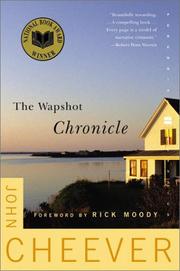
The Wapshot Chronicle is a family novel set in a decaying New England seaport, built out of episodes rather than a plot, and it won the National Book Award. It is warm and eccentric and it wanders.
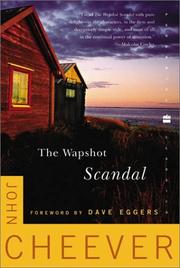
The Wapshot Scandal follows the same family into a much darker place — suburbs, missile bases, a supermarket that stands in for the whole of modern America. Read them as a pair or read only the first; the second does not stand alone well, and readers who found the first meandering will not be won over.
The suburban novels
Bullet Park was mauled on publication by reviewers who thought it a failure and has been substantially reassessed since, with several later critics calling it his best-constructed novel. It is a two-family book about a man who decides, more or less arbitrarily, to murder his neighbour's son. If you like the coldest of the stories, you will like this.
Falconer is the one to end the novels on. A professor imprisoned for killing his brother, addicted to methadone, working out something like grace inside a prison. It was written after Cheever stopped drinking, it is his least suburban book, and it is the one most people who admire him name first. Oh, what a paradise it seems is a late novella, slight, and about a pond being poisoned; read it only if you want everything.
The early collections and the journals
The way some people live was his first collection and he later disowned it, keeping its contents out of the collected volume. It is a curiosity and it is genuinely interesting to see how much of the voice was already there. The enormous radio, and other stories is the earlier gathering of the material that later became famous, so it overlaps heavily with the collected stories — if you own the big red book, skip it.
The journals of John Cheever were published after his death, edited from a much larger manuscript, and they are unsparing: on alcoholism, on his marriage, and on the desire for men that the fiction only ever approaches sideways. They change how the stories read. They are also relentless in a way the fiction is not, and a lot of readers can only take fifty pages at a time.
Cheever, by Blake Bailey, is the biography and is the one book on this list not written by him. It is long and thoroughly documented, and it is where to go if the journals leave you wanting the outside view.
Where to stop
If you read two, read The stories of John Cheever and Falconer. If you read three, add Bullet Park. The Wapshot books are for readers who have decided they want the whole writer, and the journals are for readers who want to know what the stories were built out of. The Cheever hub has the surrounding American-fiction reading.
Follow the full ordered path here: John Cheever Reading Order: Stories First, Then the Novels.