Joe Pickett Reading Order: Where to Start with C.J. Box
C. J. Box's Joe Pickett novels must be read in publication order, and this is one of the series where that advice is not a formality. Joe is a Wyoming game warden with a wife and three daughters, and the family is the actual continuing story: the girls grow up in real time across the run, the marriage is tested repeatedly, and at least three books turn on a death or a departure that a reader arriving out of sequence would meet as a spoiler rather than a shock. Two continuing threads make the order matter even more — Nate Romanowski, the falconer introduced early who becomes the series' second lead and whose own past drives several books, and Dallas Cates, an antagonist who appears mid-run and recurs for years afterward. This path takes the first fifteen or so in order, groups them into the stretches that hang together, and says where the series is safe to dip into rather than read straight through.
The first three
BeginnerMeet Joe, the Saddlestring setting and the Pickett family, and see the series establish that its hero is deliberately not very good at his job.
▸ Study plan for this stage
Pace: Three to four weeks. Open Season (293 pages) and Savage Run (287) are short, fast crime novels and go in a few evenings each; Winterkill (372 pages) is longer and is the one that sets up two decades of series. Read them strictly in order — the family situation at the end of Open Season carries direc
- Joe Pickett as a deliberately unheroic lead: a Wyoming game warden, underpaid, outgunned, frequently wrong, and already known for having had his weapon taken off him
- The game warden's jurisdiction as a plot device — a law officer whose beat is animals, land and licences, which puts him at the edge of every other agency's authority
- Saddlestring and Twelve Sleep County as a fixed setting the series returns to and eventually outgrows
- The Pickett family — Marybeth and the daughters — as the actual continuing story, with the girls ageing in real time across the run
- Wyoming land politics handled with deliberate fairness to both sides, established in Savage Run
- Nate Romanowski introduced in Winterkill: the falconer who becomes the series' second lead and whose past drives several later books
- The foster-daughter custody thread, begun in Winterkill and unresolved for many books afterwards
- What can Joe do in his job that a sheriff or an FBI agent cannot, and where is he powerless?
- Open Season won the Edgar for best first novel. What is it doing that a standard rural procedural is not?
- How does Savage Run treat the environmentalists and the ranchers — does Box take a side, and where can you tell?
- Why can Winterkill not be skipped, and what exactly would a reader who skipped it fail to understand later?
- What kind of man is Nate, and what is he for in a series whose hero is deliberately ineffectual?
- Start a family ledger: after each book, note the daughters' ages, who lives in the house, and where the marriage stands. Keep it for the whole run — it is the series' real plot and no single book states it.
- In Open Season, mark every point where Joe is outmatched, disarmed or wrong. Count them. Then do the same in a later book and see whether Box keeps the promise.
- Track the custody thread from its first mention in Winterkill: note the page each time it resurfaces. You will still be adding to that list in the third stage.
- Write one paragraph on what Nate can do that Joe cannot, and what the series risks by having him available.
Next up: With Joe, the county and Nate all in place, the next stretch is Box working out what the series is for — one Wyoming conflict per book, with the family under continuous strain underneath it.
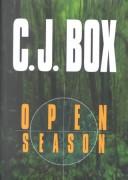
Book one, and the correct start: a poacher dies in Joe's woodpile and an endangered-species case turns into something much larger. It won the Edgar for best first novel, and it establishes the thing that makes Joe unusual in crime fiction — he is underpaid, outgunned, frequently wrong, and has already had his weapon taken off him once. The catalogue record appends the series number to the title.
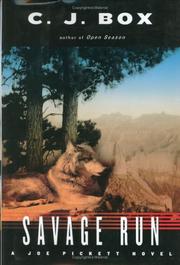
Environmental activists being killed, and a book that goes out of its way to be fair to people on both sides of Wyoming's land politics. Read it directly after the first; the family situation at the end of book one carries straight into it.
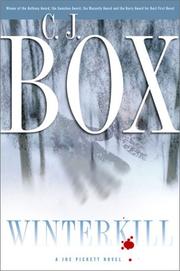
A federal forest supervisor murdered, an armed anti-government camp in the mountains, and the book that introduces Nate Romanowski and the custody thread involving the Picketts' foster daughter. Both of those run for the next twenty years of the series, which is why this book cannot be skipped.
The series settles
BeginnerRead the stretch where Box works out what the series is for — one Wyoming resource conflict per book, with the family under continuous strain underneath.
▸ Study plan for this stage
Pace: Six to eight weeks for four books of similar length — Trophy Hunt (352 pages), Out of Range (314), In Plain Sight (320) and Free Fire (352). Each is a week or two. Read them in order: Joe's professional position becomes progressively more precarious across the four and the later ones depend on it. T
- The series formula settling: one Wyoming resource or land conflict per book — wildlife, water, grazing, federal jurisdiction — with the family plot running underneath
- Joe's employment as an ongoing source of tension, since the man solving the crime can be fired for it at any point
- Out of Range as the early run's hardest test of the marriage, and the reason the book cannot be read as a standalone
- In Plain Sight and the ranching-dynasty antagonists, a family built as an opposing mirror to the Picketts
- Free Fire's premise: the so-called zone of death, a real jurisdictional gap in the Idaho strip of Yellowstone where on one reading of the Constitution a crime could not be tried
- Political patronage entering the series — Joe's relationship with the governor, which changes what he is allowed to do
- Where the books are tight and single-valley, and where they start to reach outward
- What is the actual argument in each of these four books — name the Wyoming conflict at the centre of each in one line?
- Why does Out of Range need to be read in sequence when its case is self-contained?
- What is the zone of death, and is Box's account of the legal gap accurate?
- How does working for the governor change Joe's position, and is it an improvement?
- In Plain Sight builds a whole book from one valley and one family. What does the confinement give Box that a wider canvas does not?
- Keep the family ledger going. After Out of Range in particular, write down what state the marriage is actually in — the book does not summarise it and later books assume you noticed.
- For each of the four, write one sentence naming the resource or land conflict at its centre. Four sentences in a row make the formula visible in a way reading them cannot.
- Look up the Yellowstone jurisdictional argument that Free Fire is built on and compare the legal reality with the novel's version; note what Box simplified.
- Track Joe's job status book by book — employed, suspended, reassigned, patronised — and put it beside the family ledger. The two lines move together.
Next up: The middle run widens the series beyond Twelve Sleep County, and hands the plot to the falconer introduced back in Winterkill.
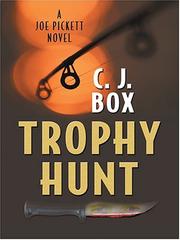
Mutilated livestock and wildlife, and the closest the series comes to horror. Also the book where Joe's professional position starts becoming genuinely precarious, which drives the next several.
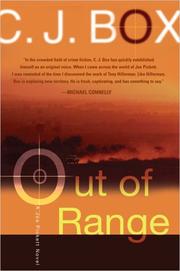
Joe on temporary assignment in Jackson, away from his family, investigating another warden's apparent suicide. The strongest test the marriage gets in the early run, and the reason it belongs in sequence rather than as a standalone.
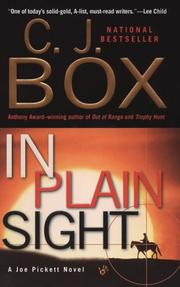
A ranching dynasty feud and one of the best-drawn antagonist families in the series. Tightly plotted and a good demonstration that Box can build a book around a single valley.
Set in the so-called zone of death, a real jurisdictional gap in the Idaho strip of Yellowstone where, on one reading of the Constitution, a crime could not be tried. The most memorable premise in the series and the one that gets Joe back into a governor's good graces.
Nate takes over
IntermediateFollow the middle run, where Romanowski's history becomes the main plot and the series widens beyond Twelve Sleep County.
▸ Study plan for this stage
Pace: Six to eight weeks for Below Zero (342 pages), Nowhere to Run, Cold Wind (388) and Force of Nature (385). Read Cold Wind and Force of Nature back to back with no gap — they are a two-book sequence about Nate's past and the second resolves the first. Below Zero depends entirely on books three through
- Inherited stakes: Below Zero works only because of what earlier books established about the Picketts' foster daughter, which is the clearest demonstration on this path of why order matters
- The survival novel inside the crime series — Nowhere to Run, Joe alone in the Sierra Madre against two brothers living off the land
- Cold Wind collapsing the family plot and the crime plot into a single plot for once, with Joe's mother-in-law accused of murder
- Nate's special-operations past resolving a thread opened in Winterkill nine books earlier
- A second lead who operates outside the law entirely, and what a series gains and loses by having one
- Point of view: Force of Nature largely leaving Joe, and what changes when the series' moral centre is not the narrator
- The series widening geographically and institutionally as the antagonists stop being local
- What does Below Zero assume you know, and from which books?
- In Nowhere to Run, what does Box strip away, and what does the book prove Joe can carry alone?
- What is Nate's history, and why did it take nine books to tell?
- Force of Nature is the most violent book in the run. Does the violence serve the story or the character?
- By the end of Force of Nature, has Nate become a problem for the series — is there a threat Joe can face that Nate could not simply solve?
- Before opening Below Zero, read back through your family ledger from Winterkill onward. The book's whole effect depends on that history being fresh.
- Track every Nate appearance from Winterkill to Force of Nature with page references, then read those notes consecutively. That is the second series running inside this one.
- Read Cold Wind and Force of Nature across a single week as one story, then write down where the first book stops and the second begins in plot terms — the seam is not where the covers are.
- In Nowhere to Run, list what Joe carries and what he improvises. The book is a survival novel and the inventory is its plot.
Next up: With Nate's past closed, the later run introduces the antagonist who will occupy the Picketts for the next decade.
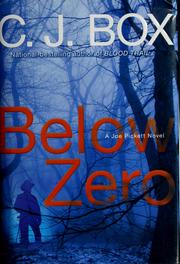
Texts arriving from a daughter the Picketts believed dead. This is the clearest example of why reading order matters here: the emotional charge is entirely inherited from books three through eight, and the plot is meaningless without them.
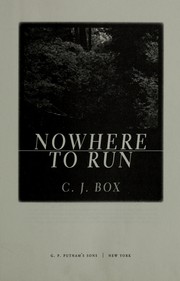
Joe alone in the Sierra Madre against two brothers living off the land, and the leanest, most physical book in the run. Reads almost as a survival novel.
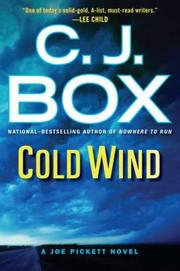
Joe's mother-in-law accused of murdering her husband, so the family plot and the crime plot are the same plot for once. It also begins the two-book sequence about Nate's past that finishes in the next volume.

The Nate book — his old special-operations unit hunting him, told largely from his point of view. It resolves the thread that started in Winterkill nine books earlier, and it is the most violent entry in the series. Read Cold Wind immediately before it.
Modern Pickett
IntermediateRead the later run, meet the antagonist who recurs for the next decade, and know how to approach the remaining books.
▸ Study plan for this stage
Pace: Five to six weeks for Endangered (385 pages), Vicious Circle (417) and The Disappeared (403). Endangered and Vicious Circle are effectively one long book split in half — read them together and in that order, because Vicious Circle is unreadable without its predecessor. Endangered opens with one of J
- Dallas Cates as the recurring antagonist of the series' back half, introduced in Endangered and returning for years afterwards
- The daughters grown: the family that was background in book one is now the source of the plot
- A two-book arc inside a series of standalones, and how Box signals that a book is half of something
- The Disappeared bringing in a new governor and Wyoming's wind industry — the resource-conflict formula still running twenty books in
- Where the series becomes safe to dip into: after the Cates history is behind you, the remaining books read comfortably in order without depending on it
- What continues past this stage — Wolf Pack, Long Range, Dark Sky, Shadows Reel, Storm Watch and Three-Inch Teeth, all of which resolve in this catalogue
- What makes Endangered different in tone from every earlier book, and is the difference sustainable?
- Why is Vicious Circle unreadable alone — what specifically does it decline to re-explain?
- What kind of antagonist is Dallas Cates, and how is he built differently from the villains of the early run?
- In The Disappeared, does the formula still work after twenty books, and what is keeping it alive?
- Looking at your family ledger from book one to here: what is the story the series has actually been telling?
- Where would you tell a new reader they can start dipping in rather than reading straight through, and why there?
- Read Endangered and Vicious Circle across one fortnight as a single book, then write the two-sentence summary that covers both. If you cannot do it in two sentences, you have found how much plot the pair carries.
- Complete the family ledger through The Disappeared and read the whole thing end to end. Twenty years of a marriage and three childhoods are in those notes, and no single novel contains them.
- Compare the antagonist of In Plain Sight with Dallas Cates: how each is introduced, what each wants, and how long each lasts. The difference is what changed in the series' back half.
- Write the reading order for the remaining books — Wolf Pack, Long Range, Dark Sky, Shadows Reel, Storm Watch, Three-Inch Teeth — and note beside it that the Cates history is the one thing you need behind you before starting them.
Next up: The Cates arc is the last thing that must be read in strict order; from here the series continues through six more books that will read comfortably in sequence and no longer require it.

One of Joe's daughters found beaten and left in a ditch, and the introduction of Dallas Cates, the recurring antagonist of the series' back half. Furious, personal, and the most important later book to read in place.
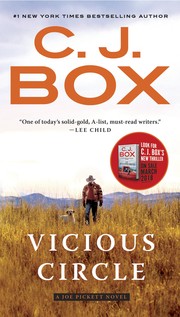
The direct sequel to Endangered and unreadable without it — the Cates family coming after the Picketts. These two are effectively one long book split in half.

A British executive vanished from a guest ranch, with a new governor and a subplot about Wyoming's wind industry. A good place to pause: from here the series continues through Wolf Pack, Long Range, Dark Sky, Shadows Reel, Storm Watch and Three-Inch Teeth, all of which resolve in our catalogue and all of which read comfortably in order once the Cates history is behind you.