Jim Thompson books in order: where to start with the pulp psychopaths
The darkest shelf in American crime writing — first-person narrators who are charming, plausible and monstrous, written for paperback originals at enormous speed. The order below is for survivability rather than chronology: there is no point starting where the bleakness is unrelieved.
Start here
IntermediateBegin with the famous one, and know what it is before you open it.
▸ Study plan for this stage
Pace: Three or four days, 225 pages. It reads fast — Thompson wrote for paperback originals and paced accordingly — but this is the one book on the path where reading fast is not necessarily wise. Two or three sittings, and stop if the register becomes unbearable rather than pushing through on principle.
- Lou Ford's voice: mild, folksy, endlessly reasonable, and narrating his own murders
- The 'sickness' Ford names but never explains, and Thompson's refusal to supply a diagnosis the reader can hold on to
- Cliché as weapon — Ford bores people to death with platitudes, and the prose performs the boredom
- Small-town Texas oil money as the social frame: who owns the town and who is disposable in it
- The violence against women is explicit and sustained. That is the book's reputation and it is accurate; know it before you open it
- The paperback-original economics that produced this prose — speed, length limits, a mass market that wanted the cover promise delivered
- The ending's break with realism, which Thompson will repeat elsewhere on this path
- Where does Ford's narration first become unreliable, and is it a lie or an omission?
- Thompson gives Ford a backstory explanation late. Does the novel treat it as sufficient?
- What does the folksy platitude routine accomplish for Ford inside the story, and for Thompson on the page?
- The town's power structure is sketched in a few pages. Who actually runs Central City, and how does that shape what Ford can get away with?
- Is the final chapter a hallucination, a confession, or a formal collapse — and does the novel let you decide?
- Mark every platitude Ford deploys and note who he is talking to each time. Read the marked lines consecutively; the pattern of who gets bored is a map of who he considers a threat.
- Read the first three pages and the last three pages together. The distance between the voices is the whole book.
- Stop after the first killing and write down, in one sentence, what you think Ford wants. Finish the book and check whether the novel ever confirms it.
- If you find the violence unbearable, stop and read Pop. 1280 instead — it has the same narrator archetype in a comic register, and coming back to this book afterwards is a legitimate route.
Next up: You have met Thompson's psychopath narrator at full strength; the con novels apply the same voice to men who are working angles rather than killing, which makes them the most controlled books he wrote.
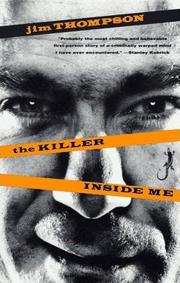
A small-town Texas deputy narrates his own killings in a mild, reasonable voice. It is a genuinely disturbing book and the violence against women is explicit; that is the reputation and it is accurate.
The con novels
IntermediateThe books about swindlers, which are the most controlled.
▸ Study plan for this stage
Pace: Two weeks. The Grifters is 192 pages and A Hell of a Woman 184, both readable in two or three sittings each, but put a few days between them — they end very differently and A Hell of a Woman's close needs room. Read The Grifters first; it is the more controlled of the two and A Hell of a Woman is ea
- The short con as a form of work: Roy Dillon's bar-and-dice routines described with procedural exactness
- The triangle of Roy, Lilly and Moira — mother, girlfriend, and each of them working the other two
- Lilly Dillon as one of the very few Thompson characters with genuine competence and no self-deception
- Thompson's tightest plotting: The Grifters is the book where cause and effect actually hold
- A Hell of a Woman's narrator, a door-to-door instalment salesman narrating his own disintegration
- The famous final pages of A Hell of a Woman, in which the text splits into two alternating strands as the narrator does
- Frears's 1990 film of The Grifters, and what a competent adaptation keeps and drops
- In The Grifters, who is running the most successful con, and does the novel's answer change on a second reading?
- Roy has money and a job and no need to grift. Why does he?
- A Hell of a Woman's narrator is a fool where Lou Ford is clever. Does that make him more or less frightening?
- The split-text ending is a typographic device. Does it earn itself, or is it a stunt appended to a conventional collapse?
- Both books are about people who are not good enough at what they do. Is incompetence Thompson's real subject?
- Write out the mechanics of one of Roy's short cons in your own words from the novel's description. Thompson is precise about the procedure, and reconstructing it shows how much of the book is technical.
- In A Hell of a Woman, read the final chapter's two strands separately — one all the way through, then the other. Then read them interleaved as printed. Decide which version is the book.
- Chart the three-way information state in The Grifters: at each major scene, note which of Roy, Lilly and Moira knows what. The plot's tightness becomes visible as a grid.
- Compare Roy's narration with Lou Ford's. Both are first person, both withhold. Name the specific difference in what each is willing to tell you.
Next up: The con novels show Thompson in control; Pop. 1280 shows what happens when he turns the Killer Inside Me narrator into comedy and writes the best prose of his career.
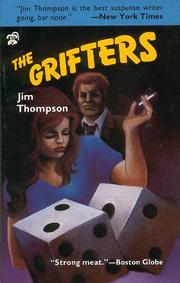
A short-con man, his mother and his girlfriend, all working angles on each other. The tightest plot he built.
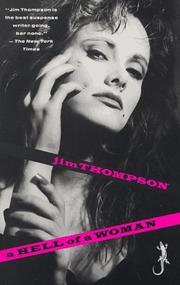
A door-to-door salesman narrates his own disintegration, and the final pages break into two alternating texts as the narrator does.
The comic peak
IntermediateThe one his admirers name first.
▸ Study plan for this stage
Pace: Three or four days, 215 pages. It moves as fast as anything he wrote and the comedy makes it the easiest reading on this path — but read the last thirty pages in one uninterrupted sitting, because the tonal turn depends on momentum.
- Nick Corey, high sheriff of Potts County, playing the fool while nobody in the county is his equal
- The deliberate revision of The Killer Inside Me — same archetype, same Southern small town, comic register
- Comedy as camouflage for the reader as well as for the characters: you laugh, and then you notice what you laughed at
- Corey's late speeches about being an instrument of God, and the question of whether the novel means them
- Racism in the town rendered as the ordinary condition of the place, with Corey murdering across the colour line and no one caring
- Thompson's best sentence-level writing — the dialogue rhythms are the reason his admirers name this one first
- Tavernier's Coup de Torchon, which relocated the book to French colonial Africa and made the political content explicit
- At what point do you stop finding Corey funny, and is that point designed?
- Corey claims a divine mandate. Is the novel satirising religion, or giving him a genuine cosmology?
- Compare Corey's fool routine with Lou Ford's platitudes: same tactic, different comedy. What does the humour add that Ford's flatness could not?
- Who in Potts County is the novel actually indicting — Corey, or everyone who elected him?
- Is this a better book than The Killer Inside Me, and if so, on what grounds — construction, prose, or nerve?
- Read the opening chapter of The Killer Inside Me and the opening chapter of Pop. 1280 back to back. Twelve years apart, the same setup, and the comparison is the clearest lesson in register available in American crime fiction.
- Mark every one of Corey's monologues about God and read them consecutively at the end. They form a coherent argument, which is the disturbing part.
- Count how many people Corey kills and how many the town notices. The gap is the political content.
- Read a summary of Coup de Torchon's setting change and write a paragraph on what transposing Potts County to a colony makes explicit that the novel keeps implicit.
Next up: With the peak behind you, the last two books are for readers who have found the register bearable and want to see how far Thompson would push a genre ending.
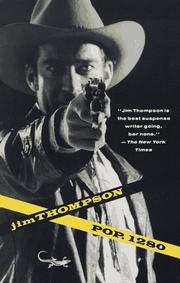
A Southern sheriff who is nobody's fool pretending to be everybody's fool. Pitch-black comedy, and the best-written thing he did.
The others
IntermediateTwo more, for readers who have found the register bearable.
▸ Study plan for this stage
Pace: One to two weeks. The Getaway is 180 pages and Savage Night 160, both quick — but read The Getaway first and stop before the final section to notice how conventional the book has been up to that point. Savage Night's last chapter is the strangest thing on this path and is worth reading twice in a ro
- The Getaway as a straightforward heist-and-flight novel for four fifths of its length
- El Rey and the closing section, an ending so strange that both film versions simply removed it
- Peckinpah's 1972 film and its substituted ending, which is the cleanest evidence of what the market would not take from Thompson
- Savage Night's Carl Bigelow: a tubercular hitman lodging in a boarding house, physically diminishing throughout
- The final chapter of Savage Night, which abandons realism entirely — the body dissolving, the goat, the cellar
- Allegory arriving late in a pulp novel, and whether it is earned or simply the deadline arriving
- Thompson's late-career decline and the paperback market's collapse as context for both books
- At what page does The Getaway stop being a heist novel, and does the turn read as prepared or as bolted on?
- What does El Rey represent, and does the novel need it to mean anything specific to work?
- Savage Night's narrator shrinks physically as the book proceeds. Is that literal, metaphorical, or Thompson refusing the distinction?
- Both endings break the genre contract. Is that a signature or a failure to finish?
- Having read all six, which is the best book and which is the best Thompson book — and are they the same?
- Which of these six would you not recommend to anyone, and on what grounds?
- Read The Getaway's final section twice, then look up how Peckinpah's film ends. Write two sentences on what the substitution tells you about who Thompson's audience was and who it was not.
- In Savage Night, track Carl's physical description chapter by chapter — height, teeth, weight. The list is a plot in itself.
- Reread the final chapters of The Killer Inside Me, A Hell of a Woman and Savage Night consecutively. Three novels, three collapses of realism at the close; decide whether that is a method or a tic.
- Rank all six by how well the ending is earned, and separately by how much you would recommend the book. Comparing the two rankings is the most useful thing you can do with a shelf this uneven.
- Write a two-sentence content warning for each of the six, of the kind you would give a friend before lending it. Thompson is a writer where this is a genuine part of recommending him.
Next up: You now have the whole reputation in hand, and can approach the lesser Thompson — the Lion Books run, the late paperbacks — knowing exactly which of his effects are deliberate and which are the deadline.
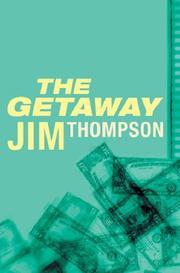
A heist and a flight to Mexico, with an ending so strange the film versions simply removed it.
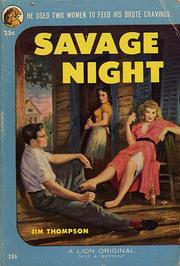
A tubercular hitman in a boarding house, and a final chapter that abandons realism entirely.