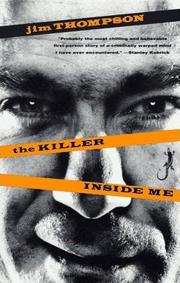
Start with The Killer Inside Me. A small-town Texas deputy narrates his own killings in a mild, reasonable, folksy voice that never breaks, and the effect is the whole reason Thompson has a reputation. It is the famous one, it is the most influential, and it is short. Know what it is before you open it: it is a genuinely disturbing book, the violence against women is explicit and prolonged, and that is not an exaggeration of its reputation but an accurate description of it.
That is a statement about the books, not a warning about your feelings. Thompson wrote first-person narrators who are charming, plausible and monstrous, at enormous speed, for paperback originals that were sold off wire racks. The register does not vary much, so the useful thing an order can do is arrange the shelf by how much relief each book offers. Several of these have none at all. The sequence below runs from the essential one, through the most controlled, to the pitch-black comedy, and only then to the two that are hardest to sit with.
Start here
The Killer Inside Me (1952). Lou Ford, the sickness he calls it, and a voice that stays polite through everything. Every unreliable-narrator crime novel written since is downstream of this book.
The con novels
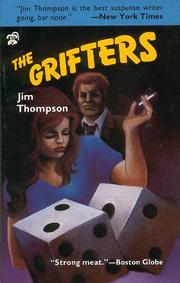
These are the most controlled things he wrote, and the most conventionally enjoyable. The Grifters (1963) is a short-con man, his mother and his girlfriend, all quietly working angles on one another, and it is the tightest plot he ever built. Stephen Frears filmed it in 1990 and the film is faithful.
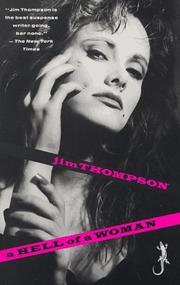
A Hell of a Woman (1954) is a door-to-door salesman narrating his own disintegration, and the last pages break into two alternating texts running down the page as the narrator comes apart. It is the most formally reckless thing in the list. It is also unrelieved — there is no comic distance anywhere in it.
The comic peak
Pop. 1280 is the book his admirers name first, and it is the best-written thing he did. A Southern sheriff who is nobody's fool spends the novel pretending to be everybody's fool, and the comedy is pitch-black and completely sustained. It is the same material as The Killer Inside Me played as farce, which is the only reason it is bearable, and it is the one book here you could recommend to someone who does not read crime fiction. Bertrand Tavernier transplanted it to colonial Africa for the 1981 film Coup de Torchon.
The others
Two more, for readers who have found the register bearable. The Getaway (1958) is a heist and a flight to Mexico with an ending so strange that both film versions simply removed it — a long allegorical coda that has almost nothing to do with the thriller preceding it. Read the novel for that ending specifically.
Savage Night (1953) is a tubercular hitman in a boarding house, and a final chapter that abandons realism outright. Along with A Hell of a Woman, it is one of the two genuinely unrelieved books on this path, and it is not where anyone should begin.
Publication order, or this order?
Chronological order would run The Killer Inside Me, Savage Night, A Hell of a Woman, The Getaway, Pop. 1280, The Grifters — and it front-loads the two bleakest books immediately after the most disturbing one. There is no artistic development to track across a career built on writing fast for small money, so chronology buys you almost nothing. Take the order above.
Where to stop
Two books is a full account of what Thompson is: The Killer Inside Me and Pop. 1280. If the first one is more than you want, start with The Grifters instead, which is the same intelligence applied to people who mostly only steal. Thompson wrote around thirty books and the quality is wildly uneven — the ones outside this list are largely for completists, and he was better known in his lifetime for screen work, including two scripts he wrote with Stanley Kubrick, than for any of the novels here.
More crime and noir reading paths are on Discover.
Follow the full ordered path here: Jim Thompson books in order: where to start with the pulp psychopaths.