Jenny Erpenbeck Reading Order: Where to Start with Her Novels
Erpenbeck writes short novels about German history that assume a great deal of it, and the International Booker for Kairos brought a wave of new readers with no map. This path gives them one: start with the house, then the century, then the present.
Start here
IntermediateBegin with the shortest and most formally elegant.
▸ Study plan for this stage
Pace: One week. Visitation is 176 pages and built as twelve chapters, each belonging to a different occupant of one house, framed by sections about the gardener. Read one or two chapters a sitting rather than straight through — the chapters are near-freestanding and the accumulation works better with gaps
- A single house on a Brandenburg lake as the fixed point, and everyone who passes through it as the variable
- German history entered sideways — Weimar, the Nazi years, the GDR, reunification — with no chapter announcing which period it is in
- The gardener sections as a refrain: unnamed, undated, and the only continuity the book allows
- Property and dispossession as Erpenbeck's underlying subject: who owns the house, and by what instrument
- Erpenbeck's assumption of prior knowledge — she will not explain who is being expelled or why, and that refusal is deliberate
- Repetition and catalogue as prose technique, closer to liturgy than to narrative
- The Jewish family's chapter, and how the book handles a mass murder in a few sentences
- Which chapter did you have to work hardest to place in time, and what were the clues you eventually used?
- What do the gardener sections do that a conventional narrator could not?
- The house is the protagonist in one sense and a piece of real estate in another. Which does Erpenbeck press harder?
- How does the book handle the Jewish family's fate, and what is the effect of the compression?
- Erpenbeck refuses to date her chapters. Is that a demand on the reader, a formal principle, or both?
- Build a timeline as you read: after each chapter write the year or decade you think it occupies and the single detail that fixed it. Then check the whole list at the end and see where you were wrong.
- Read the gardener sections consecutively, skipping everything else, in one sitting. They form a short text of their own and it changes what the book is about.
- Mark every sentence that begins with the same construction as an earlier one. Erpenbeck repeats openings on purpose and the pattern is invisible page by page.
- Find a map of the Brandenburg lakes east of Berlin and locate the setting. The novel's geography is real and specific, and knowing where you are makes the expulsions concrete.
Next up: You have seen Erpenbeck compress a century into one location; The End of Days does the opposite, expanding a single life until it happens five times.
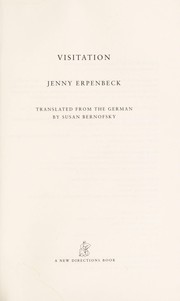
A house on a Brandenburg lake and everyone who passes through it across a century — Weimar, the Nazis, the GDR, reunification. Under two hundred pages and the best introduction to how she compresses history.
The century
IntermediateRead the novel that tells one life five times.
▸ Study plan for this stage
Pace: Two to three weeks. The End of Days is 320 pages in five books separated by short intermezzos, and each book restarts a life that has just ended. Read one book at a time with a pause after each intermezzo — reading straight through blurs the restarts, which are the entire point.
- The counterfactual structure: the protagonist dies as an infant, then does not; dies as a young woman, then does not; five versions in all
- The intermezzos as hinges — each one names the small contingency that would have changed the outcome
- The route the versions take: Galicia, Vienna, Moscow, East Berlin — effectively the whole map of twentieth-century Central European catastrophe
- The Stalinist purge section, and the file-and-denunciation machinery Erpenbeck reconstructs in detail
- Contingency versus determination — the book argues both, and does not settle
- Erpenbeck's own family history in the GDR and its distance from the novel
- Susan Bernofsky's translation, which keeps the German syntax's suspended verbs where English would normally resolve them
- What exactly changes at each intermezzo, and how small is the smallest of the five changes?
- Does the novel argue that a life is contingent, or that the century would have killed her anyway?
- Which of the five books is the most fully realised, and does its length correspond to its weight?
- How does the Moscow section's bureaucratic detail compare with Visitation's property documents — is Erpenbeck making the same point about paperwork?
- By the fifth book, do you read the deaths as endings or as pauses, and when did that shift?
- After each of the five books, write two sentences: what killed her, and what the intermezzo says would have saved her. The five pairs together are the novel's argument in miniature.
- Reread book one immediately after finishing book five. It is short, and it reads completely differently once you know the pattern.
- Compare the Vienna sections here with Visitation's Weimar chapter — the same decade, two entirely different narrative postures. Note which one gives you more information and which gives you more feeling.
- Track the grandmother's Hebrew prayer book or any single object that survives across versions, and note every appearance. Objects, not people, are Erpenbeck's continuity devices.
Next up: Both books so far look backwards; the next stage brings Erpenbeck's method to the German present, including the novel that won the International Booker.

A woman dies in infancy, then does not; dies as a young woman, then does not. Five versions of one twentieth-century life. Structurally her most audacious book.
The present
IntermediateThe two contemporary novels, including the Booker winner.
▸ Study plan for this stage
Pace: Four weeks. Go, Went, Gone is 286 pages and the most conventionally readable book she has written — two weeks at a comfortable pace. Kairos is 358 pages and much harder emotionally; give it two weeks and expect to want a break in the middle. Read them in this order: Go, Went, Gone is the gentler ent
- Go, Went, Gone's premise: a retired classics professor in Berlin begins talking to African asylum seekers occupying a square
- Richard's academic habits — note-taking, question lists, Ovid and Herodotus — as both a genuine method and a form of distance
- The specific machinery of German and EU asylum law, Dublin regulations included, rendered accurately enough to function as reporting
- The GDR biography Richard carries, and the parallel Erpenbeck draws between an East German whose country vanished and men whose countries expelled them
- Kairos's central relationship: a nineteen-year-old woman and a much older married man in the last years of the GDR
- The state and the affair failing on the same timetable, and the risk that the analogy flatters the affair
- Kairos's archive of letters, tapes and documents, and the Stasi file that arrives late
- The 2024 International Booker, Michael Hofmann's translation, and the wave of new readers it produced
- Is Richard's classical learning in Go, Went, Gone an instrument of understanding or a way of not being implicated?
- The novel gives long passages of asylum-law procedure. Would it be a better or worse book with them cut?
- In Kairos, does the parallel between the affair and the GDR hold, or does it excuse Hans by making him historical?
- Katharina is young and Hans is not. Where does the novel place its judgement, and does it place it at all?
- Kairos ends in an archive. What does Erpenbeck gain by making the reader sort documents at the close?
- Both novels are about the present of a country that no longer exists. Which one makes the stronger case that the GDR is still operating?
- Keep Richard's list of questions to the men as you read Go, Went, Gone, and note which ones he never asks. The omissions are the character.
- In Kairos, mark every date given explicitly. The affair and the state run on a shared calendar and the correspondence only shows on a list.
- Read the boxes-of-papers frame at the start and end of Kairos back to back once you have finished. It is a single device split across 350 pages and it is easy to lose.
- Compare the treatment of a bureaucratic file in Kairos with the Moscow file sequence in The End of Days. Erpenbeck returns to the document as an instrument twice, twenty years of history apart.
- Read one contemporary review of Kairos that objects to the Hans-Katharina analogy and one that defends it, then write a paragraph stating your own position with a scene as evidence.
Next up: Having read four novels that never explain themselves, you can now read the non-fiction where Erpenbeck states directly what the fiction assumes.
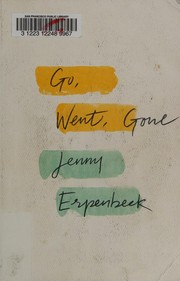
A retired classics professor in Berlin starts talking to African asylum seekers in a square. The most conventional and most immediately moving of her books.

A destructive affair between a young woman and a much older man in the last years of the GDR, with the relationship and the state failing together. It won the International Booker in 2024.
The essays
IntermediateFinish with the non-fiction.
▸ Study plan for this stage
Pace: One week, 186 pages. Not a Novel collects essays and speeches written across decades, so read it in short sessions of two or three pieces rather than continuously; the repetitions between pieces are an artefact of collection, not of argument.
- Growing up in East Berlin, and what reunification actually felt like from the eastern side rather than the western account of it
- The disappearance of a country as an ordinary autobiographical fact — the shops, the currency, the street names
- Erpenbeck's account of her own working method, which explains the refusals in the novels
- Her theatre background and the way her prose is staged rather than described
- Essays on other writers, and what her reading tells you about what she is attempting
- The gap between the fiction's silence and the non-fiction's directness, and why she keeps the two apart
- Reading the collection as a key rather than as a companion — it makes the novels legible without making them smaller
- What does Erpenbeck say about the GDR in her own voice that Kairos declines to say in fiction?
- Which essay most directly explains a formal decision in one of the novels, and which decision?
- She writes about reunification as loss. What exactly was lost, on her account, and does the fiction agree?
- Does the directness of the essays weaken the fiction's ambiguity, or protect it?
- Having read all five books, which would you now hand to someone who has read no Erpenbeck at all, and has that changed since stage one?
- Read the essays on her childhood, then immediately reread the GDR chapters of Visitation. The house and the biography overlap and the essays name the overlap.
- Find the passage where she discusses how she constructs a book, and test it against The End of Days' five-part structure. Say whether the description matches the practice.
- Write a one-page reading order of your own for these five books, arguing against this path's sequence wherever you now disagree with it.
- List every real historical event these five books touch and mark which ones you had to look up. That list is a fair account of what Erpenbeck assumes of a reader, and it is longer than most novelists dare.
Next up: With the fiction and the non-fiction both read, the earlier and stranger books — The Old Child, The Book of Words — become approachable rather than obscure.

Essays and speeches on growing up in East Berlin and on what reunification actually felt like from the eastern side. It explains the fiction.