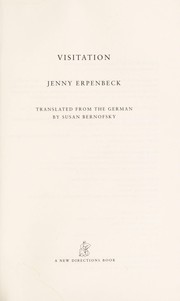
Start with Visitation. A house on a lake in Brandenburg, and everyone who passes through it across a century — the family who built it, the Jewish family forced to sell, the Red Army, the GDR functionaries, the restitution claim after reunification. It runs under two hundred pages and it is the clearest possible demonstration of what Erpenbeck does: history arrives as a series of occupants, the house stays, and nobody explains anything.
The reason to say this out loud is that most new readers now arrive at Kairos, which won the International Booker in 2024 and sold accordingly. It is a superb novel and it is the wrong first one, because it assumes you already have the last decade of the GDR in your head — the specific texture of the state in the late 1980s, and what it meant for everything to be about to stop existing. Erpenbeck writes short novels about German history that assume a great deal of that history, and Visitation is the book that supplies it. She writes about a past that accumulates across her books, and reading them in this order means each one is standing on the one before.
Start here
Visitation (2008) is the shortest and most formally elegant thing on this path. The structure does the work: chapters named for occupations rather than for people, a gardener recurring between them, and the twentieth century passing through a building that outlasts all of it.
The century
Then The End of Days (2012), which tells a single life five times. A woman dies in infancy; then the book says, in effect, but suppose she had not, and continues. She dies as a young woman in Vienna; then she does not. Five versions, running from Habsburg Galicia to Stalinist Moscow to East Berlin. It is structurally the most audacious book she has written, and it works far better once Visitation has trained you to read a chapter break as a jump in historical time. Read cold, the restarts read as a gimmick; read second, they read as an argument about how arbitrary a century was.
The present
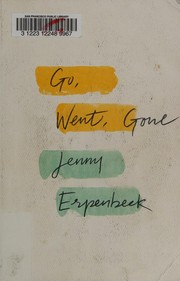
Go, Went, Gone (2015) is the most conventional and the most immediately moving of her novels. A recently retired classics professor in Berlin starts talking to a group of African asylum seekers occupying a square, and keeps going long after it stops being comfortable. It is the least difficult book on this path and the one to give someone who does not read much translated fiction. It also gains from position: a man raised in the GDR discovering how a state decides who is permitted to exist somewhere lands very differently once you have read the two novels about what states did to the people in that house.
Kairos
Now Kairos (2021). A destructive affair between a young woman and a much older man in the last years of East Germany, with the relationship and the state failing in parallel. The parallel is the risk in the book and also the achievement; readers who find it schematic usually say so, and readers who do not find it devastating. Michael Hofmann's translation shared the International Booker with her in 2024. Coming fourth, the ending has three previous books of accumulated German history sitting behind it.
The essays
Finish with Not a Novel (essays and speeches, published in English in 2020), on growing up in East Berlin and on what reunification actually felt like from the eastern side. It is short and it explains the fiction — not in the sense of decoding it, but in the sense of showing you the material the novels were made out of. Read last, it is a coda. Read first, it would spoil the reticence that makes the novels work.
Her earliest book, the novella published in English as The Old Child, is not in our catalogue. It is worth finding afterwards if the compression appeals; it is stranger and colder than anything here.
Where to stop
Two books is a real reading: Visitation and Go, Went, Gone, which between them give you the historical method and the contemporary one. Everything on this path is short — none of the novels runs much past three hundred pages — so the full sequence is a genuinely achievable month.
More reading paths in world literature are on Discover.
Follow the full ordered path here: Jenny Erpenbeck Reading Order: Where to Start with Her Novels.