Diary of a Wimpy Kid books in order: where to start
Diary of a Wimpy Kid does run in sequence, and unusually for a long children's series it genuinely rewards being read in order — Greg Heffley never ages, but the running jokes, the recurring characters and the Rodrick material all accumulate. The books are cartoon-illustrated journals of roughly two hundred pages with a few dozen words per page, so a child who finds ordinary chapter books daunting will often finish one in a sitting; that, rather than the plots, is why they matter. This path lists the main sequence in publication order, then the Rowley Jefferson spin-offs, and says which of the extras are actual books and which are merchandise. Two catalogue notes for anyone ordering: the volumes resolve under their bare titles, not under a Diary of a Wimpy Kid prefix, and three of the later volumes — The Getaway, The Deep End and Hot Mess — resolve here only as multi-book box sets rather than as single books, so they are named rather than listed below.
Start at book one
BeginnerRead the opening three, which establish Greg, Rowley, Rodrick and the format, and settle whether the series suits this reader.
▸ Study plan for this stage
Pace: A week or two, and possibly a single weekend. Diary of a Wimpy Kid (224 pages), Rodrick Rules (224) and The Last Straw (217) are each around two hundred pages with only a few dozen words on most of them and a cartoon on nearly every one, so a child who stalls on ordinary chapter books will often fin
- Greg Heffley as an unreliable narrator — the joke is usually that Greg has not understood what he is describing
- The diary-with-drawings format, and how the cartoon on the page often contradicts the sentence above it
- The cheese touch, and how a running gag set up in book one gets called back across the whole series
- Rodrick as the engine Kinney found in book two: an older brother who is a genuine character rather than a background torment
- Greg and Rowley's friendship as the series' one real relationship, and the imbalance in it
- Book one's origin as a free web serial, which is why its early entries read like collected strips rather than a plotted novel
- The Last Straw introducing a plot that runs underneath the gags — the first sign the series can hold a story
- What does Greg say happened at the end of book one, and what does the reader work out actually happened?
- What is the cheese touch, and why does a joke about a piece of cheese keep coming back for twenty books?
- Why is Rodrick funnier than the school characters — what can he do that they cannot?
- What is Greg's dad threatening in The Last Straw, and does the book take the threat seriously?
- Which of these three is a story and which are collections of incidents, and how can you tell?
- Pick five pages in book one where the drawing and the writing say different things, and say out loud what each one is doing. That gap is where nearly all of Kinney's jokes live.
- Start a running-jokes list — the cheese touch, Rowley's parents, Manny, Rodrick's band — and add a page number every time one comes back across these three books. Keep the list for the rest of the series.
- Read the first ten pages of book one and the first ten of The Last Straw and count how many entries each covers. The change in pace is measurable.
- Write one diary entry about your own week in Kinney's format: a few short sentences, then a cartoon that shows something the sentences left out.
Next up: The format and the cast are established, so the next three books are the series running at full confidence and settling into what it does.
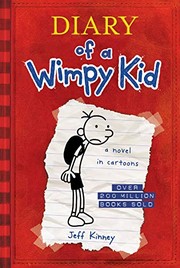
Book one, and the only correct starting point — Greg's voice, his friendship with Rowley and the cheese touch all begin here, and every later book assumes them. It began as a free web serial, which is why the early entries feel like collected strips rather than a plotted novel.

Book two, and the one where Kinney found the series' best engine: Greg's older brother. Most people who love these books love the Rodrick ones, and this is where he becomes a full character rather than a background torment.

Book three, in which Greg's father starts threatening military school. It is the first book with something like a sustained plot running underneath the gags, and a good test of whether the reader wants the whole series or just the funny bits.
Books four to six
BeginnerContinue through the run where the format is settled and the books are at their most consistent.
▸ Study plan for this stage
Pace: A week or two. Dog Days (220 pages), The Ugly Truth (218) and Cabin Fever (218) are the same length and the same speed as the first three. Read them in order, though Dog Days is the loosest of the run and survives being read slightly out of sequence if that is the copy the library has — the Rowley m
- The summer book: what Kinney does when he cannot use school as a structure
- Episodic construction versus a single situation — Dog Days is a run of incidents, Cabin Fever is one snowstorm
- The Greg-and-Rowley falling-out as the series' most durable plot, first used properly in The Ugly Truth
- Kinney handling puberty and growing up at the level of a joke about deodorant, which is the register the whole series keeps
- Constraint as a comic device: a family trapped indoors gives Kinney a single setting and produces a tighter book
- Reading aloud — where the cartoons need to be shown and where the sentence carries it alone
- What holds Dog Days together, given that it has no single plot?
- Why do Greg and Rowley fall out in The Ugly Truth, and whose fault is it really?
- What does the snowstorm let Kinney do in Cabin Fever that he cannot do in a school book?
- The health-class material in The Ugly Truth is the part parents ask about. How does Kinney actually handle it?
- Which of these three is the best book, and which is the funniest? If those are different answers, why?
- Keep adding to your running-jokes list. By the end of Cabin Fever, count how many jokes have come back at least three times.
- Read one chapter of Cabin Fever aloud to someone else and mark the places where you have to show them the picture for it to land.
- Take the falling-out in The Ugly Truth and write two short accounts of it, one from Greg's side and one from Rowley's. Keep both — you will check them against the spin-off in the last stage.
- List the settings in Dog Days in order. Then do the same for Cabin Fever. One list is long and one is very short, and that is the difference between the two books.
Next up: With the format settled, the middle books start varying it — a bigger family, a flashback structure, and a road trip that runs as one story.
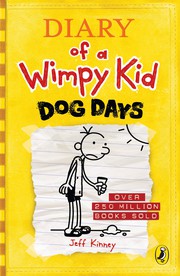
The summer holidays book, and the loosest and most episodic of the early run. Fine to read slightly out of sequence if a library copy turns up, though the Rowley material follows on from book three.
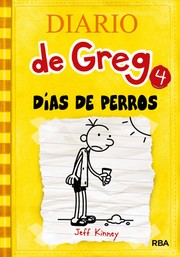
Greg and Rowley fall out, which is the most durable plot the series has and the one it returns to repeatedly. Also contains the lock-in and the health-class material that parents most often get asked about; it is handled at the level of a joke about deodorant.
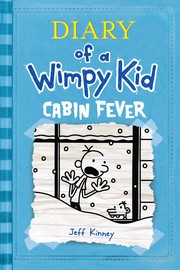
A snowstorm traps the family indoors, which forces Kinney into a single setting and produces one of the tighter books. A good one to read aloud.
Books seven to nine
BeginnerRead the middle stretch, where the family expands and the series starts varying its structure.
▸ Study plan for this stage
Pace: A week or two. The Third Wheel (223 pages), Hard Luck (218) and The Long Haul (218) are the same reading time as everything before them. Read them in order: Hard Luck depends on knowing how long Greg and Rowley have been friends, and it is the book that most rewards having read the earlier ones. The
- Manny promoted from a background gag to a real presence in the family
- The flashback opening in The Third Wheel — the first time Kinney varies the diary structure, and a device he reuses
- Hard Luck's premise: Rowley gets a girlfriend and Greg is left without a best friend, which is the emotionally sharpest situation in the whole run
- The road trip as a single continuous story rather than a run of school incidents — the closest the series comes to a novel
- Why a book that depends on accumulated history hits harder than a funnier standalone one
- Kinney's family cast as an ensemble: Greg, Rodrick, Manny, Mum and Dad each reliably generating a different kind of joke
- What does the flashback in The Third Wheel add that starting in the present would not?
- In Hard Luck, is Greg actually sad, and how does Kinney show it without ever saying so?
- What makes The Long Haul feel like one story when the earlier books feel like collections?
- What kind of joke does each member of the Heffley family exist to produce? Give an example of each from these three books.
- Hard Luck rewards having read the earlier books. Name the specific thing a new reader would miss.
- In Hard Luck, mark every page where Greg is alone. Count them, then count the same in book one. The difference is what the book is about.
- Retell The Long Haul as a list of stops on the journey, in order. Then try the same for The Third Wheel; the second list will not work, and that tells you how the two books are built.
- Take your running-jokes list and find the oldest joke that comes back in these three books. Note how many books it has survived.
- Draw the three-panel version of the single funniest moment in these three books, in Kinney's style, and see how much of the joke is in the picture.
Next up: The next stage takes the series into its modern run, and names which volumes this list could not include and where they belong.
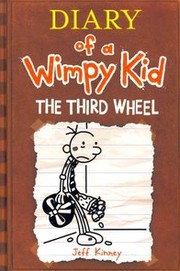
The school dance book, and the arrival of Greg's baby brother Manny as a real presence rather than a background gag. The first entry that opens with a flashback, which Kinney reuses later.

Rowley gets a girlfriend and Greg is left without a best friend, which is the emotionally sharpest thing in the whole run. It is also the book that most rewards having read the earlier ones.
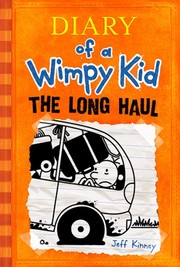
The family road trip, and the closest the series comes to a single continuous story. Frequently named the funniest of them, and a reasonable jumping-on point for a reluctant reader who will not start at book one.
The later books
BeginnerCarry on into the modern run, and know which volumes are missing from this list and what else exists.
▸ Study plan for this stage
Pace: A week or two for what is here, plus some ordering. Old School (221 pages), The Meltdown (224) and Wrecking Ball (220) are the same fast read as the rest. Two books sit before The Meltdown in the sequence — Double Down and The Getaway, books eleven and twelve — and only Double Down resolves separate
- Kinney writing about screens and childhood directly in Old School, rather than around them as the earlier books did
- The Meltdown as the most tightly plotted of the later books — a neighbourhood snowball war escalated into a campaign
- Escalation as a structure: one small thing growing until it takes over the book
- Wrecking Ball and the renovation plot, in which the family considers moving and the series looks at its own setting
- Standalone construction in the later run, and why the books can now be read in almost any order
- Where a reader can reasonably stop — and what continues past it: Big Shot, Diper Överlöde, No Brainer and Hot Mess
- What is Old School's argument about technology, and does Greg agree with it by the end?
- How does the snowball war in The Meltdown escalate — what are the stages, and where does it stop being a game?
- What would actually change for the series if the Heffleys moved house?
- Why can these later books be read in any order when the first six cannot?
- If you stopped at Wrecking Ball, what would you be leaving unfinished — anything, or nothing?
- Chart the escalation in The Meltdown as a numbered list from the first snowball to the last, and mark the point of no return.
- Compare a page of Old School with a page of book one side by side: count the words and the panels on each. Kinney's page has changed over twelve books, and the count shows it.
- Update your running-jokes list one last time and pick the three that have lasted longest across the whole series.
- Work out which numbered book each of Double Down, The Getaway, The Deep End and Hot Mess is, and write the full sequence out in order so you know what to look for at a library.
Next up: The last stage is the only genuinely different thing in the franchise — the same world told by the other boy in it.
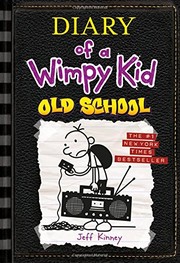
A screen-free school camping trip, and the book where Kinney starts writing about technology and childhood directly rather than around it.

A neighbourhood snowball war escalating into a small war, and the most structured plot of the later books. It follows Double Down and The Getaway, which are books eleven and twelve — Double Down resolves separately in our catalogue, The Getaway only as a box set.
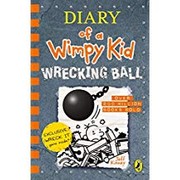
The Heffleys renovate the house and consider moving. A good place to pause: the series continues past it with Big Shot, Diper Överlöde, No Brainer and Hot Mess, all of which stand alone well enough that a reader can take them in any order or stop here without losing a thread.
Rowley's own books
BeginnerRead the spin-offs, which are the only genuinely different thing in the franchise, and skip the merchandise.
▸ Study plan for this stage
Pace: A few days. Diary of an Awesome Friendly Kid: Rowley Jefferson's Journal (224 pages) and Rowley Jefferson's Awesome Friendly Adventure (224) read exactly as fast as the main sequence. Read the Journal first, and only after at least a few of the Greg books, because every joke in it depends on knowing
- The same events told by a sincere narrator instead of a calculating one, so that the gap between the two accounts becomes the joke
- Rowley's unreliability being the opposite of Greg's: Greg hides things, Rowley misses them
- A book about writing a book — the Awesome Friendly Adventure is Rowley writing a fantasy novel with Greg interrupting to criticise it
- Story-within-a-story structure, and how Kinney keeps two voices going on the same page
- What a spin-off is for: not more of the same, but the same material from a position that changes it
- Which franchise extras are books and which are merchandise
- Pick one event that appears in both a Greg book and Rowley's Journal. What does Greg leave out?
- Rowley is kind and Greg is not. Why is the kind narrator funnier here rather than duller?
- In the Awesome Friendly Adventure, what are Greg's criticisms actually about — the story, or Rowley?
- Would either of these books work for a reader who had never met Greg? What exactly would they miss?
- Which is the better book, and does your answer depend on how many Greg books you read first?
- Take the two accounts of the falling-out you wrote back in the Ugly Truth stage and compare them against Rowley's Journal. See how close you got to what Kinney does.
- Find one incident described in both series and mark, line by line, what Greg's version adds, removes and changes.
- In the Awesome Friendly Adventure, keep the two voices separate as you read — mark Rowley's story in one colour and Greg's interruptions in another. The layout does the comedy.
- Write your own short Rowley-style version of a scene from any Greg book: same events, sincere narrator, no idea what is really going on.
Next up: That is the whole franchise worth reading, in order, with the box-set-only volumes named — anything else on the shelf beside them is an activity book.

The same events from Rowley's point of view, and much funnier than it sounds, because Rowley is sincere where Greg is calculating and the gap between the two accounts is the joke. Read it after at least a few of the main books, since the comedy depends on knowing Greg's version.

Rowley writing a fantasy novel, with Greg interrupting to criticise it. The most inventive book in the franchise and the one most likely to get a child writing their own. Note that the Do-It-Yourself Book, often shelved beside these, is an activity book rather than a story, and resolves here only inside a box set.
Discussion
Keep reading
Paths that share books, cover the same subject, or open a related topic.