Earth's Children books in order: where to start with Jean M. Auel
Earth's Children is six books, published across thirty years, and they run in strict sequence — Ayla's story starts as an orphaned Cro-Magnon child raised by Neanderthals and continues in a straight line to the painted caves of Ice Age France. There is no debate about order and no good place to start other than the first page of the first book. What there is a debate about is where to stop, because the series changes character sharply after book two: the tight survival story becomes a much longer, slower romance with long passages of ethnographic detail and, from book three onward, a great deal of sex. This path reads the six in order, says honestly where the momentum goes, and then does the more interesting thing — puts Auel next to the other serious Ice Age novelists and next to what archaeology now actually knows, since the science has moved a long way since 1980 and it has moved in Auel's favour more often than not.
The two that made the series
BeginnerRead the pair almost everyone agrees are the best, and decide from them whether to continue.
▸ Study plan for this stage
Pace: Four to six weeks for the pair — The Clan of the Cave Bear (524 pages) and The Valley of Horses (580). Both are long but move; the Clan is the faster read because its plot is continuous, while the Valley alternates between two strands and one of them is a woman alone in a valley for hundreds of page
- The premise: a modern-human child raised by Neanderthals, so that both populations are seen from inside the one that is about to disappear
- The Clan's memories — Auel's device of inherited, unalterable knowledge, which makes her Neanderthals unable to innovate and gives the book its central conflict
- Sign language as the Clan's speech, and how Auel uses a gestural language to write scenes of misunderstanding
- Ayla as an inventor: the sling, the fire stone, the domesticated horse — a pattern that runs to the end of the series and eventually breaks it
- The Valley's split structure — survival narrative on one side, a travelling man on the other — and the moment they meet, which is where the series changes genre
- Auel's research method: real Ice Age sites, real flora and fauna, and long passages of ethnographic detail woven into the narrative
- Why the Clan works as a standalone novel and the Valley does not
- What exactly can the Clan not do that Ayla can, and how does Auel keep that from making them simply stupid?
- How does Broud's hostility function structurally — what would the book be without it?
- In the Valley, what proportion of the pages are Ayla alone, and what does Auel do to sustain a novel with one character and no dialogue?
- At what page does The Valley of Horses stop being a survival novel, and what does it become?
- Having read both: which of the two Auels are you here for, the survival writer or the romance writer?
- Keep an invention log from page one: every tool, technique or domestication Ayla originates, with the page. You will keep adding to it for four more books, and the list is the best single measure of where the series goes wrong.
- Pick three scenes of Clan sign language and rewrite one exchange as spoken dialogue. What is lost tells you what the gestural conceit was buying.
- Count the pages in the Valley between Jondalar's first chapter and his meeting with Ayla, and note how Auel paces the two strands toward each other.
- Mark every passage in the Clan longer than a page that is description of plants, animals or technique rather than plot. Measure the same thing in the last hundred pages of the Valley — the ratio is already shifting.
Next up: You have the two books almost everyone agrees are the best; the next stage is the remaining four, in order, with the pace drops named in advance.
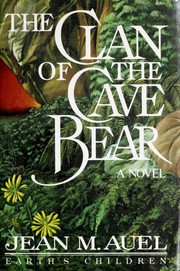
A five-year-old modern-human girl orphaned by an earthquake and taken in by a Neanderthal clan whose members cannot understand a child who asks questions. Tight, strange and genuinely moving, and it stands completely on its own — a reader who stops here has read a good novel rather than an unfinished one.

Ayla alone in a valley, domesticating a horse and a cave lion, intercut with Jondalar travelling toward her. The survival half is the best writing Auel ever did; the strand that meets it is where the series turns into a romance. Read it second and you will know, by the end, which of the two Auels you are here for.
The rest of Earth's Children
BeginnerFollow the remaining four in publication order, which is also chronological, and know in advance where the pace drops.
▸ Study plan for this stage
Pace: Four to six months, and be realistic: these four run to well over three thousand pages. The Mammoth Hunters is 719 pages, The Plains of Passage 917, The Shelters of Stone 832 and The Land of Painted Caves 800. Publication order is chronological order, so there is no decision to make except how far t
- The Mammoth Hunters' anthropology as the strongest thing in the later run — the mammoth-bone lodges and social world drawn from real Ukrainian sites
- The misunderstanding plot: one withheld conversation stretched across a novel, and why it exhausts readers who accepted everything else
- The journey structure of The Plains of Passage — one group after another, episodic by design, with description in place of plot
- Ayla's inventions accumulating past the point of plausibility, and what that does to a story about a real prehistoric world
- The Shelters of Stone as a novel of social acceptance rather than event, and what a series has become when its plot is whether the in-laws approve
- The Land of Painted Caves and the guided cave tours that make up much of it — the best material in the book and the least novelistic
- How a six-book series written across thirty years changes as its author's interests move from survival to ethnography to ritual
- What does The Mammoth Hunters get right about Ice Age social organisation, and where can you see Auel's site research directly?
- Could the jealousy plot have been resolved in one conversation, and if so what is Auel actually spending six hundred pages on?
- In The Plains of Passage, how many distinct groups do Ayla and Jondalar meet, and what does each one exist to demonstrate?
- By the end of the six books, how long is your invention log — and is Ayla still a character or a device?
- What is The Land of Painted Caves actually about, underneath the plot, and does the series end or merely stop?
- Keep adding to the invention log through all four books. When you finish, read the list end to end in one go; it is the clearest argument about what happened to the series.
- In The Plains of Passage, tabulate each group encountered with its page range and the one custom or technology it exists to show. The table is the book's structure, and it explains why it reads as episodic.
- Take one chapter of The Mammoth Hunters and mark every paragraph as plot, description or misunderstanding. Do the same for a chapter of The Clan of the Cave Bear and compare the three proportions.
- Read the cave-tour sections of The Land of Painted Caves with Gregory Curtis's The Cave Painters open beside you — that pairing is scheduled properly in the final stage, but the last book is where it starts paying.
- Write down where you stopped, if you stopped, and exactly which page or scene did it. That answer is the most useful thing you can tell another reader about this series.
Next up: Having read one writer's answer to the problem of narrating prehistoric minds across six books, the next stage sets three other novelists solving the same problem in completely different ways.
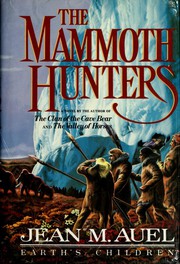
Ayla among a large modern-human community for the first time, and the strongest of the later books on its anthropology — the mammoth-bone lodges and the social world are drawn from real Ukrainian sites. Its plot, however, is a jealousy misunderstanding sustained for six hundred pages, which is the single most common reason readers stop here.
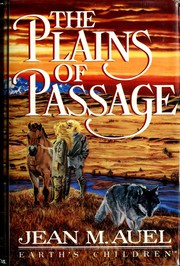
A journey book: Ayla and Jondalar crossing Europe, meeting one group after another. Structurally episodic and heavily padded with description, and best read as travelogue rather than plot. This is the volume to skim if you are skimming any.
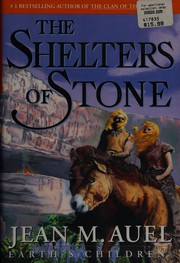
Twelve years after the previous book, and largely concerned with Ayla being introduced to Jondalar's people and accepted by them. Very little happens, and what does is worth having if you are invested in the characters. Read it only if you intend to finish.

The conclusion, built around Ayla's training as an acolyte and long guided tours of the decorated caves. It is the weakest book of the six by common consent and it does close the story. The honest advice: read it for completion, and read Gregory Curtis on the real caves alongside it, because the caves are the best thing in it.
The other Ice Age novelists
IntermediateRead the prehistoric novel as a form rather than as one series, and see three writers solving the same problem — how to narrate minds unlike ours — in completely different ways.
▸ Study plan for this stage
Pace: Two to three months. William Golding's The Inheritors (233 pages) is the shortest and by far the hardest — its first thirty pages are deliberately disorienting because the narration is locked inside a mind that lacks the concepts to describe what it sees, and readers who push through report the diff
- The central formal problem of the prehistoric novel: how to narrate a consciousness organised differently from the reader's without either patronising it or making it modern
- Golding's solution — restricted narration in which the reader must infer events the narrator cannot conceptualise, and the shift of viewpoint at the end
- Kurtén writing as a scientist against Auel's choices: same encounter between Neanderthals and modern humans, opposite conclusions, so that the disagreements are legible as evidence versus plot
- Thomas's ethnographic realism — the texture of foraging life, including boredom, drawn from fieldwork rather than from archaeology
- Robinson's subject as apprenticeship: how a skill and a cosmology are transmitted, set among the people who painted Chauvet
- Four registers — modernist, scientific, ethnographic and contemporary literary — applied to one setting
- Reading Auel as one option among several rather than as the form itself
- In The Inheritors, at what point did you first understand something the narrator did not, and how did Golding engineer that?
- What does Golding's final shift of viewpoint do to everything preceding it?
- Where does Kurtén disagree with Auel about Neanderthals, and in each case is the disagreement about evidence or about story?
- What does Thomas include about daily life that neither Auel nor Golding does, and what does her fieldwork give her that archaeology cannot?
- How does Robinson handle the cave paintings compared with Auel in the sixth book?
- Which of these four convinced you most as an account of a mind, and which as an account of a life?
- Read the first thirty pages of The Inheritors twice, the second time writing in the margin what you now believe is actually happening in each scene. The gap between narration and event is the whole technique.
- Set the Neanderthal characterisation in Kurtén beside Auel's Clan point by point — cognition, language, social structure, relations with modern humans — in a two-column list, then mark which of Auel's choices Kurtén treats as unsupported.
- In Reindeer Moon, count the pages spent on food, weather and physical discomfort. Compare with the same count in The Shelters of Stone; the difference is the argument Thomas is making.
- Compare the transmission of skill in Shaman with the Clan memories in Auel's first book — two opposite theories of how knowledge moves between generations, both dramatised.
Next up: Four novels have now given four incompatible pictures of the same people; the last stage replaces all of them with what the evidence currently supports.

Golding's 1955 novel, told almost entirely from inside a Neanderthal consciousness that cannot form the concepts it would need to understand what is happening to it. The most formally daring book on this list and the one Auel's premise descends from, whether or not she read it. Short, and difficult in the first thirty pages by design.

Written by a professional palaeontologist as deliberate scientific counter-programming to Auel — same Neanderthal-meets-modern-human encounter, opposite conclusions, and a foreword by Stephen Jay Gould. The best way to see which of Auel's choices were evidence and which were plot.
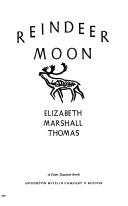
By an anthropologist who lived with the Ju/'hoansi in the Kalahari, and it shows: this is the most convincing account of what daily life in a small foraging band would feel like, hunger and boredom included. Colder and less consoling than Auel, and the better book.
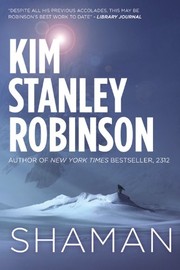
A modern novelist's take, set among the people who painted Chauvet, and concerned with apprenticeship — how a skill and a cosmology get transmitted. Read it last of the four: it is the most recent, and it absorbs everything the archaeology learned after Auel started writing.
What the science actually says
IntermediateReplace the novels' picture with the current evidence on Neanderthals, interbreeding and cave art, and see where Auel was ahead of her field and where she was wrong.
▸ Study plan for this stage
Pace: Two to three months, and note what kind of book each of these is. Rebecca Wragg Sykes's Kindred (400 pages) — published as Kindred: Neanderthal Life, Love, Death and Art, and catalogued here under the bare title, which it shares with unrelated books, so check the author — is popular science by a wor
- The current picture of Neanderthals: pigment use, structured living space, care of the injured, and complexity that the brutish version Auel's Clan is partly built on cannot accommodate
- The genome result — most living humans outside Africa carry Neanderthal DNA — and the fact that Auel's central plot device, a child of both populations, was considered biologically implausible when she wrote it
- How ancient DNA is actually recovered, on Pääbo's account, and why contamination is the discipline's governing problem
- Lewis-Williams's neuropsychological model of Palaeolithic art as a record of altered states, and the specific objections other archaeologists make to it
- The caves themselves — Altamira, Lascaux, Chauvet — and the history of their discovery, authentication and dating
- Where Auel was ahead of her field, where she was wrong, and where the question is still open
- Popular synthesis, research memoir, contested academic thesis and narrative history as four different kinds of authority
- Which specific traits does Sykes attribute to Neanderthals that Auel's Clan cannot have, and which does Sykes confirm Auel got right?
- What did Pääbo's team actually find, and why was interbreeding so hard to establish that the result was doubted?
- What is Lewis-Williams's argument in outline, what evidence does it rest on, and what is the strongest objection to it?
- What do the dates from Chauvet do to any story that treats cave art as a late development?
- Which of Auel's inventions for Ayla are archaeologically defensible for the period, and which are anachronistic?
- After all four: is The Clan of the Cave Bear a better or a worse novel than it was before you knew the science?
- Take your invention log from the first two stages and check each entry against Sykes and Curtis for the period Auel is writing about. Mark each one plausible, early or impossible.
- Read Sykes's chapters on Neanderthal cognition and symbolic behaviour directly against the Clan memories device in Auel's first book, and write a paragraph on which of Auel's choices the evidence has vindicated.
- Summarise Lewis-Williams's thesis in five sentences, then find and summarise one published archaeological objection to it in three. Holding both is the point of reading a contested book.
- Reread the cave-tour chapters of The Land of Painted Caves with Curtis beside you, comparing his account of each named cave with Auel's. This is the pairing the last novel most needs.
- Write a final page: what a novelist writing about the Ice Age today would have to do differently from Auel in 1980, and which of the four novelists in stage three already does it.
Next up: The path closes with the novels and the evidence in the same frame — Auel wrong about the brutishness, right about the interbreeding, and readable now as a document of what was thinkable in 1980.

Published as Kindred: Neanderthal Life, Love, Death and Art, and catalogued here under the bare title, which it shares with unrelated books — check the author. It is the best current account of Neanderthals for a general reader, and it demolishes the brutish version Auel's Clan is partly built on while confirming the empathy she gave them.

The Nobel laureate's account of sequencing the Neanderthal genome, and of the finding that most living humans outside Africa carry Neanderthal DNA. Auel's central plot device — a child of both populations — was considered biologically implausible when she wrote it and is now established fact. Read this for that reason alone.
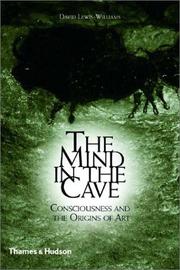
The most influential modern theory of Palaeolithic cave art, arguing it records altered states of consciousness and the emergence of a religious imagination. Contested among archaeologists, and unavoidable — it is the framework the last Earth's Children novel is quietly arguing with.
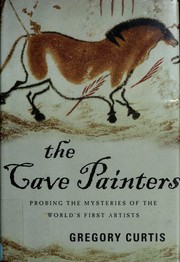
The caves themselves and the people who found and studied them, from Altamira through Lascaux to Chauvet. Accessible, narrative, and the ideal companion to The Land of Painted Caves — it is the real version of the tour that novel takes you on.