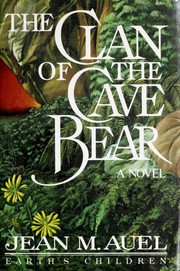
Start with The Clan of the Cave Bear. Earth's Children was published in order and reads in order: the six novels follow Ayla from roughly age five to adulthood with no gaps and no flashback structure, so there is no chronological-versus-publication argument to have here. The only decision worth making is how far to keep going, and that one is genuine.
The alternative people reach for is The Valley of Horses, where Ayla meets Jondalar and the series becomes the romance it is remembered as. That is a mistake. The first novel is the one that works as a novel — shorter, tighter, and built on a fully imagined culture whose rules matter: the Clan's ranked hierarchy, its gesture-based language, its total intolerance of a girl who does forbidden things. Skip it and everything after is a travelogue with a stranger in it.
The six novels
The Clan of the Cave Bear (1980) has Ayla orphaned by an earthquake and raised by Neanderthals who find her physically repellent and cognitively alien. Stated plainly, because it is central to the plot rather than incidental: Broud, the leader's son, rapes her repeatedly as an assertion of rank, she becomes pregnant at around eleven, and the child shapes the rest of the book. Auel writes it as coercion inside a system that has no concept of refusal, which is a large part of what the novel is about.
The Valley of Horses (1982) alternates between Ayla surviving alone — the flint-knapping, trapping and horse-taming chapters that many readers consider the best writing in the series — and Jondalar travelling toward her. From the moment they meet, the books carry long, explicit and often repeated sex scenes. That is a feature of the remaining five volumes.
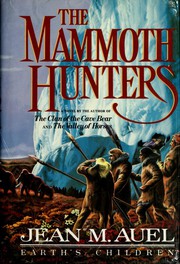
The Mammoth Hunters (1985) puts Ayla among Cro-Magnon people for the first time and hangs its plot on a love triangle sustained entirely by characters declining to speak to each other. It divides readers more than any other volume. The Plains of Passage (1990) is a year-long journey up the Danube and is where, by common agreement, the botanical and ethnographic description outruns the story.
The Shelters of Stone (2002) arrived after a twelve-year gap and is mostly arrival, introduction and ceremony. The Land of Painted Caves (2011) closes the series and is the one most readers regret: it recaps at length, repeats earlier material almost verbatim in places, and settles its central conflict quickly. If you want an exit, take it after The Plains of Passage — Ayla's story has arrived somewhere by then.
Where the archaeology stops and the invention starts
Auel researched seriously and it shows. The knapping, the pit traps, the atlatl, the cold-weather clothing and the medicinal plant use draw on real archaeological and ethnographic work, and Ice Age Europe is a real place at a real date. Readers come away feeling they have learned prehistory, so it is worth being exact about what is not evidence.
The Clan's inherited memories, their inability to learn anything genuinely new, and their near-total reliance on gesture rather than speech are Auel's construction on a 1970s picture of Neanderthals that has since been overturned. Ayla personally inventing the sewing needle, the fire striker, the domesticated horse and the domesticated wolf is narrative convenience. Compressing that many firsts into one lifetime is close to the opposite of what the record shows.
For where the science actually sits, Kindred is the current synthesis on Neanderthal life and the best single corrective. Neanderthal Man is Svante Pääbo's own account of sequencing the Neanderthal genome — a laboratory memoir, and the source of the interbreeding finding Auel's plot half-anticipated. On cave art, The Mind in the Cave argues a specific neuropsychological and shamanic explanation that is influential and genuinely contested, so read it as an argument rather than a summary; The cave painters is the gentler journalistic tour of the caves and of the scholars who fought over them.
Prehistoric fiction that does something else
The Inheritors is William Golding's short, disorienting novel narrated from inside Neanderthal perception, and it is the finest book on this list by a distance. Dance Of The Tiger was written by a working palaeontologist and reads like a hypothesis in narrative form. Reindeer Moon comes from an anthropologist who spent years with Kalahari hunter-gatherers and is unsentimental about hunger. Shaman is Kim Stanley Robinson's Chauvet-era novel, similar in scope to Auel and far more restrained. Browse more author reading orders on Discover.
Follow the full ordered path here: Earth's Children books in order: where to start with Jean M. Auel.