James Michener books in order: where to start
Michener wrote standalone novels, so there is no sequence to get right — the only real question is which of the thousand-page place-epics to spend a month on, and in what order to try them. The answer is: not the epics first. Start with the short early books, which are genuinely good and take an evening each, then commit to two or three of the big ones. Know the formula before you start: most of the epics open with a geological prologue covering millions of years, then follow several families across centuries in the same place, and the first hundred pages of any of them are the hardest. A catalogue warning that shapes this path: several Michener novels are recorded here only as split paperback volumes or foreign editions — Hawaii resolves as Part 2, Chesapeake only as the Spanish Bahía de Chesapeake, Centennial and Poland as first-of-two parts — so those, including two of his best-known books, are not on this list. Where a record has an odd display title but is the whole novel, that is noted.
Start with the short ones
BeginnerRead the early, tight Michener before deciding whether the epics are worth the time — these three are all under three hundred pages and none of them uses the formula.
▸ Study plan for this stage
Pace: Two to three weeks for all three, and none of them uses the formula. Tales of the South Pacific (270 pages) is nineteen linked stories and can be read a few at a time. The Bridges at Toko-ri (136 pages) is a single evening and is the leanest thing Michener wrote. Sayonara (226 pages) is two or three
- The early Michener as a short-form writer: linked stories and novellas, tightly cut, with no geological prologue and no multi-century sweep
- Place as the organising subject even at this length — the New Hebrides, a carrier off Korea, occupied Japan
- Cultures colliding through individuals caught between them, the subject that runs through everything he later wrote at ten times the length
- The Pulitzer for Tales, and what a linked-story collection could win in 1948
- Toko-ri's ending as evidence that the discipline was available to him, which makes the later expansiveness a choice rather than a limitation
- Michener as a participant in the war he writes about, not a researcher of it — the only stage on this path where that is true
- What holds the nineteen stories in Tales together, given that they have no continuous plot?
- How does Toko-ri spend its 136 pages — what does Michener refuse to include that a later Michener would have?
- What does Sayonara's central relationship let him say about the occupation that a report could not?
- Which of the three is best written, and does your answer change if you ask which is most ambitious?
- On this evidence, what would you predict about the epics — and what would you not have predicted?
- Read Tales of the South Pacific and mark which stories the musical South Pacific used and what it cut; the omissions are the ones about race.
- Time yourself on The Bridges at Toko-ri and read it in one sitting as written. Then write down its last two pages' effect in a sentence — you will test the epics against it.
- Take the opening five pages of each of the three books and note how quickly a named character appears. Keep the figures; you will repeat the exercise on the epics, where the answer is very different.
- Write a paragraph predicting how Michener will handle a place he did not personally serve in. Check it after The Source.
Next up: Having seen the tight early Michener, you can now judge the long-form books as a deliberate change of method rather than a decline into padding.

The Pulitzer-winning debut, written while he was a naval officer in the New Hebrides: nineteen linked stories about the war that Rodgers and Hammerstein turned into South Pacific. Nothing like the later doorstops and the best pure writing he ever did. The catalogue record has a second name conflated into its author field; the book is Michener's.
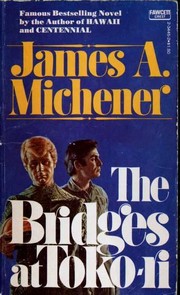
A hundred and fifty pages on Korean War carrier pilots, and famously the leanest thing he wrote. Read it second: it proves the discipline was available to him, which makes the later expansiveness a choice rather than a limitation.

An American pilot and a Japanese performer during the occupation, and the book where Michener's lifelong subject — cultures colliding in a specific place, told through people caught between them — first appears at novel length.
The three best epics
IntermediateCommit to the long-form Michener, starting with the one that most readers rate highest and moving to the two big American books.
▸ Study plan for this stage
Pace: Three to four months. These are very long, heavily researched novels and each is a genuine commitment: The Source (1,039 pages), Texas (1,096) and Alaska (939) — over three thousand pages between them, so at 40 pages a day each book is roughly a month. Read The Source first; its structure solves the
- The Michener formula: geological prologue, then several families followed across centuries in one place, each chapter a discrete era
- The Source's variant — an archaeological dig at a fictional tell, with each excavated level opening onto a story from its era, which gives the multi-century structure an actual reason to exist
- Representative characters: individuals built to stand for a group, and the trade between historical coverage and interiority that this forces
- Research as method — the teams, the reading, the years in place — and where the research shows through the fiction
- Why Texas reads fastest despite being the longest: the density of incident in the history it covers
- Alaska's prologue as the strongest of them, because the geology there is still visibly in progress
- How to read a thousand-page novel structured as linked eras — where you can pause, and where you cannot
- What problem does the dig frame in The Source solve that Texas and Alaska have to solve some other way?
- How many pages into each book does the first named human character appear, and what is Michener buying with that delay?
- Which of the three families or lineages did you actually care about, and what did Michener do differently with that one?
- Where in Texas does the fiction visibly give way to the history lesson, and does it recover?
- In Alaska, what does the pipeline material do to a book that began with the land bridge — is the modern section a payoff or an appendix?
- Chart the era structure of The Source: list each excavated level, its date, and the story attached to it. Then do the same for Texas's chapters. Comparing the two charts is the clearest possible view of what the dig frame is for.
- Repeat the stage-one exercise: count the pages before the first named character in each of these three books, against the figures you took from Tales and Toko-ri.
- Track one lineage through Texas from its first appearance to its last, noting the page ranges. You will find long absences; note what the book is doing while they are offstage.
- Read Alaska's geological prologue twice — once first, once after finishing the novel — and note what the second reading tells you that the first could not.
- After all three, write one page on which of the formula's parts you would keep and which you would cut. Michener answers the same question himself in the last stage.
Next up: With the formula understood on home ground, the next stage takes it abroad, including to the two books where the politics of what Michener was doing became a live argument.
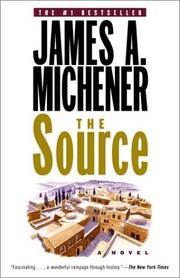
The one to read if you read one: an archaeological dig at a fictional tell in Israel, told through the objects found at each level, each of which opens onto a story from that era. The structure solves the pacing problem the other epics have, and it is the most intellectually serious thing he did.
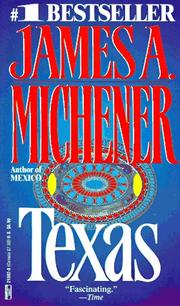
The most readable of the American epics and the one that feels shortest despite its length, because the history it covers is dense with incident — the Alamo, the Republic, the cattle drives, oil. Read it after The Source when you know how the form works.

Late Michener and the last of the epics with real energy: the land bridge, the Russians, the gold rushes, statehood and the pipeline. The geological prologue is unusually good here, because in Alaska the geology is still visibly happening.
Beyond America
IntermediateRead the books set outside the United States, including the two most politically contested ones, and the travel writing that fed them.
▸ Study plan for this stage
Pace: Three to four months. The Covenant is a full-length epic covering South Africa from the earliest inhabitants through apartheid; Caribbean (691 pages, catalogued as a limited-edition printing of the complete novel) and Mexico (640 pages, catalogued in capitals — it is the 1992 novel) are each about a
- The formula applied to places Michener had no personal claim on, and what changes when the researcher is a foreigner
- The Covenant as an argument as well as a novel — a contested account of Afrikaner history published into a live political conflict
- Caribbean's structural problem: the widest range of societies of any of the epics, and the least depth in any one of them
- Mexico's visible seam — begun in the 1960s, abandoned, finished thirty years later, so that young and old Michener sit in the same book
- The bullfight as Mexico's frame, and what an event-based frame does that a geological one does not
- Iberia as the demonstration of what the research underneath the epics actually was, and the argument that he wrote better when not obliged to invent families
- Travel writing versus historical fiction as two ways of handling the same material
- What case is The Covenant making about Afrikaner history, and which parts of it would a South African historian dispute?
- Caribbean covers a dozen societies. Pick the one it handles worst and say what a whole novel on it would have needed.
- Where exactly in Mexico can you see the join between the 1960s material and the 1990s material, and what tipped you off?
- Iberia has no invented families at all. What does Michener gain, and what does the reader lose?
- Across these four, is the formula portable — does it work as well outside the United States, and on what evidence?
- Read one chapter of The Covenant on a specific episode — the Great Trek, or the founding of the apartheid statutes — and then read a South African historian on the same events. Write down every point of factual and interpretive difference.
- Take Iberia's chapters on two Spanish cities and read them beside the equivalent city-and-era chapters in Mexico. The difference between what he does with a place he is reporting and a place he is peopling is the whole question of this stage.
- List Caribbean's islands and eras in order with page ranges, then mark the three that get the most pages. Ask whether that allocation matches the historical weight.
- In Mexico, find the bullfight scenes and note how many pages of past-tense history hang off each one; that ratio is the book's structure in miniature.
Next up: Having seen the method stretched to its limits abroad, the final stage lets Michener explain it in his own words and then hands you a critic who is not persuaded.
South Africa from the Bushmen to apartheid, written and published while apartheid was in force. It was banned in some quarters and criticised from several directions, and it is worth reading alongside a South African historian rather than alone — but it is the most ambitious of the non-American epics.
The islands from the Arawaks through the sugar economy, piracy, slavery and independence — the epic that covers the widest range of societies and does least well at any one of them. Read it for the sweep. The catalogue record is a limited-edition printing of the full novel.
Begun in the 1960s, abandoned, and finished thirty years later around a bullfighting festival with the pre-Columbian and colonial past cut in. Uneven, and interesting precisely because the seam between young and old Michener is visible. Catalogued in capitals; it is the 1992 novel.
Not a novel at all — his book about Spain, written after decades of travel there, and by common consent the best non-fiction he produced. Read it as the demonstration of what the research underneath the epics actually was, and of how much better he wrote when he was not obliged to invent families.
Michener on Michener
IntermediateUnderstand the method, the industry it became, and the honest case for and against the whole enterprise.
▸ Study plan for this stage
Pace: Two to three months. Space (815 pages) is a full epic and a month on its own; read it first as the test case, because it applies the formula to events recent enough that many readers remember them. The Novel (446 pages) is short by his standards and is four narrators on the making of a book. The Wor
- Space as a stress test: the formula meeting a subject whose real participants were alive and whose facts readers already knew
- Where representative characters flatten into representatives, and how visible that becomes when the underlying history is recent
- The Novel's four-narrator structure — writer, editor, critic, reader — as Michener's most formally interesting late work and an open examination of the kind of writer he had become
- Michener explaining the geological prologue in his own words in the memoir, which is the only place he does
- The memoir as a self-account by an interested party: candid, but structured by theme in a way that lets him choose what stands next to what
- May's sceptical reading against Michener's genial one, and his judgement on which of the forty books still repay reading
- The critical case against the whole enterprise, and what survives it
- In Space, which real events does Michener fictionalise, and where does knowing the real version work against the novel?
- What does each of The Novel's four narrators know that the others do not, and which one is Michener?
- How does Michener justify the geological prologue in the memoir, and does the justification match what the prologues actually do?
- Where does May contradict the memoir directly, and whose account do you find better supported?
- Which Michener books does May say are still worth reading, and how does his list compare with the one this path has given you?
- After all of it: what is the strongest case for reading a thousand-page Michener today, and what is the strongest case against?
- Take one strand of Space that covers a real programme and check it against a factual history of the same events; list what Michener compressed, invented or reassigned.
- Read the critic's sections of The Novel immediately after May's biography and note where Michener anticipates the exact objections May makes.
- Find the memoir's explanation of the geological prologue and hold it against the prologues of The Source, Texas and Alaska. Mark each place the practice diverges from the stated principle.
- Using May, build a final list: the Michener novels worth reading, in the order you would give someone else, with a one-line reason each. Note which of them this path could not include because the catalogue holds them only as split or foreign editions.
Next up: The path ends with Michener's own account of the method and a critic's account of its costs, which between them are the fairest basis for deciding how many more of the forty books you want.
The American space programme done as a Michener epic, and the one where the formula meets a subject recent enough that many readers knew the facts. A useful test case: it shows both what the method captures and where it flattens people into representatives.
Four narrators — writer, editor, critic, reader — on the making of a book. Structurally his most interesting late work and openly self-examining about the kind of writer he had become and what the critics said about it.
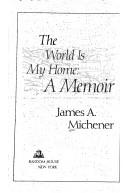
The memoir, catalogued under a clipped display title, and organised by theme rather than chronology. It is candid about the orphaned childhood, the research habits and the money, and it is the only place he explains the geological prologue in his own words.
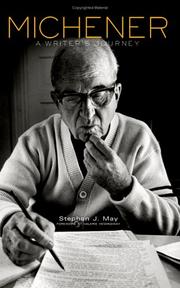
A short critical biography, filed under the bare surname, and a corrective to the memoir — May is sceptical where Michener is genial, and clear about which of the forty books are still worth anyone's time. The right last book here, since it gives you the case against the ones this path left out.