Start with Tales of the South Pacific. Michener wrote standalone novels, so there is no sequence to get right — the only real question is which of the thousand-page place-epics deserves a month, and the answer is that you should not begin with one.
The Pulitzer-winning debut takes an evening. Nineteen linked stories about the Pacific war, written while he was a naval officer in the New Hebrides, and the basis for the Rodgers and Hammerstein musical. It is nothing like the later doorstops and it is the best pure writing he ever did. One note on the record: its author field has a second name conflated into it, but the book is Michener's.
Know the formula before you commit
Most of the epics open with a geological prologue covering millions of years, then follow several families across centuries in one place. The first hundred pages of any of them are the hardest, and readers who quit almost always quit there. Knowing this in advance is most of what it takes to get through.
The other two short ones
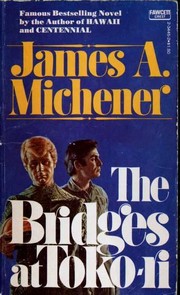
The Bridges at Toko-ri is a hundred and fifty pages on Korean War carrier pilots and the leanest thing he wrote — read it second, because it proves the discipline was available to him and that the later expansiveness was a choice. Sayonara puts an American pilot and a Japanese performer together during the occupation, and is where his lifelong subject first appears at novel length: cultures colliding in a specific place, told through the people caught between them.
The three epics to read first
The Source is the one to read if you read only one. An archaeological dig at a fictional tell in Israel, told through the objects found at each level, each opening onto a story from that era. The structure solves the pacing problem the other epics have, and it is the most intellectually serious thing he did.
Texas is the most readable of the American epics and feels shortest despite its length, because the history is so dense with incident — the Alamo, the Republic, the cattle drives, oil. Alaska is late Michener and the last epic with real energy: the land bridge, the Russians, the gold rushes, statehood, the pipeline. Its geological prologue is unusually good, because in Alaska the geology is still visibly happening.
Which famous ones are missing here, and why
Several of the best-known Michener novels are recorded in our catalogue only as split paperback volumes or foreign editions. Hawaii resolves as part two, Chesapeake only as the Spanish edition, and Centennial and Poland as first-of-two parts. They are not on this list for that reason, not because they are not worth reading — Hawaii and Centennial in particular are among the books most often named as his best. Buy those separately.
Beyond America
The Covenant covers South Africa from the earliest inhabitants to apartheid, and was written and published while apartheid was in force. It was banned in some quarters and criticised from several directions, both by those who found it too sympathetic to Afrikaner self-understanding and by those who found it a foreigner's flattening of the country. It is the most ambitious of the non-American epics, and it is better read alongside a South African historian than alone.
Caribbean-Limited Ed — the record is a limited-edition printing of the full novel — runs from the Arawaks through the sugar economy, piracy, slavery and independence. It covers the widest range of societies and does least well by any one of them. MEXICO, catalogued in capitals, was begun in the 1960s, abandoned, and finished thirty years later; the seam between young and old Michener is visible, which is the interesting thing about it.
Iberia; Spanish travels and reflections is not a novel at all. It is his book about Spain, and by common consent the best non-fiction he produced — worth reading as a demonstration of what the research underneath the epics actually was.
Michener on Michener
Space does the American space programme as an epic, on a subject recent enough that readers knew the facts, which makes it a useful test of both what the method captures and where it flattens people into representatives. The Novel gives four narrators — writer, editor, critic, reader — on the making of a book, and is openly self-examining about the kind of writer he had become. World is My Home is the memoir, catalogued under a clipped title and organised by theme rather than chronology. Finish with Michener, Stephen J. May's short critical biography, filed under the bare surname: it is sceptical where the memoir is genial, and clear about which of the forty books still repay the time.
Follow the full ordered path here: James Michener books in order: where to start.