James M. Cain books in order: where to start with American noir
A slim, ferocious shelf. Cain wrote in the first person, in a flat American voice, about people who want something badly enough to destroy themselves for it — and he is far less interested in crime than in appetite. Four books carry the reputation and they are all short.
Start here
BeginnerBegin with the one that shocked 1934 and still moves faster than almost anything.
▸ Study plan for this stage
Pace: Two or three days. The Postman Always Rings Twice is barely 120 pages of actual text and Cain designed it to be read in one sitting — do that once, then go back over the first chapter and the last chapter slowly.
- The confessional first person: Frank is telling you this from somewhere, and where he is telling it from is the novel's last card
- Cain's flat declarative sentence — almost no metaphor, almost no interiority, everything carried by action and dialogue
- Appetite rather than crime as the engine; the murder is a means, and Cain is bored by detection
- Pace as structure — the whole book is roughly the length of a novella and nothing is withheld for suspense
- The 1934 scandal: banned in Boston, and what specifically was found unpublishable
- Cain's own rejection of the 'hardboiled school' label, and why the label stuck anyway
- Who is Frank addressing, and at what point can you first tell?
- The title has nothing to do with the plot. What did Cain say it meant, and does the novel support it?
- How much of Cora do we ever get directly, and how much is Frank's account of her?
- Where does Cain spend his few descriptive sentences, and what does that tell you about what he thinks matters?
- Is the second half — the trial, the insurance, the lawyers — a sag or the actual subject?
- Time yourself on the first chapter. It is about three pages and it establishes drifter, diner, wife and husband. List what Cain gives you and what he simply declines to supply.
- Copy out the first and last paragraphs and set them next to each other. The frame is what turns the book from a crime story into a confession.
- Count the similes in the whole novel. There are close to none; find the exceptions and ask why they earned the exemption.
- Watch or read a summary of one film version afterwards and note what the adaptation had to add. Every version adds something, and what gets added marks what Cain deliberately left out.
Next up: You now know the Cain machine — first-person confession, appetite, an insurance policy at the centre — which is exactly what Double Indemnity rebuilds with the parts more tightly fitted.
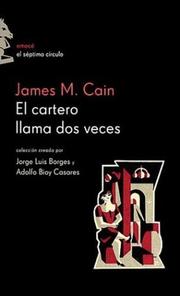
A drifter, a roadside diner, a wife and a husband who is in the way. Under a hundred and twenty pages, banned in Boston, and the opening is a masterclass. Our record credits several film-makers alongside Cain.
The insurance novel
BeginnerThe other famous one, and the tighter machine.
▸ Study plan for this stage
Pace: Two or three days, 158 pages. It first appeared as a magazine serial, so the chapter breaks land hard; read it in three or four sessions of two chapters each and the serial rhythm becomes obvious.
- The inverted structure — Huff tells you the scheme, so the tension is entirely in execution and unravelling
- Technical expertise as texture: actuarial tables, the double-indemnity clause, the mechanics of a claim
- Keyes as the anti-detective — an investigator motivated by professional irritation rather than justice
- The serial origin and its effect on chapter shape and cliffhangers
- The same triangle as Postman, deliberately reused with a professional in place of a drifter
- Billy Wilder and Raymond Chandler's 1944 film, and the fact that Chandler disliked Cain's dialogue and rewrote it
- Why does Cain hand you the entire plan in the first fifty pages rather than withholding it?
- What does Huff's insurance expertise buy the novel that Frank's drifting could not?
- Where does the book stop being about the crime and start being about Phyllis, and is that turn prepared or abrupt?
- Compare the endings of Postman and Double Indemnity: what is each willing to do to its narrator?
- Chandler thought Cain's dialogue unspeakable aloud. Read a page aloud and judge.
- Read Postman and Double Indemnity's opening chapters back to back and list the shared components — the arrival, the husband, the wife, the first look. Cain is reusing a chassis and it is instructive to see it bare.
- Mark every passage of pure insurance procedure. Then ask whether the book would survive their removal.
- Track Keyes's appearances and note that he is offstage for long stretches. Work out how Cain keeps him present anyway.
- Read the last three pages twice: once as a plot resolution, once as a confession delivered to a specific reader.
Next up: Both short novels run on the same crime template; Mildred Pierce removes the crime entirely and shows what Cain was actually interested in all along.
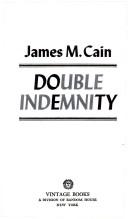
An insurance salesman and a client's wife plan a death that will pay double. Written as a magazine serial and later filmed by Wilder from Chandler's script.
The long novel
IntermediateThe book that is not noir at all, and may be his best.
▸ Study plan for this stage
Pace: Two weeks at roughly twenty-five pages a day. At 288 pages Mildred Pierce is nearly twice the length of the two before it and it moves at a completely different speed — a domestic and economic chronicle rather than a sprint. Do not try to read it in the two sittings the earlier books allowed.
- A novel with no murder in it, by the writer most associated with murder
- Depression-era Glendale: pies, waitressing, a chicken-and-waffle restaurant, credit, and the exact mechanics of building a small business
- Third-person narration after two first-person confessions, and what Cain gains by stepping outside a narrator's account
- Veda as the object of an appetite — Cain's constant subject relocated from sex to a daughter's regard
- Class aspiration and the American middle class as Cain's real terrain
- The 1945 film's invented murder plot and framing device, and what its addition reveals about how Cain was read
- Mildred wants Veda's love. In Cain's terms, is that appetite different in kind from Frank's or Huff's, or only different in object?
- What does the third-person narration let Cain show about Mildred that she would never say about herself?
- How much of the novel is business procedure — costing, hiring, expansion — and why does Cain give it so much room?
- Is Veda a character or a force? Does the novel ever grant her an interior?
- Does the absence of a crime make this a departure from noir, or does it expose noir as having been about something else?
- Keep a one-line ledger of Mildred's finances as you read — each loan, each opening, each setback. Cain tracks them precisely and the arc of the novel is legible in the numbers.
- Read the scene where Mildred first hears Veda sing, then reread the murder scene in Postman. Both are the moment the narrative commits; compare how each is written.
- Pick one chapter and rewrite its opening paragraph in Cain's first person as Mildred. The resistance you meet is the reason he chose third.
- Look up a plot summary of the 1945 Curtiz film and write down every element it added. Then decide which additions the novel had made unnecessary.
Next up: With the range established — sprint and chronicle, crime and no crime — the last stage takes on the two books where Cain's obsessions go somewhere much stranger.
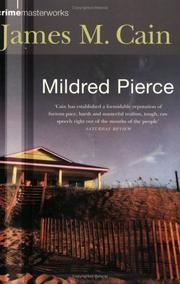
A woman builds a restaurant business in Depression California to buy the love of a daughter who despises her. There is no murder in it. The film added one.
The strange ones
IntermediateThe two that show how odd his range was.
▸ Study plan for this stage
Pace: Two weeks. Serenade is 209 pages and The Butterfly 156, but both are slower going than their length suggests because the material is uncomfortable and the plotting is looser. Read Serenade over a week, take a break, then read The Butterfly in three or four sittings.
- Serenade's Mexico and its opera-singer narrator — Cain writing about the art form he knew best and had failed at
- The novel's 1937 theory linking sexuality and the singing voice, which was startling then and reads as plainly homophobic now; know it is coming before you open the book
- Juana, and Cain's handling of a Mexican woman as both saviour and object — worth reading with the same scepticism the Serenade thesis demands
- The Butterfly's West Virginia mining valley and its incest plot: the most extreme premise Cain attempted
- Cain's own preface to The Butterfly, in which he answers his critics and denies the Hemingway comparison
- What the two books show about the limits of the Cain method when the subject is not appetite for money or sex but something he cannot name flatly
- Serenade's argument about voice and sexuality is presented as knowledge, not opinion. How does the novel's form make it hard to dispute from inside?
- Where does Cain's plain style break down under operatic material, and where does the mismatch work in his favour?
- The Butterfly is his least read book. Is that a judgement on its quality or on its subject?
- Both books end in flight or violence rather than in law. Compare with Postman and Double Indemnity, where the institutions win.
- Having read five, which of Cain's narrators is the least reliable, and how did you determine it?
- Is the reputation — four short books, one of them not noir — a fair account of the shelf?
- Read the church scene in Serenade twice: once for what happens, once for the sentences Cain uses to avoid saying what happens.
- Read Cain's own preface to The Butterfly last rather than first, then decide whether it improves or damages the novel.
- Rank all five books by how much of the total page count is dialogue. Then rank them by how much you enjoyed them, and see whether the two lists relate.
- Write a short recommendation for each of the five that names one reader who should read it and one who should not — this is the practical output of the whole path.
- Reread the first page of The Postman Always Rings Twice after finishing Serenade. Twelve years and a great deal of ambition separate them and the difference is audible in a paragraph.
Next up: With all five read you have the whole reputation in hand, and are placed to judge for yourself which Cain the films kept and which they discarded.

An opera singer in Mexico who has lost his voice. It contains a theory about sexuality and singing that was startling in 1937 and reads very strangely now; worth knowing that before you start.
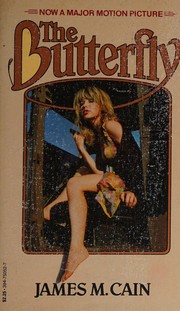
A West Virginia mining valley and an incest plot. The most extreme of his books and the least read.