Start with The postman always rings twice. A drifter walks into a roadside diner in California, there is a wife, and there is a husband who is in the way. It runs under a hundred and twenty pages, it was banned in Boston in 1934, and the opening paragraph is still taught as a masterclass in getting a novel moving. Nothing else on this list is a better demonstration of what Cain actually does.
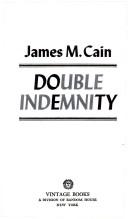
The alternative first move is Double Indemnity, and it is not wrong — it is the tighter machine of the two, and the Billy Wilder film from Raymond Chandler's screenplay is more famous than the book. But it is a smaller book, built for a magazine serial, and it works better once you have seen the same engine running rough in the earlier novel. One thing to establish before either: Cain wrote in the first person, in a flat American speaking voice, about people who want something badly enough to wreck themselves getting it. He is far less interested in crime than in appetite, and he objected all his life to being filed alongside Hammett and Chandler. The books bear him out.
Start here
The postman always rings twice (1934). Read it in one sitting, which is how it was designed. A practical note: our catalogue record for this title credits several film-makers alongside Cain, an artefact of how often it has been adapted rather than anything about the book.
The insurance novel
Double Indemnity is the other famous one. An insurance salesman and a client's wife arrange a death that will pay out at twice the value, and the whole thing turns on the salesman knowing exactly how the fraud will be investigated because investigating it is his job. Written as a serial in the 1930s and published as a book in 1943, it is the most efficient thing he wrote.
The long novel
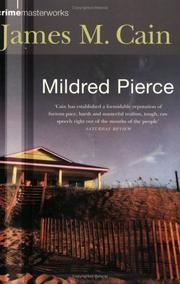
Then Mildred Pierce (1941), which is not noir at all and may well be his best book. A woman in Depression-era California builds a restaurant business from nothing, and does it to buy the love of a daughter who despises her. There is no murder in it. The 1945 film added one, which tells you a great deal about what Hollywood thought Cain was for. It is roughly three times the length of the first two books and it is a straight social novel about work, money and class in Glendale.
The strange ones
Two more, for readers who want the full range. Serenade (1937) follows an opera singer in Mexico who has lost his voice, and it contains a theory linking sexuality and singing that was startling when it appeared and reads very oddly now. Worth knowing that before you start rather than after.
The butterfly (1947) is set in a West Virginia mining valley and turns on an incest plot. It is the most extreme of his books and the least read, and it is here for completeness rather than as a recommendation.
Publication order, or this order?
They are nearly identical, and that is unusual enough to say plainly: Cain published his three best books first, in 1934, 1936 and 1941, and never matched them again. The only reordering here is putting Serenade after Mildred Pierce instead of before it, so that the two odd books sit together at the end. If you want strict chronology, read Serenade third; nothing breaks.
Where to stop
Two books is the honest answer. The postman always rings twice and Double Indemnity are what the reputation rests on and take an evening each. Add Mildred Pierce if you want the surprise — the discovery that the man who wrote the fastest crime novel in America also wrote a patient four-hundred-page book about a woman opening a restaurant. The later work, of which there is a lot, declines sharply, and almost nobody argues otherwise.
More crime and noir reading paths are on Discover.
Follow the full ordered path here: James M. Cain books in order: where to start with American noir.
Ready to learn something deeply?
Build a reading path — free