Icon Painting: The Best Books to Read, in Order
Icon painting is one of the few crafts where you cannot separate the technique from the doctrine: the materials, the proportions and the prototypes are all theologically argued, and a manual that skips the argument will leave you copying shapes you do not understand. This path starts with what an icon is meant to do, moves to the theology that governs it, then to the studio practice — gesso board, egg tempera, gold leaf — and finally to the medieval materials literature and the historical prototypes you will be working from.
What an Icon Is For
BeginnerLearn to read an icon before attempting to paint one: the conventions of gesture, colour, inscription and perspective, and the practice of prayer they exist to serve.
▸ Study plan for this stage
Pace: 2–3 weeks, about 475 pages. Praying with Icons (218) is a devotional introduction written from inside Orthodox practice — Jim Forest is a believer describing use, not a scholar describing objects — and Sacred Doorways (258) is a beginner's guide to reading icons, effectively a visual grammar with pl
- The icon as an object of use — venerated, kissed, carried, prayed before — rather than an object of display
- Veneration distinguished from worship, and why the distinction is doctrinally load-bearing
- Inverse perspective: lines converging toward the viewer rather than away, and what it is meant to imply
- The conventional vocabulary of gesture, hand position, and the blessing hand
- Colour convention — gold, red, blue, and what each signifies in the standard schemes
- Inscriptions and abbreviations: IC XC, MP ΘY, the halo lettering, and how to read a name off an icon
- The tilted architecture and unnaturalistic landscape as deliberate signals rather than incompetence
- What does Forest say an icon is for, and how does that use constrain what an icon may look like?
- Decode a standard Christ Pantocrator from Martin's grammar: what does every element of it mean?
- Why is inverse perspective used, and what argument does Martin give for it?
- What do the standard colours signify, and where do the conventions vary between Greek and Russian practice?
- What is the difference between a religious painting and an icon, as these two books define it?
- Take a single reproduction of the Vladimir Mother of God and annotate every element you can name using Martin's grammar; keep the annotated sheet.
- Find an Orthodox church near you and spend an hour with the iconostasis identifying subjects and reading the inscriptions.
- Copy out the standard abbreviations Martin lists and drill them until you can identify a saint from the lettering alone.
- Read Forest's chapters on the practice of praying with an icon and actually do it once, so that the craft chapters have a purpose attached.
Next up: You can now read an icon; the next stage explains why it may not be painted any other way.

The gentlest and most widely recommended introduction to icons as objects of use rather than of study. Start here because the craft chapters later make no sense unless you know what the finished object is supposed to do.
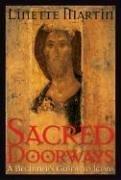
A beginner's guide to reading icons — why the hands are held that way, why the buildings tilt, what the letters mean. Read it second: it is effectively a visual grammar, and it will change what you notice in every plate in the later books.
The Theology That Governs the Craft
IntermediateUnderstand the Orthodox theological argument for images — the iconoclast controversy, the doctrine of the incarnation as the ground for depiction, and why the canon constrains invention.
▸ Study plan for this stage
Pace: 7–8 weeks, and the heaviest reading on this path. The Meaning of Icons (222) is Ouspensky and Lossky's classic exposition organised by feast and saint type and is the book most icon schools assign; Theology of the Icon is Ouspensky's two-volume historical and doctrinal treatment and should be read a
- The iconoclast controversy: the arguments actually made on both sides, and the Seventh Ecumenical Council's resolution
- The incarnation as the doctrinal ground of depiction — the claim that a depictable God is the whole permission
- Prototype and image: veneration passing to the prototype rather than resting on the panel
- Why the canon constrains invention, and what an iconographer is and is not permitted to originate
- The feast and saint types as a fixed repertoire, and the logic by which each type is composed
- Sendler's geometry: the construction of the face, the modular proportions, inverse perspective drawn out mathematically
- Ouspensky's account of the post-Petrine Russian 'decline' into Western naturalism, which is a contested art-historical judgment as well as a theological one
- Evdokimov's theology of beauty and the argument that an icon is not simply a painting of a holy subject
- What were the iconoclasts' strongest arguments, and how did the iconodules answer each?
- Explain the prototype-and-image doctrine, and say what it implies about a badly painted icon.
- What does the canon actually fix and what does it leave to the iconographer?
- How does Sendler construct the face geometrically, and can you reproduce his scheme on paper?
- Ouspensky treats the Westernised Russian icon as a corruption. What is his argument, and what would an art historian who disagreed say?
- What does Evdokimov add that the three earlier books do not?
- Work through Sendler's facial construction with compass and ruler on tracing paper until you can lay out the proportional scheme from memory.
- Take five feast icons from The Meaning of Icons and write down, for each, which elements are canonically fixed and which vary between the examples reproduced.
- Draw the inverse-perspective construction Sendler describes for a throne or a building, and compare it to a one-point perspective version of the same object.
- Write a page summarising Ouspensky's argument against naturalism, then find a Westernised Russian icon of the eighteenth century and assess it on his terms.
Next up: With the doctrine understood, you can now follow a technical instruction knowing what it is for — which is the point at which the studio manuals become usable.
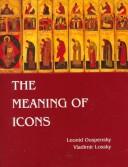
Ouspensky and Lossky's classic exposition, moving through the major feast and saint types and explaining what each is doing theologically. The standard first serious book, and the one most icon schools assign.
Ouspensky's two-volume historical and doctrinal treatment, including the iconoclast crisis and the later Russian decline he considered a corruption. Read it after The Meaning of Icons, whose claims it argues at length.

Catalogued as The Icon, Image of the Invisible. Sendler is the crucial bridge on this path: a Jesuit scholar who covers theology, aesthetics and technique in one volume, including inverse perspective and the geometry of the face.
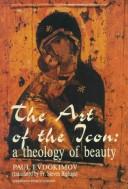
Evdokimov's theology of beauty, the most philosophical book here. Fourth because it presupposes the doctrinal ground the previous three lay, and because it is the best answer to why an icon may not simply be a painting of a holy subject.
The Studio Practice
IntermediateWork through the physical sequence — seasoned board, cloth and gesso, transfer of the prototype, gold leaf, egg tempera in float and line, olifa varnish — well enough to attempt a first icon.
▸ Study plan for this stage
Pace: 6–8 weeks, though the page count is small: The Technique of Icon Painting is 80 pages, A Brush with God 82, and The Icon Handbook 319. The reading is a fraction of the time — the schedule is set by the work. Gesso must be laid in many thin coats with drying between, egg tempera is built in dozens of
- Board preparation: seasoned wood, the sunken kovcheg field, battens, and why the panel moves if you get it wrong
- Cloth (pavoloka) and gesso (levkas): rabbit-skin glue, chalk or gypsum, the number of coats and the sanding sequence
- Transferring the prototype — pouncing, incising the outline, and why the drawing is copied rather than invented
- Gilding: bole, water gilding versus mordant gilding, burnishing, and the order relative to painting
- Egg tempera: yolk emulsion, pigment grinding, the proportion of yolk to water, and why the medium behaves as it does
- The float-and-line sequence — roskrysh underpainting, successive lighter floats, then assist and highlight lines
- Olifa and modern varnish alternatives, and the drying and dust problem
- Choosing a prototype responsibly, using Coomler for types and inscriptions
- List the full sequence from raw board to finished icon in order, with an approximate time for each step.
- What does Pearson say goes wrong most often, and at which step?
- Why is gilding done before the painting rather than after, and what happens if you reverse it?
- What is the proportion of yolk to water in the emulsion, and how does the ratio change the handling?
- How do Ramos-Poqui and Pearson differ on any single step, and which explanation is more convincing to you now that you have the theology?
- Prepare one small board fully: cloth, gesso in the number of coats Ramos-Poqui specifies, sanded between, and record the drying times you actually get.
- Mix egg tempera from yolk and a single earth pigment and paint a test card of ten floats, so you can see the medium build.
- Gild a scrap panel with bole and loose leaf before touching a real icon, and burnish it; the failure modes are worth meeting on a scrap.
- Pick a prototype from Coomler, transfer it by pouncing, and paint one complete small icon following Ramos-Poqui's sequence with Pearson open beside you as the second opinion.
- Keep a bench log of every deviation you make from the manuals and why — it becomes your own version of Pearson's honesty.
Next up: Having followed the modern instructions, the next stage takes you to the historical evidence behind them so you can judge an instruction rather than obey it.
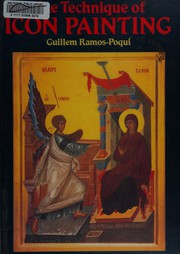
The most practical step-by-step in English, taking one icon from raw board to finished varnish with materials lists. The core craft book of this path.

Pearson writes as a working iconographer and teacher, and is far more forthcoming than most about mistakes, drying times and what actually goes wrong. Read it alongside Ramos-Poqui as the second opinion.

A reference on prototypes, inscriptions and iconographic types with practical notes, useful once you are choosing a subject rather than following an exercise. Third because it is the book you consult rather than read.
The Materials, from the Medieval Workshop
IntermediateGo behind the modern manuals to the historical evidence for tempera and gilding, so you can judge a technique instruction instead of merely following it.
▸ Study plan for this stage
Pace: 2–3 weeks, 380 pages: The Practice of Tempera Painting (141) and The Materials and Techniques of Medieval Painting (239). Both are Daniel V. Thompson's — the first is a practical account of egg tempera as a medium, the second a technical reference on pigments, binders, gesso and gilding drawn largel
- Why egg tempera dries as it does — emulsion chemistry, water loss, and the long slow cure after apparent dryness
- Handling consequences: why tempera cannot be blended wet and must be hatched, and why that dictates the painting sequence
- Pigment identity and permanence: earths, mineral pigments, lakes, and which historical pigments are toxic or fugitive
- Grinding, washing and levigation as preparation steps that change how a pigment behaves
- Gesso grosso and gesso sottile, and what each layer is for
- The Cennini tradition as the documentary source most modern manuals silently descend from
- How to read a technique instruction as a claim about materials, and therefore how to test one
- Why does tempera require hatching rather than blending? Answer from the medium's properties, not from convention.
- Which of the pigments Thompson describes are still in use, which have been replaced, and why?
- What is the difference between gesso grosso and gesso sottile, and what does each contribute?
- Where does Thompson's account contradict, or merely omit, something the modern manuals in the previous stage told you?
- Which of Thompson's instructions rest on Cennini's authority rather than on his own testing?
- Grind and levigate one earth pigment yourself following Thompson, and compare its handling to the commercially prepared version of the same pigment.
- Paint two identical test panels, one hatched and one attempted wet-blended, and record exactly how the second fails.
- Go back through your bench log from the previous stage and mark every instruction whose reason Thompson explains, and every one he does not.
- Make gesso grosso and gesso sottile separately and lay them in sequence on a scrap, then sand and compare the surface to a single-formula panel.
Next up: With the materials understood from the inside, the last stage supplies the historical canon you will actually be copying from.
Thompson's 1936 classic, still the clearest account of egg tempera as a medium — emulsion, handling, the reasons it behaves as it does. Every modern icon manual is downstream of this book.
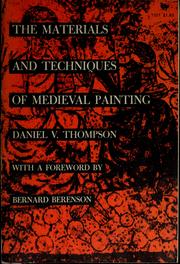
The companion volume on pigments, binders, gesso and gilding, drawn largely from Cennini. Read it second, as the reference behind the previous book's instructions.
The Prototypes and Their History
IntermediateKnow the historical canon you will be copying — Byzantine, Russian and Greek — and where the surviving major examples are.
▸ Study plan for this stage
Pace: 3–4 weeks, about 770 pages, and mostly looking rather than reading. Icons and Saints of the Eastern Orthodox Church (383) is a Getty identification guide organised for lookup, heavily illustrated; Weitzmann's The Icon (134) is a large-format plate survey of Byzantine, Greek, Russian, Georgian and Ba
- The major types and their names: Pantocrator, Hodegetria, Eleousa, Deesis, and the feast cycle
- Regional hands: Byzantine, Cretan, Novgorod, Moscow, Balkan, Georgian — what distinguishes them visually
- Encaustic and the Sinai panels as the earliest surviving group, and why they survived
- Rublev, Theophanes the Greek and the Moscow school as named artists in an anonymous tradition
- Where the major examples physically are — Sinai, Athos, the Tretyakov, the Benaki, Ohrid
- Icons inside a total visual programme: mosaic, fresco, architecture, liturgy (Cormack's correction)
- Imperial and monastic patronage as a determinant of what got made and what survives
- Identify five saints from their attributes and inscriptions alone using Tradigo, then check yourself.
- What visually distinguishes a Cretan icon from a Novgorod one of the same subject?
- Why do the Sinai encaustic panels survive when so little else of that date does?
- What does Cormack say is lost by studying icons apart from the buildings and liturgy they belonged to?
- Which prototype will you paint next, where is the best surviving example of it, and what does its regional tradition ask of you?
- Build an index card for each of the twelve great feasts with its canonical composition, drawn from Tradigo and Weitzmann's plates.
- Take one subject — the Nativity, say — and compare four versions across Weitzmann's plates, listing every element that stays fixed and every one that moves.
- Choose a prototype from Weitzmann and produce a full-size cartoon of it, using Sendler's geometry from stage two to check the proportions.
- Visit a museum collection with Byzantine or Russian icons and identify ten of them from Tradigo before reading the wall labels.
Next up: You now have a doctrine, a technique, a materials literature and a canon of prototypes — enough to paint from a chosen model and to keep working from a monastery collection or a teacher rather than from a manual.
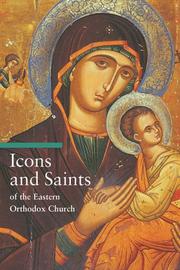
The Getty guide to identifying subjects and types, heavily illustrated and organised for lookup. The most useful single book for choosing and understanding a prototype.

The large survey of Byzantine, Greek, Russian, Georgian and Balkan icons by the scholar who catalogued Sinai. The plate volume to work from, and distinct from Sendler's similarly named book above.

Catalogued as Byzantine Art (Oxford History of Art). Cormack places icons inside the wider visual culture that produced them — mosaic, architecture, imperial patronage. The closing context, and the correction to treating icons as a self-contained craft.