Icon painting is unusual among painting subjects because the technique is inseparable from the reasoning behind it. Why the gold ground, why the inverse perspective, why the face is built up from dark to light in successive translucent layers, why the painter works from an existing prototype rather than from imagination — each of these is a theological answer before it is a studio method. Someone who learns the procedure without the reasoning tends to produce work that looks like an icon and functions like an illustration.
So the order here runs from reading icons, to the theology, to the technique, and finally to art history. The books also come from three different places, and it is worth knowing which you are holding: some are written from inside Orthodox practice, some by Western painters adapting the tradition, and some by art historians studying icons as objects. They disagree, politely, about what an icon is for.
Learning to read one
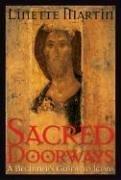
Praying with icons is Jim Forest's short devotional introduction — how icons are used, what the common types are, and why they are venerated rather than merely admired. It is the gentlest entry and makes no technical demands. Sacred Doorways by Linette Martin is the better book for a reader who wants to understand the visual grammar: what the gestures, colours, proportions and inscriptions mean, and how to tell one saint from another. If you buy one book before anything else, buy this one.
Icons and saints of the Eastern Orthodox Church by Alfredo Tradigo is the Getty identification guide — a compact, heavily illustrated reference for identifying subjects and attributes. It belongs on the desk rather than in the reading order, and you will keep using it.
The theology
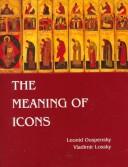
The meaning of icons by Léonide Ouspensky and Vladimir Lossky is the standard statement in English of the Orthodox understanding, combining theological exposition with commentary on specific icons. Theology of the icon is Ouspensky's own much larger two-volume historical theology, tracing the doctrine from the early Church through the iconoclastic controversies to the modern revival. The two overlap in argument but not in scale: read the first, and go to the second only if you want the full historical case. Both are written from a firmly confessional position and say so.
The Icon, image of the invisible by Egon Sendler is the most useful single volume in this section, because it moves from theology into aesthetics and then into actual technique — geometry, composition, colour, the construction of the face — in one book. The art of the icon by Paul Evdokimov is a theology of beauty rather than a manual; it is the densest book here and rewards patience rather than speed.
The craft
The technique of icon painting by Guillem Ramos-Poqui is the practical manual: preparing the gesso panel, transferring the design, water gilding, egg tempera, the layered building of flesh tones. A brush with God by Peter Pearson is the friendlier beginner's book, written by a Western iconographer who teaches workshops, and the better first purchase for someone who intends to pick up a brush this month. The icon handbook by David Coomler works as a reference alongside either.
Two older books cover the materials themselves. The practice of tempera painting by Daniel V. Thompson is the classic 1936 studio manual on egg tempera, and it is still the clearest explanation of why the medium behaves as it does. The materials and techniques of medieval painting, by the same author, is the scholarly companion drawn largely from Cennino Cennini. They overlap; take the first for practice and the second for background. A plain factual note on both: several historic pigments they discuss — lead white, vermilion, orpiment, certain lead-based driers — are genuinely toxic, and modern practice substitutes safer alternatives or handles them with proper precautions.
The art history
The icon, the large survey associated with Kurt Weitzmann, is the plate volume: Byzantine, Greek, Balkan, Russian and Sinai material photographed at scale. It is a looking book. Byzantine Art (Oxford History of Art) by Robin Cormack is the scholarly counterweight to everything above — an art historian's account of icons as objects made in social and political circumstances, which is a deliberately different frame from the theological books. Reading both frames is more useful than choosing between them.
Work through the path in order and the studio manuals will make sense as consequences rather than as arbitrary rules.
Follow the full ordered path here: Icon Painting: The Best Books on Writing Icons, in Order.