Modern Slavery: The Best Books on Human Trafficking and Forced Labour, in Order
Modern slavery reading is dominated by two authors — Kevin Bales, who built the field's conceptual frame, and Siddharth Kara, who did the economics — and a reader who only meets one of them gets a distorted picture. Start with the global surveys, then the American cases that show forced labour is not somewhere else, then the sex trade and the mineral and debt-bondage supply chains, and finish with the genuinely contested question of where the estimates come from and whether the anti-trafficking movement has always helped the people it names.
The Global Frame
IntermediateAcquire the working definition of modern slavery — control through violence, economic exploitation, and the loss of free will — and see why it is treated as an economic rather than a legal phenomenon.
▸ Study plan for this stage
Pace: 3–4 weeks, about 890 pages: Disposable People (298), Half the Sky (320), Ending Slavery (274). Read Bales first, then Kristof and WuDunn, then Bales again. Two things to hold from the start. Disposable People is from 1999 and its headline global figures are dated and were always estimates. Half the
- Bales's working definition: control through violence, economic exploitation, and the loss of free will — and how it differs from legal ownership
- The 'disposability' thesis — that where a person can be acquired cheaply, they are used up rather than maintained as an asset
- Old slavery versus new: the collapse in acquisition cost and what it does to the incentives of the person doing the holding
- Debt bondage, contract slavery and chattel slavery as distinct forms with distinct mechanics
- The advocacy frame: what Kristof and WuDunn's reporting gains from its urgency and what it may cost in accuracy
- Bales's abolition costing in Ending Slavery — what freeing and rehabilitating a person is claimed to cost, and what that estimate assumes
- Why this field treats modern slavery as an economic phenomenon before a legal one
- State Bales's four-part definition of modern slavery and give an example from Disposable People that satisfies all four.
- What does Bales claim happened to the price of a person between the eighteenth century and the 1990s, and what does he argue follows from it?
- Where does Half the Sky's argument depend on individual cases, and what would you need to know to judge whether those cases are typical?
- In Ending Slavery, what does Bales say abolition actually requires, and which of his requirements is most vulnerable to challenge?
- Which of the claims in this stage are testable, and which are assertions of scale that would need a survey method to support?
- Write out Bales's definition and then test it against three cases from Half the Sky — mark which of the four criteria each case actually meets.
- Take one global figure from Disposable People and one from Ending Slavery and write down, from the books themselves, how each was arrived at; keep the note for the final stage.
- Chart the difference between Bales's diagnostic book and his prescriptive one: list what Ending Slavery adds that Disposable People only implies.
- Read one chapter of Half the Sky as a piece of persuasion — mark every place where a rhetorical choice is doing work that evidence is not.
Next up: Having taken the global frame from books mostly set in South Asia and West Africa, the next stage removes the assumption that this is a phenomenon of somewhere else.

The 1999 book that created the modern field, arguing that slavery had become cheap, temporary and disposable rather than a property relation. Everything else here descends from it, so read it first even though its numbers are now dated.
Kristof and WuDunn on the oppression of women worldwide, with trafficking as one strand among maternal mortality and education. Second because it is the book that brought this subject to a general audience, and because its advocacy framing is itself something the later stages will make you question.

Bales's follow-up on what abolition would actually require — cost estimates, rehabilitation, enforcement. Read it here because it turns the diagnosis into a set of testable claims rather than leaving you with outrage.
Forced Labour in Rich Countries
IntermediateDismantle the assumption that this happens elsewhere, using American cases in agriculture, domestic work and the commercial sexual exploitation of children.
▸ Study plan for this stage
Pace: 3–4 weeks, about 910 pages: The Slave Next Door (328), Nobodies (304), Girls Like Us (277). Bales and Soodalter and Bowe are reported journalism and research; Rachel Lloyd's book is a survivor memoir and the account of the organisation she founded, so she is a participant and an advocate rather than
- The mechanism of control in a country with functioning police: debt, document confiscation, immigration status, isolation, threat to family
- Agricultural, domestic and restaurant labour as the American sectors where forced labour concentrates, and why
- The Saipan and Tulsa cases in Nobodies as demonstrations that the mechanism does not require an informal economy
- How American law long treated commercially sexually exploited minors as offenders rather than victims, and what changed
- Safe harbour laws and the shift Lloyd was arguing for
- The difference between what a reported case can prove about a mechanism and what it implies about prevalence
- The insider account as evidence: what Lloyd can say about recruitment and attachment that Bowe and Bales cannot
- Across the cases in Nobodies, what are the common elements of control, and which single element seems most load-bearing?
- Why does immigration status function as a control mechanism even where the worker has not broken any law?
- What does Lloyd say about why girls stay, and how does her account differ from the outside descriptions in the other two books?
- Which specific legal changes do these authors advocate, and who would bear the cost of each?
- What can three books of American cases establish about the scale of forced labour in the United States, and what can they not?
- Build a one-page table of the cases in Nobodies and The Slave Next Door with columns for sector, nationality, control mechanism, and how the case surfaced — the last column is the most revealing.
- Take Lloyd's account of recruitment and write it as a sequence, then check it against how the same process is described from the outside in The Slave Next Door.
- Look up your own state's safe harbour statute, if it has one, and compare it against what Girls Like Us says the law used to do.
- Find the current federal trafficking prosecution statistics and set them beside the prevalence claims in the previous stage; note the size of the gap without yet trying to explain it.
Next up: You have the mechanism; the next stage follows the money through it, which is where the field's most-quoted numbers come from.
Bales and Soodalter on forced labour inside the United States — domestic servitude, farm work, restaurants. The necessary correction to a reading list that would otherwise be entirely about South Asia and West Africa.

Three long reported cases: Florida citrus pickers, Tulsa welders from India, and garment workers in Saipan. Second because it shows the mechanism — debt, isolation, immigration status — at the level of individual employers.

A survivor's memoir and account of founding GEMS, on the commercial sexual exploitation of American girls and how the law long treated them as offenders. The insider voice the reported books cannot supply.
The Economics of the Sex Trade
IntermediateFollow the money through trafficking networks — recruitment cost, transport, profit per victim — and read the regional reporting that puts faces to those figures.
▸ Study plan for this stage
Pace: 3–4 weeks. Sex Trafficking (320) is Kara's field-researched business analysis, Malarek's The Natashas (319) is investigative journalism on the post-Soviet corridors, and Slavery Inc is Lydia Cacho's reporting across Mexico, Turkey, Cambodia and Japan — she investigated it at genuine personal risk an
- Kara's unit economics: acquisition cost, transport, maintenance, revenue per victim, and the resulting return on investment
- Why Kara concludes that raising the risk and cost to the demand side is the effective lever, and what that argument assumes
- The post-Soviet corridor as a case study — collapse of a state, mass female unemployment, and the recruitment offer that follows
- Corridor structure: recruiter, transporter, receiver, and the fact that these are usually different businesses
- Official complicity as an input to the model rather than a failure of it (Cacho's central point)
- Where field-interview economics gets its numbers, and how much of Kara's model rests on interviews he conducted himself
- The distinction between a profitable business and a large one — high margins do not establish scale
- Reproduce Kara's cost-and-revenue structure for one of his case regions. Which figures come from interviews, which from documents, and which from inference?
- Why does Kara argue that supply-side interdiction fails, and what would have to be true of the market for him to be wrong?
- What conditions in the former Soviet states does Malarek identify as making recruitment easy, and are they present anywhere else on this list?
- What does Cacho document about the relationship between traffickers and state officials, and how does that change the enforcement recommendations of the other two books?
- Kara's numbers are the most cited in the field. What would it take to independently verify any one of them?
- Take Kara's per-victim profitability calculation and rebuild it yourself line by line from the figures he gives, then note which single input the answer is most sensitive to.
- Map Malarek's routes on a physical map and mark, for each leg, which of Kara's cost categories applies — you should end up with a corridor cost model.
- Read one of Cacho's chapters purely for its sourcing: mark which claims rest on a document, which on a named interview, and which on an unnamed one.
- Write a one-paragraph demand-side and a one-paragraph supply-side intervention proposal for a single corridor, and identify which of Kara's numbers each depends on.
Next up: Sex trafficking is the visible part of the field; the next stage moves to debt bondage and supply chains, which involve far more people and receive far less attention.

Kara's field-researched business analysis: what a trafficker pays, earns and risks, and why the economics make demand-side intervention the effective lever. The single most quoted set of numbers in the field. Its catalogue record lists a Spanish translator alongside Kara; the book is his.

Reporting on the post-Soviet trafficking routes into Western Europe, Israel and the Balkans in the 1990s and 2000s. Read it after Kara so you can see his model operating in one specific corridor.
Catalogued as Slavery Inc: The Untold Story of International Sex Trafficking. Cacho reported this at serious personal risk across Mexico, Turkey, Cambodia and Japan, and she is unusually direct about official complicity.
Debt Bondage and the Supply Chain
IntermediateTrace forced labour through the commodities that reach consumers — bricks, carpets, fish, gold, cobalt — and understand debt bondage as the dominant global form.
▸ Study plan for this stage
Pace: 4–5 weeks, about 980 pages: Bonded Labor (325), Blood and Earth (290), Cobalt Red (368). All three are field investigations rather than syntheses — the authors went to the brick kilns, the fisheries and the cobalt pits themselves. Read Kara's two in order with Bales between or after. Cobalt Red in p
- Debt bondage as the dominant global form of forced labour by headcount, and why it attracts a fraction of the attention
- The mechanics of an inherited or perpetually renewing debt — advance, interest, deduction, and why the balance never falls
- Sector portraits: brick kilns, carpet looms, agriculture, quarrying, and what makes each one susceptible
- Bales's link between slavery and environmental destruction — the same fisheries, mines and forests appearing in both accounts
- Artisanal versus industrial extraction, and where in a mineral supply chain the two get mixed
- Chain of custody and traceability: the specific point at which an audit loses sight of the material
- Consumer connection as an argument — what it establishes and where it risks substituting for analysis
- Set out the arithmetic of a bonded debt from Bonded Labor: what is advanced, what is deducted, and why does the principal not fall?
- Why does Kara argue bonded labour persists where it is illegal and formally abolished?
- What is Bales's causal claim linking slavery and environmental damage — does he argue one causes the other, or that both follow from a third thing?
- At which specific point does cobalt from an artisanal pit become indistinguishable from industrially mined cobalt, according to Cobalt Red?
- Which claims in Cobalt Red have been contested, by whom, and what evidence would settle them?
- Build the debt schedule for one bonded worker from Kara's figures and show, arithmetically, the point at which repayment becomes impossible.
- Take one commodity — bricks, carpets, shrimp, gold, cobalt — and draw the chain from extraction to retail using only what these three books state, marking each link where the books say visibility is lost.
- Cross-read Blood and Earth and Cobalt Red on a single site type and note where Bales's environmental frame explains something Kara's economic frame does not, and vice versa.
- Find the current supply-chain due-diligence disclosure for one electronics manufacturer and read it against Cobalt Red's account of the same supply chain.
Next up: Four stages have taken these authors' figures largely on trust; the last stage asks where those figures come from and whether the movement built on them has always helped.

The other half of Kara's project, on South Asian debt bondage, which involves far more people than sex trafficking and receives a fraction of the attention. Read it directly after his trafficking book to correct that imbalance.
Bales links slavery to environmental destruction — the same fisheries, mines and forests appear in both accounts. The book that turns modern slavery into a supply-chain and climate question.

Kara's field investigation of artisanal cobalt mining in the Democratic Republic of Congo and its route into consumer batteries. The most immediate demonstration on this list that the reader is already connected to the problem.
Where the Numbers Come From
IntermediateInterrogate the estimates and the anti-trafficking movement itself, and be able to say what is well evidenced and what is not.
▸ Study plan for this stage
Pace: 2–3 weeks. Understanding Global Slavery (222) is Bales auditing his own methodology, which is rarer than it should be; Sex at the Margins is Laura Agustín's academic critique of the rescue industry, and it contradicts several of the books you have just read. Read them in that order, slowly, with you
- How a global slavery estimate is actually constructed: secondary-source coding, expert judgment, extrapolation, and the assumptions at each step
- Random versus convenience sampling in a hidden population, and why the second cannot produce a valid rate
- Circular citation — how a single estimate acquires apparent independent corroboration by being requoted
- Agustín's core claim: that much migrant sex work is reclassified as trafficking by institutions with an interest in that classification
- The 'rescue industry' as a set of organisations with budgets, mandates and career structures
- Agency and coercion as a continuum rather than a binary, and what the binary does to policy
- How to hold a critique like Agustín's alongside the documented cases of the previous stages without collapsing into either denial or credulity
- Describe, step by step, how Bales says a global figure is produced, and identify the weakest link he himself names.
- What sampling problem makes prevalence in this field genuinely hard, and what would a defensible estimate require?
- What is Agustín arguing, and what is she not arguing — where exactly does her critique stop?
- Which specific claims in the earlier stages does Sex at the Margins contradict, and on which of those does she have the better of the argument?
- After this stage, which propositions on this path do you consider well evidenced, which plausible but unproven, and which unsupported?
- Take the list of headline figures you collected in stage one and, for each, write down the method that produced it and the sample it came from — using only what the books say.
- Trace one widely quoted global trafficking statistic backwards through its citations until you reach the original document, and record how many hops it took and what the original actually claims.
- Write Agustín's strongest objection to Half the Sky, and then the strongest reply Kristof and WuDunn could make from their own text.
- Produce a final one-page ledger for the whole path with three columns — well evidenced, plausible, unsupported — and put every major claim from all five stages into one of them.
Next up: You can now read an NGO report or a news story in this field and tell which of its claims are documented mechanism and which are recirculated estimate — which is the single most useful thing this literature can give you.
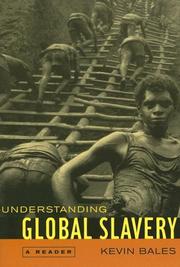
Bales sets out his own methodology — how the global figures are constructed, what they assume, and where they are weakest. Read it as the author auditing his own headline numbers, which is rarer than it should be.

The strongest critique on this list: Agustin argues that much migrant sex work is misread as trafficking by a rescue industry with its own institutional interests. It contradicts several books above, which is exactly why it belongs at the end rather than being left out.
Discussion
Keep reading
Paths that share books, cover the same subject, or open a related topic.


