Start with two facts that will save you from most of the bad writing on this subject. First, the prevalence figures everyone quotes — twenty-seven million, forty million, fifty million people in modern slavery — are estimates built by extrapolating from small surveys across very different countries, and they are contested by researchers who study the methods rather than by anyone denying the underlying crime. The figures move by tens of millions when definitions change. Treat any book that leads with a headline number and does not explain where it came from with caution, including several on this list.
Second, the anti-trafficking movement has serious internal critics, and their objection is not that trafficking is rare. It is that conflating all migration for sex work with trafficking has produced raids, deportations and policing that harm the people being rescued. That argument is represented here too, at the end, and it is worth reading rather than skipping.
Where the field starts
Disposable people is Kevin Bales's 1999 book, which more than any other established modern slavery as a category and drove the estimate that has anchored discussion since. It is reported from Thailand, Mauritania, Brazil, Pakistan and India, and the case studies remain the reason to read it; the global figure is where the methodological criticism concentrates.
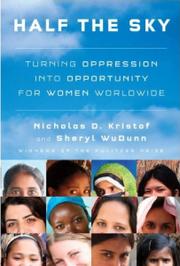
Half the sky by Nicholas D. Kristof and Sheryl WuDunn is advocacy journalism on women's oppression worldwide, with trafficking as a major strand. It is the book most likely to be someone's introduction and also the most criticised for its framing — the emphasis on Western rescue and on individual redemption narratives — including by people who share its goals. Read it aware of that.
Ending slavery is Bales's policy sequel, arguing what governments and consumers could do; The slave next door, with Ron Soodalter, is the American-focused volume showing forced labour in domestic work, agriculture and restaurants inside the United States. Nobodies by John Bowe is the sharpest US reporting on the list: three long investigations into forced labour in Florida agriculture, Tulsa welding and the Northern Mariana Islands garment industry, told without a rescue frame.
Sexual exploitation
Girls like us is Rachel Lloyd's memoir. She was commercially sexually exploited as a teenager in Germany and later founded GEMS in New York; the book is her own account and an argument for treating exploited minors as victims rather than offenders. It is a primary source about one life and a campaigning document, not a survey.
Sex Trafficking is Siddharth Kara's field-research book, notable for attempting to model the economics — the capital cost of a trafficked person, the returns, the price elasticity. That framing is his contribution and also where his critics push back, on both data quality and the assumption that the market behaves like a market. The Natashas is Victor Malarek's 2003 investigation of post-Soviet trafficking into Western Europe and the Middle East; it is vivid, twenty-plus years old, and written in a register closer to campaigning journalism than research. Slavery Inc The Untold Story Of International Sex Trafficking is Lydia Cacho's investigation across several continents; Cacho was imprisoned and tortured in Mexico for earlier reporting on a paedophile network, which is context for how the book was made.
Labour, supply chains and the counter-argument
Bonded labor is Kara on debt bondage in South Asia, which involves far more people than sexual exploitation and receives a fraction of the attention. Blood and earth is Bales connecting forced labour to environmental destruction — brick kilns, gold mining, fishing fleets. Cobalt Red is Kara on artisanal cobalt mining in the Democratic Republic of Congo and its place in the battery supply chain; it has had real influence and has also been challenged by regional specialists on its characterisation of artisanal mining and on some of its scale claims. Understanding Global Slavery is Bales's more academic collection of essays on definitions and measurement, and the best place to see the estimation problem discussed directly.
Sex at the margins by Laura María Agustín is the dissenting book, and it belongs at the end. Agustín argues from her own research with migrant sex workers that the anti-trafficking apparatus — what she calls the rescue industry — often overrides the stated intentions of the people it acts on. It is a scholarly argument, it is contested in turn, and reading it after the rest is the point.
If you encounter a suspected case, that is a matter for law enforcement or a national trafficking hotline, not for anything a reader should attempt directly. Follow the full path for the range of positions rather than one of them.
Follow the full ordered path here: Modern Slavery: The Best Books on Human Trafficking and Forced Labour.