Henrik Ibsen in Order: Which Play to Read First
Ibsen wrote three quite different bodies of work — enormous verse epics, the prose social plays that made modern drama possible, and a late symbolist run about old men and the cost of a life's work — and each demands something different from a reader. This path deliberately ignores chronology and starts in the middle, with the prose plays of the 1880s, because they are the accessible ones and the reason he is read at all. The verse epics come last, not first, even though Ibsen wrote them first.
The Two That Broke the Theatre
BeginnerUnderstand what Ibsen actually invented — an ordinary drawing room in which a respectable past is opened up and cannot be closed again — from the two plays that caused the scandal.
▸ Study plan for this stage
Pace: About two weeks. Each play is roughly a hundred pages of dialogue and can be read in a single evening, but read A Doll's House twice — once for the plot, once watching only what Nora conceals and from whom — before starting Ghosts. Reading them a few days apart lets the argument between them land; r
- The retrospective structure Ibsen perfected here: the play opens near the end of a long story, and the drama is the past being forced into the room rather than events unfolding
- The forgery as the engine of A Doll's House — Nora's crime is an act of love that the law and her husband can only read as fraud, and the gap between those two readings is the play
- Torvald's reaction as the real reversal: Nora's illusion breaks not when she is exposed but when she sees what he does about it
- The slammed door, and why Victorian managements demanded an alternative ending — the offence was structural, not moral
- Ghosts as a deliberate rebuttal: Mrs Alving did what critics said Nora should have done, stayed, and the play traces what staying cost
- Inherited disease, inherited duty and inherited belief as one idea — 'ghosts' in Ibsen is anything dead that still gives orders
- Pastor Manders as the voice of respectable opinion, written without caricature, which is what makes him damaging
- What does Nora actually do that is illegal, and why does she not understand it as a crime?
- At what line does Nora stop performing for Torvald, and what has she just learned?
- Ghosts was written in answer to the reception of A Doll's House. What is the answer, stated as an argument rather than a plot?
- What are the 'ghosts' Mrs Alving names, and which of them is she still obeying at the end?
- Both plays end on a decision or a refusal to decide. Which ending is bleaker, and on what grounds?
- Reread act one of A Doll's House and list every piece of information about the past that Ibsen plants in it. Then check how many are detonated in act three — this is the retrospective method in miniature.
- Write out Torvald's case against Nora as sympathetically as you can manage, in 200 words. If it comes out obviously monstrous you have not read him closely enough.
- Track Mrs Alving's account of her marriage across Ghosts: note each point where she revises what she told us earlier. The revisions, not the revelations, are where the play does its work.
- Set the two endings side by side and write a paragraph on what each says about whether escape is available. Keep it — The Wild Duck will attack both positions.
Next up: These two established the household as Ibsen's laboratory; the next stage widens the frame to the town and shows him turning the same scepticism on people who think they are the solution.
The correct first Ibsen and one of the few cases where the most famous play is also the right entry point. Three acts, one household, and an ending that Victorian theatres refused to stage; everything he does later is a variation on this machine.

Read immediately after, because Ibsen wrote it as a direct answer to critics who said Nora should have stayed. It is the same house with the door kept shut, and it is far bleaker — which is the point.
The Social Plays
BeginnerSee Ibsen turn from the family to the community, and notice that he attacks the reformer as readily as the hypocrite.
▸ Study plan for this stage
Pace: Two to three weeks. An Enemy of the People is the longer and busier of the two, with crowd scenes that read faster than they look — a few sittings. Give The Wild Duck more room and reread its final act; it is the play in this path most often misremembered, because the ending arrives quickly and the
- Dr Stockmann as a man who is factually right and socially impossible, and Ibsen's refusal to let the first excuse the second
- The public meeting in act four as the pivot: Stockmann stops arguing about the baths and starts arguing about the majority, and loses the audience's sympathy on purpose
- The economics underneath the morality — the town cannot afford the truth, and Ibsen takes that constraint seriously rather than treating it as mere cowardice
- The edition question: the English text most readers meet is Arthur Miller's adaptation, which sharpens the politics for a 1950s American context, so some of the bluntest lines are Miller's rather than Ibsen's
- The reversal in The Wild Duck: Gregers Werle brings the truth into a household and destroys it, which inverts the moral position of both plays in stage one
- The 'life-lie' — Dr Relling's claim that most people need a sustaining illusion to function, stated in the play as a serious position rather than a cynical aside
- The duck in the attic as a symbol that the characters themselves interpret, which is why it works where cruder symbolism would not
- Is Stockmann right? Separate the question of whether the water is poisoned from the question of whether he is behaving well.
- What changes in act four of An Enemy of the People, and why does Ibsen let his protagonist say things most readers will find indefensible?
- Gregers believes he is doing what Nora did — insisting on truth over comfortable illusion. Why does it destroy the Ekdal household instead of liberating it?
- What is Relling's life-lie argument, and is there anything in A Doll's House or Ghosts that answers it?
- Who is responsible for what happens to Hedvig? The play distributes blame carefully; account for each share.
- After The Wild Duck, does the ending of A Doll's House read differently?
- Compare a page of the Miller adaptation with a literal translation of the same scene, if you can find one, and note what the adaptation makes explicit. This is the cleanest illustration in the path of how much a translator can shape a play's politics.
- Chart the town's factions in An Enemy of the People — Hovstad, Billing, Aslaksen, Peter Stockmann — and write one sentence on what each stands to lose. The play is often taught as one man against the mob; the chart shows it is not.
- Reread the last ten pages of The Wild Duck and mark every line where an adult misreads Hedvig. Ibsen makes the catastrophe entirely legible in advance.
- Write 200 words arguing that Gregers is the villain, then 200 arguing that Relling is. Do not decide — the play does not.
Next up: With the social argument now cutting in both directions, Ibsen loses interest in the town and turns inward, to characters whose problem is not what society permits but what they want.
His response to the outrage over Ghosts, and much funnier than its reputation — a doctor who is right about the water supply and insufferable about being right. The English text most readers meet is Arthur Miller's adaptation, which is why the record carries his name too.

The turn, and for many readers the best thing he wrote. Here the truth-teller is the villain, and the play quietly demolishes the moral position of the two before it — so it only lands properly read third.
The Psychological Turn
IntermediateFollow Ibsen inward as the social argument recedes and the plays become studies of will, self-deception and thwarted appetite.
▸ Study plan for this stage
Pace: Four weeks, one play per week with a spare week to reread Hedda Gabler. These three are shorter on incident and longer on implication than anything before them, so speed is the enemy. Read Rosmersholm before Hedda, and read The Lady from the Sea last in the stage as a deliberate change of temperatur
- The white horses of Rosmersholm and Ibsen's shift from social evidence to symbol — the house's atmosphere becomes an agent in the plot
- Rebecca West as the prototype: an outsider with will, intelligence and no legitimate outlet for either, who has already done something irreversible before the curtain rises
- Ibsen's late structure of confession, where the past is disclosed in stages by the person who committed it rather than uncovered by others
- Hedda Gabler's central emptiness: enormous capacity and no available object, and Ibsen's refusal to give her a motive that would explain her away
- The manuscript and the pistols as the only two things Hedda can actually act upon, and what her choice of them says about the range left to her
- Reading the pauses — in Hedda Gabler almost nothing is stated, and the meaning sits in evasions, interruptions and what Brack knows
- The Lady from the Sea as the outlier that resolves: Ellida is released by being genuinely given the choice, which is Ibsen's clearest statement that freedom must be chosen and not granted
- What did Rebecca West do before the play begins, and at what point does she stop concealing it — and why then?
- Rosmer and Rebecca each claim to have changed the other. Which claim does the play support?
- Hedda destroys the manuscript. What does she believe she is doing, and what is she actually doing?
- Why does Brack's knowledge matter more to Hedda than anyone's judgement of her, and what does that reveal about what she values?
- The Lady from the Sea ends with Ellida staying. Why is that not the same as Mrs Alving staying in Ghosts?
- What has replaced 'society' as the antagonist in these three plays?
- List every stage direction in Hedda Gabler describing Hedda's movement rather than her speech. Read the list on its own; it is a nearly complete account of the play.
- Take one scene from Rosmersholm and one from Hedda Gabler with the same shape — a confession under pressure — and write 200 words on how the later scene withholds what the earlier one supplies.
- Write Ellida's decision as it would appear in Ghosts, with Ibsen's earlier bleakness intact. The exercise shows how much of The Lady from the Sea's resolution depends on Wangel's specific act of releasing her.
- Keep a one-page tally, across all three plays, of what each central woman wants and what is available to her. This is the argument the late plays inherit.
Next up: These plays put a life's will at the centre; the final ones ask what such a will costs the people it is spent on, and answer in the voice of an old man taking stock.
Half a social play and half a ghost story, and the one where the symbolic method that dominates the late work first takes over. Read before Hedda because Rebecca West is the prototype Hedda perfects.

The greatest part written for an actress in the nineteenth century and the most modern-feeling play here: a woman with enormous capacity and nothing whatever to spend it on. Almost nothing is stated; read the pauses.
The quiet outlier — the one late play that resolves rather than destroys, and the clearest statement of Ibsen's belief that choice made freely is the only thing that counts. A useful corrective before the bleakness of the final stage.
The Late Reckonings
BeginnerRead the final plays as a single sequence about what a career costs the people around it, and recognise Ibsen writing about himself.
▸ Study plan for this stage
Pace: Three to four weeks, read as one sequence rather than three separate plays — a week each, with the last few days spent reading them against one another. They are short, the shortest run in this path, and the density is in the symbolism rather than the incident. Do not start here.
- The recurring late figure: an old man who built something at the direct expense of a living person, confronted by that person or by someone who arrives to collect
- Solness's tower in The Master Builder as a literal object, a symbol, and a challenge that Hilde issues rather than one he sets himself
- Hilde Wangel's arrival ten years after a promise, and the deliberate ambiguity about whether the promise was ever made — Ibsen supplies no verdict
- The eight years of pacing in John Gabriel Borkman, and how Ibsen builds an entire play out of the refusal of three people to move
- The two sisters' fight over Erhart as a struggle over whose ruined life he is obliged to redeem — the play's coldest and most modern idea
- When We Dead Awaken subtitled a dramatic epilogue, and Rubek's admission that the masterpiece required consuming Irene's life
- Art and ambition as the last subjects: Ibsen writing about a man who traded a life for a body of work, at the end of a body of work
- Symbolism grown load-bearing — towers, mines, avalanches — which is exactly why the earlier prose plays have to be behind you
- What does Hilde want from Solness, and does the play let you decide whether her account of their first meeting is true?
- Why must Solness climb the tower, given that he already knows he cannot bear heights?
- What has Borkman actually done, and why does his ruin read as a moral catastrophe rather than a financial one?
- Gunhild and Ella both want Erhart. What does each want him to be, and what does he want?
- Rubek says his sculpture required Irene. Is the play's verdict on that trade the same as Rubek's?
- In what sense is When We Dead Awaken an epilogue to the plays you have already read, and not just to Ibsen's career?
- Make a table of the three plays: the man, the thing he built, the person it cost, and who arrives to present the bill. The pattern is the point of reading them together.
- Reread the final page of each and write a paragraph on how differently the three deaths are staged — an avalanche, a cold, a climb. Ibsen is choosing each ending for a reason.
- Take a symbol you find overwrought — the tower is the usual candidate — and write 200 words arguing it earns its place, drawing on Rosmersholm's white horses as the precedent.
- Write down what you would say to a reader who started Ibsen with When We Dead Awaken. The answer is the argument for this path's ordering.
Next up: Having seen the disciplined prose plays through to their end, you are equipped to see what the early verse dramas were doing with the same obsessions before Ibsen imposed any discipline at all.

An ageing architect, a young woman who arrives to collect on a promise, and a tower he should not climb. The symbolism is thick enough that it needs the earlier plays behind it to stay grounded.

A ruined financier pacing an upstairs room for eight years while two sisters fight over his son. Cold, strange and formally severe — the late style at its most concentrated.
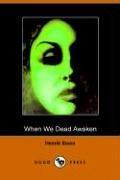
His last play, subtitled a dramatic epilogue, in which a sculptor meets the model whose life he consumed to make his masterpiece. It reads as a verdict on the entire preceding shelf and should be read exactly there.
The Verse Epics, Kept for Last
BeginnerTake on the two huge early poetic dramas, and be able to explain why they are great and why they are the wrong place to start.
▸ Study plan for this stage
Pace: Six weeks or more, and treat these as two long poems rather than two plays. Peer Gynt runs well over two hundred pages of verse across continents and decades; Brand is longer still and relentlessly single-minded. Read Peer Gynt first, take a break, then Brand. Reading a scene aloud is not a flourish
- Peer as a man with no fixed self — the Boyg's instruction to go 'round about' is the play's diagnosis and Peer's whole method
- The troll principle, 'to thyself be enough', set against the human 'to thyself be true', and how one word separates them
- The button-moulder and the melting-ladle: the terror of the ending is not damnation but being found insufficiently anything to be worth judging
- Brand's 'all or nothing' as the exact inverse of Peer's evasion, and the family Brand destroys to prove it
- That Ibsen wrote no answer to either. Both absolutism and evasion are shown ruinous, and the prose plays spend forty years working the space between them
- Verse as the reason these are unstageable as written and thrilling on the page — the freedom of scale that the drawing-room plays deliberately gave up
- Why chronological reading misleads: these came first, and a reader who starts here meets Ibsen at his least disciplined and most difficult
- What does the Boyg tell Peer, and where in the play does Peer follow that advice most consequentially?
- What is the difference between the troll motto and the human one, and why does Peer never notice it?
- Brand refuses to compromise at three specific costs. Name them, and say whether the play thinks he was right at any of them.
- Read as a pair, do Peer Gynt and Brand present a choice or a trap?
- Which of the prose plays you have read is the closest working-out of this argument in realist form — and what did Ibsen gain by the change?
- Having finished, what would you now say to someone about to read Peer Gynt as their first Ibsen?
- Read the Boyg scene and the button-moulder scene aloud, back to back, and write 200 words on how the second answers the first.
- List Peer's identities in sequence — trader, prophet, emperor — and note what he abandons at each change. The list is the biography of a man who was never anyone.
- Set Brand's demands against Gregers Werle's in The Wild Duck and write a paragraph on what the prose play adds by putting the absolutist in an ordinary attic.
- Write a one-page reading order for a friend, giving your own reasons, and say where you would now depart from this path's ordering and why.
Next up: This closes the loop: with the epics behind you, rereading A Doll's House shows how much of Ibsen's lifelong argument about the will is already compressed into three acts and a slammed door.
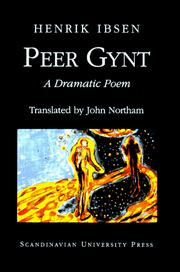
Sprawling, unstageable as written, and dazzling — a fantasia across continents and decades about a man with no self at the centre. Everything the prose plays are disciplined about, this is not, which is why it comes last.
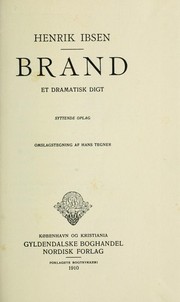
Peer Gynt's twin and opposite: a priest who will accept nothing less than all, and destroys his family proving it. Read the pair back to back and Ibsen's lifelong argument about the will is complete.