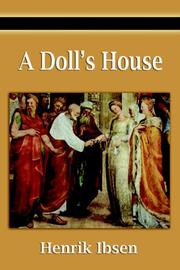
Start with A Doll's House. It is short, the situation explains itself within a scene, and the final sound in the play is still the most consequential stage direction in the modern theatre. You do not need a word of context about nineteenth-century Norway to feel exactly what Nora is doing and what it will cost her.
The obvious alternatives are Hedda Gabler, which is the better-constructed play, and Peer Gynt, which is the more spectacular one. Neither should go first. Hedda Gabler depends on a social code the reader has to reconstruct before Hedda's boredom reads as desperation rather than petulance. Peer Gynt is a sprawling verse fantasia written years earlier, in a mode Ibsen then abandoned, and starting there tells you almost nothing about the twelve prose plays that made him matter.
The prose cycle, in sequence
Ghosts comes next, and it should, because Ibsen wrote it as an answer to the people who were outraged by A Doll's House. This time the wife stays, does her duty, keeps the family respectable, and the play shows you what that costs. Read the two in that order and you have Ibsen's entire argument in about four hours.
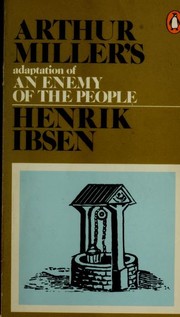
An Enemy of the People is the third act of that quarrel: a man tells his town an inconvenient truth about its water supply and is destroyed for it. One important catalogue note — our record for this play credits Arthur Miller, because the widely printed English text is Miller's 1950 adaptation. It is a strong play in its own right, but Miller cut, compressed and sharpened the politics for a McCarthy-era American audience. If you want Ibsen's text, look for a straight translation from the Norwegian rather than an adaptation, and check the title page.
The Wild Duck is the counterargument to his own last three plays, and it is the one specialists most often name as his best. A man arrives to tell a family the truth, exactly as the hero of An Enemy of the People did, and the truth destroys them. Read it immediately after, or the reversal will not register.
Rosmersholm is the most political and the most haunted. The lady from the sea is the gentlest and ends in something like freedom. Hedda Gabler belongs here, once you can see how tightly the room is closed around her.
The late plays
The Master Builder, John Gabriel Borkman and When We Dead Awaken get progressively more symbolic and colder, with towers, mines and mountains standing in for what the earlier plays stated outright. They are extraordinary and they are not where anyone should meet him. Honest warning: readers who love the middle plays sometimes find these thin, and readers who find the middle plays too tidy find these the best of him.
The verse plays
Peer Gynt and Brand come before all of the above chronologically, which is why so many editions and courses put them first. We would not. They are long verse dramas, heavily dependent on the translation you happen to pick, and Peer Gynt in particular reads as a series of set pieces unless you already trust the author. Read them after the prose cycle, as the strange earlier country Ibsen came from.
The translation problem, stated honestly
Ibsen in English varies more than almost any other major dramatist. Victorian translations flatten the colloquial register that made the plays shocking; modern versions differ on whether to sound Norwegian or contemporary. Our catalogue keys books by title and author, so every translation of a given play collapses into a single record — that is a limitation on our side, not a claim that editions are interchangeable. Compare the opening page of two versions before committing.
Four plays give you Ibsen: A Doll's House, Ghosts, The Wild Duck and Hedda Gabler. Everything else is enrichment. The Ibsen hub collects the surrounding reading.
Follow the full ordered path here: Henrik Ibsen in Order: Which Play to Read First.