Heinrich Boll Reading Order: Where to Begin with the Nobel-Winning German Novelist
Böll wrote about the Federal Republic for forty years, won the Nobel in 1972, and is now read — if at all — through one short political novel. That novel is the right place to start, but it is the least typical thing here. This path moves from it to the postwar fiction that is his real achievement.
Start here
IntermediateBegin with the short, furious book that is still his most read.
▸ Study plan for this stage
Pace: Four or five evenings. The Lost Honour of Katharina Blum is a novella and the shortest book Böll is now widely read in — most editions run to a couple of hours' reading. Read it in as few sittings as possible; the compression is the effect and it dissipates if spread over a fortnight.
- A young woman spends one night with a man wanted by the police, and a tabloid newspaper systematically destroys her life over the following four days. The novella is the record of that destruction.
- It is narrated as a report — sources, statements, depositions, with the narrator explicitly discussing how the account was assembled and where the material came from. The form is the argument: this is what a life looks like after it has been processed.
- Böll wrote it out of his own treatment by the Springer press, which attacked him for urging the state to negotiate with the Baader-Meinhof group. The book is a specific act of retaliation, not an abstract meditation on media.
- The full title carries a subtitle about how violence develops and where it can lead. Our record is truncated mid-subtitle; the missing words are the book's thesis, and knowing them changes how the ending reads.
- The violence at the end is announced at the beginning. There is no suspense about the outcome, only about how a reasonable person arrives at it — which is the point.
- This is his most read book and the least typical thing in this path. It is short, furious and formally experimental where the postwar fiction is patient and realist.
- Why does Böll use the language of a police report and a legal file rather than ordinary narration?
- What does the newspaper actually publish, and how far are its statements literally false as opposed to merely destructive?
- The outcome is stated early. What does the novella gain by giving up suspense?
- Who else is damaged besides Katharina, and how does the report form register that?
- Given that Böll was writing about his own persecution, is the book fair? Does it need to be?
- Read it in one or two sittings and mark every instance where the narrator comments on his own sources — where the account admits a gap or a doubt. That commentary is the second book running inside the first.
- Write down what Katharina actually did, in one sentence, using only facts the novella establishes. Then compare it to what the newspaper says she did. The gap is the whole work.
- Look up the full subtitle before you finish, and reread the last two pages with it in mind.
- Note how many days the events cover. The compression against the scale of the damage is measurable, and worth having in hand before the long novels.
Next up: You have met Böll at his angriest and briefest; the next stage is the patient postwar realism that this novella is the late outlier of.

A woman's life destroyed by a tabloid newspaper after one night with the wrong man. Written out of Böll's own treatment by the Springer press. Note the American spelling of the title returns a scholarly monograph about the novel rather than the novel; our record is also truncated mid-subtitle.
The Adenauer years
IntermediateRead the novels about a prosperous Germany that has not looked at itself.
▸ Study plan for this stage
Pace: Two and a half weeks. The Clown is 247 pages and takes place across a single evening, which makes it best read fast — a week. And Never Said a Word is 195 pages and alternates two voices; a week, and read the alternating chapters in order rather than reading one voice through.
- The Clown is a single evening: Hans Schnier, broke and abandoned by the woman he lived with, telephones everyone he knows and gets nothing from any of them.
- It is Böll's most sustained attack on postwar Catholic respectability — a class that was compromised under the Nazis and has reconstituted itself as the moral establishment of the Federal Republic, with the same people in it.
- Böll was a Catholic and this is an argument from inside, which is why it is angrier than an outsider's would be. He is not attacking belief; he is attacking an institution's arrangements.
- And Never Said a Word is a marriage collapsing in the rubble years, told in alternating chapters by husband and wife. Poverty is rendered without a shred of sentiment: rooms, coins, a hotel bill, a headache powder.
- The alternation means the same marriage is described twice and the two accounts do not match. Böll makes you assemble the truth from two partial and self-serving reports.
- The Adenauer economic miracle is the background of both books, and Böll's position is that the prosperity was bought by not looking at the previous fifteen years.
- What does the telephone do structurally in The Clown — why is this the right device for a novel about isolation?
- What is Hans Schnier's actual grievance against the Church, and is he a reliable witness to it?
- In And Never Said a Word, where do the husband's and the wife's accounts contradict each other, and who do you believe?
- How does Böll write poverty — what details does he choose, and what does he refuse to do with them?
- Both books are about a prosperous Germany that has not looked at itself. Where in each does the unexamined past surface?
- Keep a list of everyone Hans telephones and what he wants from each. The list is the novel's structure, and reading it back at the end is a portrait of a society.
- In And Never Said a Word, mark one event described in both voices and set the two accounts side by side on paper. This is the book's method in miniature.
- Track the money in both novels — actual sums, actual purchases. Böll counts, and following the arithmetic is how the poverty stops being atmosphere.
- Reread the first two pages of The Lost Honour of Katharina Blum after these two. Twenty years apart, the same target — an establishment protecting itself — approached at completely different speeds.
Next up: You now have the realist Böll of the fifties and early sixties, which is what the formally ambitious books push against.
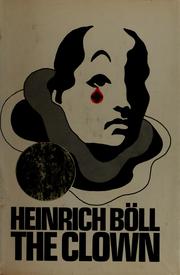
A performer, broke and abandoned, telephones everyone he knows in one evening. His most sustained attack on postwar Catholic respectability.

A marriage collapsing in the rubble years, told in alternating voices. Poverty rendered without a shred of sentiment.
The big novels
IntermediateTake on the formally ambitious work.
▸ Study plan for this stage
Pace: Five to six weeks. Billiards at Half-Past Nine takes place in one day but reaches across fifty years through memory, and it is the hardest thing here — three weeks, slowly, and expect to reread. Group Portrait with Lady is 416 pages assembled from interviews; two to three weeks at about 25 pages a d
- Billiards at Half-Past Nine covers a single day — the architect Heinrich Fähmel's eightieth birthday — while three generations of the family reach the Nazi years only through memory and monologue. The most demanding structure Böll attempted.
- The abbey the grandfather built, the son demolished as a demolitions officer, and the grandson may rebuild. The building is the family's relation to German history made physical.
- The novel divides Germans into those who took the Sacrament of the Lamb and those who took the Host of the Beast. It is a schematic, almost allegorical device inside an otherwise psychological novel, and readers disagree about whether it works.
- The past is never narrated directly. Everything before 1958 arrives as recollection inside a conversation, which is Böll's formal answer to the question of how a country talks about what it did.
- Group Portrait with Lady assembles Leni Pfeiffer's life entirely from interviews with everyone who knew her, conducted by a narrator who calls himself the author and keeps intruding.
- The Nobel citation of 1972 singled out Group Portrait with Lady. It is the book in which his technique and his subject — an ordinary German life across the Nazi years and after — are fully joined.
- In Billiards at Half-Past Nine, which events are never described directly, and why has Böll refused to stage them?
- Does the Lamb-and-Beast schema clarify the novel or simplify it? Point to a character it fits badly.
- What does the abbey mean to each of the three Fähmel generations?
- In Group Portrait with Lady, who is the narrator and what is his interest in Leni? Does the book ever let you trust him?
- Leni is described by dozens of people and speaks for herself very little. What is Böll doing by keeping his central character at that distance?
- For Billiards at Half-Past Nine, keep a chronology on one page — birth years, the war, the demolition, the present day — and add to it as each memory supplies a date. The novel is unreadable without one and trivially clear with one.
- In Group Portrait with Lady, note who is being interviewed at the top of each section. The witnesses have agendas and tracking them is how the portrait becomes an argument.
- Pick one incident in Leni's life reported by two different witnesses and write out both versions. This is the same technique as And Never Said a Word, scaled up to a whole society.
- Read the abbey passages in Billiards consecutively, skipping the rest, and see whether the building alone tells the century's story. Then decide what the surrounding novel adds.
Next up: Everything so far has approached the war through its consequences; the last book was written closest to it and explains where the consequences came from.
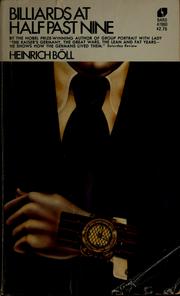
Three generations of an architect family in a single day, with the Nazi years reached only through memory. The most demanding structure he attempted.
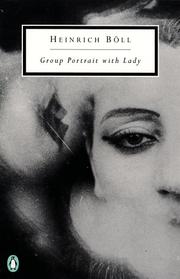
A woman's life assembled from interviews with everyone who knew her. It is the book the Nobel citation singled out.
The war
IntermediateFinish with the early novella, written closest to the events.
▸ Study plan for this stage
Pace: Two evenings. The train was on time is 110 pages, a novella, and should be read in one or two sittings without a break. It is the shortest book in the path and the most concentrated.
- A German soldier travelling east on a troop train knows, with complete certainty, that he is going to die. The word soon recurs and narrows across the journey until it has a date and a place.
- It was his first published book, in 1949, written closest to the events of anything in this path, and it is the origin of everything after it.
- The novel does not indict the soldier or defend him. He is a conscript on a train, and Böll's postwar position — that ordinary Germans were both instruments and casualties — starts here in its rawest form.
- The train is almost the entire setting. A confined space, a fixed direction, and a certainty about the destination give the novella the shape of everything Böll later did with compressed time.
- Read last, it explains the anger of the Adenauer novels: this is the experience the prosperous fifties Germany of The Clown had agreed not to discuss.
- The prose is plainer and less controlled than the later work, and that is worth seeing. The technique came afterwards; the subject was there immediately.
- How does Böll make the certainty of death convincing rather than melodramatic?
- What does the word soon do across the novella, and how does its meaning change?
- Is Andreas guilty of anything, in the novella's terms? Does the book ask?
- How does this early prose differ from Group Portrait with Lady — what did Böll learn in twenty years?
- Having read six books, what is Böll's account of what the Federal Republic did with its past?
- Read it in one sitting and mark every occurrence of soon. The narrowing is the novella's structure and it only registers if you can see the whole sequence.
- Go back to the first chapter of Billiards at Half-Past Nine immediately afterwards. One book stays inside the war, the other refuses to enter it — the contrast is the path's conclusion in two chapters.
- Write down what Böll's first book and his most famous book have in common. The distance between 1949 and 1974 is thirty-five years and the target has not moved.
- Choose which of the six you would give someone who has only heard of Katharina Blum, and write one sentence saying why. That choice is the path's real question.
Next up: This closes the path: the famous late novella, the Adenauer novels, the formally ambitious work the Nobel singled out, and the wartime book everything else grew from.
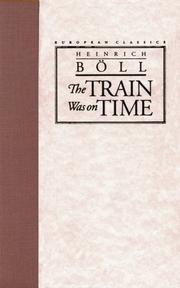
A soldier travelling east knows he is going to die. Böll's first published book and the origin of everything after it.