Start with The Lost Honour of Katharina Blum. It is short, it is furious, it takes an evening, and it is the one book of his that people still reach for. A woman spends one night with the wrong man and a tabloid newspaper dismantles her life over the following four days. The full published title continues "or How Violence Develops and Where It Can Lead", which tells you how little interest Böll had in ambiguity here.
Be clear about what you are getting, though: it is the least typical book on this list. Böll wrote it in 1974 out of his own treatment by the Springer press, and it is a pamphlet with characters — controlled, fast, and pointed at a single target. His real achievement is the slower fiction about the Federal Republic that came before it, and The Lost Honour of Katharina Blum is the door into that rather than a sample of it. Read it first because it is the easiest thing he wrote, then go backwards.
The Adenauer years
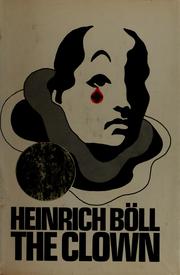
The core of Böll is a set of novels about a prosperous Germany that has decided not to look at itself. The Clown (1963) is the most sustained of them: a performer, broke and abandoned, spends an evening telephoning everyone he knows, and the accumulated calls become an attack on postwar Catholic respectability so direct that it caused a public row. It is the book to read if you want to know why he mattered in Germany specifically.
And Never Said a Word (1953) is earlier and harder. A marriage collapses in the rubble years, told in alternating voices, husband and wife in turn. Poverty is rendered without a shred of sentiment — no lesson, no uplift, just what it costs to have nowhere to live. It is the shortest route to what people mean by the rubble literature of the early 1950s.
The big novels
Then the formally ambitious work, and this is where he asks something of you. Billiards at half-past nine (1959) covers three generations of an architect family in a single day, reaching the Nazi years only through memory, with time folding constantly. It is the most demanding structure he attempted and it is not the place to begin.
Group Portrait With Lady (1971) assembles a woman's whole life out of interviews with everyone who knew her, narrated by a researcher who keeps intruding. It is the book the Nobel citation singled out when he won in 1972, and it is the fullest statement of his method: no authority, no single reliable account, just testimony that has to be weighed.
The war
Finish with The train was on time (1949), the novella he published first and wrote closest to the events. A soldier travelling east becomes certain he is going to die, and the book is the journey. Everything after it is contained in it somewhere. Reading it last rather than first turns it into an origin rather than an introduction, which is the right way round — as a first book it is grim and slight, and as a last one it is devastating.
Publication order, or this order?
Strict chronology would run The train was on time, And Never Said a Word, Billiards at half-past nine, Group Portrait With Lady, The Lost Honour of Katharina Blum, and it is a genuinely good order for a second pass, because you watch the war recede and the target shift from hunger to comfort. As a first order it fails on the same point every time: it opens with the bleakest, thinnest book and puts the hardest structure fourth. Take the order above.
Where to stop
Two books is a real reading of Böll: The Lost Honour of Katharina Blum and The Clown. Four is a serious one. Billiards at half-past nine is the one most readers abandon, and skipping it costs you nothing that Group Portrait With Lady does not also give you in a friendlier form. His reputation has fallen a long way since the 1970s and there is an ongoing argument about whether that is fair; the short books are the best evidence for the defence.
Browse more literary reading paths on Discover.
Follow the full ordered path here: Heinrich Boll Reading Order: Where to Begin with the Nobel-Winning German Novelist.