Greg Egan books in order: where to start with hard science fiction
Egan is the hardest hard science fiction anyone is currently writing, and reading him in publication order is a good way to give up. This path orders the books by how much mathematics they demand of you rather than by date: short stories first, then the three accessible novels, then the full-strength ones, then the Orthogonal trilogy — which is set in a universe with a different metric signature and comes with its own diagrams. The last stage is the near-future work that needs no mathematics at all. Each note says plainly whether a book requires you to follow equations or merely to tolerate their existence.
The short fiction first
IntermediateFind out whether Egan's method suits you at forty pages rather than four hundred, and meet his recurring obsessions in isolation
▸ Study plan for this stage
Pace: Two to three weeks, a story or two an evening. Axiomatic is 376 pages of short fiction and reads easily at that rate; Luminous is shorter at around 295 pages but considerably denser, and the title story rewards a second pass on its own. Oceanic spans twenty years of output and is the one to graze ra
- Egan's standard move: take one proposition about mind or physics literally and follow it to the end without softening it for the reader
- The identity stories in Axiomatic — Learning to Be Me and Closer — and the jewel-versus-original problem that Permutation City later builds a novel on
- Luminous and Dark Integers: arithmetic treated as a contingent physical fact with a defect somewhere out past the numbers anyone has ever used
- Neurology as plot machinery. Belief, love and moral conviction are all modifiable in these stories, and Egan declines to treat any mental state as off-limits
- The Hugo-winning novella Oceanic, in which religious experience is given a chemical cause without the story becoming a debunking
- Egan's prose: flat, declarative, ornament-free. This is a deliberate technique that puts all the pressure on the idea, not a failure of style
- What hard SF means in his hands — the premise has to survive being checked, not merely sound plausible
- In Learning to Be Me, which entity is narrating the final pages, and what in the text decides it?
- The story Luminous proposes that mathematics could have a defect. What would that mean physically, and what does the story say happens when two systems of arithmetic meet?
- Across Axiomatic, what does Egan seem to think a person is? Answer using at least two stories.
- Oceanic supplies a physical explanation for a religious conversion. Does the story treat the belief as thereby refuted, and how do you know?
- Which of the three collections would you hand to a friend first, and what does your answer say about what you want from Egan?
- Read Learning to Be Me in Axiomatic, then write two sentences saying which of the two selves you think survives. Keep the note — Permutation City in the next stage is an argument with whatever you just wrote.
- After finishing the title story of Luminous, note down whether you wanted the mathematics explained further or wanted it to stop. That answer predicts more accurately than anything else here whether the Orthogonal trilogy will be a pleasure or a chore.
- Take any one Axiomatic story and restate its premise in a single sentence containing no metaphor. Every story in the book survives this; doing it twice shows you the machine under the prose.
- Read Dark Integers in Oceanic directly after the story Luminous, out of book order. It is the sequel, and reading the pair back to back is the cleanest demonstration of how Egan extends an idea rather than repeating it.
Next up: You now know at forty pages a time whether Egan's method suits you, and you have met the identity and mathematics obsessions in isolation — which is exactly what the three novels in the next stage assume you can already hold.

The best single-author SF collection of the 1990s, and the correct entry point to Egan by a wide margin. No mathematics required. Each story takes one idea about identity or neurology to its conclusion; if these do not grip you, the novels will not either.
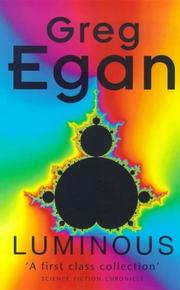
The second collection, and where the mathematics starts. The title story concerns a defect in arithmetic itself and is the purest thing he has written; it will tell you honestly whether the harder novels are for you.

The career-spanning collection, including the Hugo-winning title novella about religious experience as neurochemistry. Read it third: it mixes the accessible and the demanding, which is a good calibration before committing to a novel.
The accessible novels
IntermediateRead three full-length Egan novels whose ideas are radical but whose physics stays in the background
▸ Study plan for this stage
Pace: About a month for roughly 1,000 pages. Quarantine at 272 pages is the shortest and the fastest — it is genuinely a detective novel and moves like one. Permutation City at 340 pages needs more thinking time than reading time; budget an extra week for the middle third, where the dust theory argument i
- The literalised measurement problem in Quarantine: an eigenstate-collapsing brain mod treated as a piece of espionage hardware rather than as a thought experiment
- Permutation City's dust theory — the claim that a computation's physical substrate and even its ordering are irrelevant to whether the experience inside it happens
- The Autoverse and the Lambertian ecology, and why Egan spends a novel building a toy chemistry that has to be self-sustaining rather than merely described
- Copies, patience and money: the social economics of uploaded minds, which is where Permutation City is doing its quietest and best work
- Distress as a novel about how science is made — funding, publicity, conference politics and the Theory of Everything as a professional event rather than a revelation
- Anthropocosmology, and Egan's willingness to give a crank position a serious hearing before dismantling it
- The three books share one question — what makes an explanation final — approached from measurement, computation and physics in turn
- In Quarantine, what does the mod actually do, and why is the plot's central heist only possible with it?
- State the dust theory in your own words. What is the strongest objection to it, and does the novel answer that objection or absorb it?
- Permutation City spends considerable time on the Autoverse rather than on the human characters. What would be lost if Egan had cut it?
- Distress ends with a claim about the relation between an observer and a physical theory. What is that claim, and does the novel earn it?
- All three books involve someone paying money for a change to their own mind. What does Egan consistently assume about how people would use that option?
- Read the dust theory chapters of Permutation City twice — once at reading speed and once slowly with a pen. Write out the argument in numbered steps and mark the step you find weakest. This is the single most useful hour on the whole path; Diaspora assumes you have done it.
- In Quarantine, keep a note of every point where the prose describes a measurement outcome that has not yet been fixed. It is a short book and the trick is used precisely; catching it is what makes the last quarter legible.
- Compare the opening chapter of Distress with the opening chapter of Quarantine. Both are first-person and both involve a journalist or investigator; note how much technical vocabulary Egan uses before the reader has been given any of it.
- After Permutation City, revisit your note from Learning to Be Me in the previous stage and record whether the novel changed your answer. This is the only place on the path where you can measure that directly.
Next up: These three novels teach you to read Egan's ideas at full length without ever requiring you to do arithmetic — which is exactly the reader the next stage's books stop accommodating.

A detective novel built on a literalised quantum measurement problem. The plot carries the physics rather than the other way round, which makes this the easiest of the novels — start here. No equations.
Uploaded minds and the dust theory, and the novel most people mean when they say Egan changed how they think. Philosophically brutal but mathematically light — the argument is about computation and identity, not calculation.
Near-future journalism, biotechnology and a physics conference on an artificial island. It talks about a theory of everything without asking you to do any of it, and it is his sharpest book about how science is actually made.
The full-strength ones
BeginnerRead the novels where the physics is the plot, and where following the argument is the point of reading them
▸ Study plan for this stage
Pace: Six to eight weeks for around 1,180 pages, and the first stage where reading speed is not the constraint. Diaspora is 352 pages and its second half moves through five-dimensional geometry at a pace that will halve your usual rate. Schild's Ladder at 336 pages is the most austere prose on the path —
- Diaspora's polises, fleshers and gleisners as three answers to the same question about what a person should be made of
- The Kozuch theory and the wormhole-topology material in Diaspora — the point at which Egan asks you to picture a higher-dimensional object rather than accept a label for one
- Quantum graph theory in Schild's Ladder: spacetime as a combinatorial object, and the novo-vacuum as a physically motivated apocalypse rather than a plot device
- The title's own meaning — Schild's ladder is a real construction in differential geometry for transporting a vector along a curve, and it is also the novel's model of identity across change
- Incandescence's method: the alien Splinter chapters derive general relativity from local observation, with no external narrator supplying the answer
- Egan's late position that the universe is comprehensible from inside, by anyone, with enough patience — which is a moral claim as much as a physical one
- Where the difficulty actually sits: Diaspora asks you to visualise, Schild's Ladder asks you to accept an unexplained setting, Incandescence asks you to follow a derivation
- What is the difference between a citizen of a polis and a gleisner in Diaspora, and why does the distinction matter for the novel's ending rather than only for its world-building?
- In Schild's Ladder, what is the novo-vacuum and why is destroying it not obviously the right thing to do?
- Incandescence gives you two narrative strands. What does the Splinter strand know at the end that the reader knew from the first chapter, and what is the point of that gap?
- Which of these three books would you defend to someone who says Egan writes physics essays with characters attached, and on what grounds?
- All three involve a decision made by a very long-lived or very alien mind. Does Egan make those decisions psychologically legible, or does he decline to?
- Diaspora contains a sequence describing a five-dimensional structure. Try to draw or otherwise represent it before reading on. Whether or not you succeed, the attempt is what converts the passage from prose you skim into geometry you have handled.
- Read the first two Splinter chapters of Incandescence and write down, in ordinary physics vocabulary, what Roi and Zak have measured. Do this again at the halfway point. The two notes side by side are the novel's real plot.
- Look up what Schild's ladder is as a construction in differential geometry, then reread the passage where the phrase enters the book. The title is doing work and the novel never stops to tell you so.
- Consult Egan's own supplementary notes and diagrams for Diaspora and Incandescence, published alongside the books. Using them is not cheating — it is how these two novels were designed to be read, and Incandescence in particular is materially clearer with them open.
- Stop after Diaspora and write a paragraph on whether you want to continue. It is the honest checkpoint on this path, and abandoning here is a defensible reading of Egan rather than a failure.
Next up: Having followed a derivation you were not given the answer to in Incandescence, you have done in one strand of one novel what the next stage asks you to do for three consecutive books in a universe whose physics is not ours.

Post-human software minds and a genuine attempt to dramatise higher-dimensional geometry, including Kozuch theory and a wormhole topology you are expected to picture. The most demanding novel here and the one his reputation rests on.
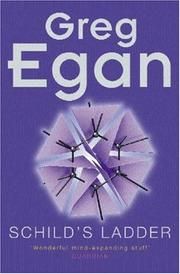
A quantum graph theory of spacetime and an expanding novo-vacuum. Read it after Diaspora — it assumes the reader who finished that one, and it is more austere: the physics is not illustrated, it is simply the setting.
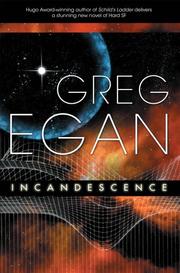
Arthropods derive general relativity from scratch inside a rock orbiting a black hole. Egan expects you to follow the derivation, and readers divide sharply on whether that is thrilling or airless. Read it knowing which kind of book it is.
The Orthogonal trilogy
BeginnerFollow a complete alternative physics — a universe with a Riemannian rather than Lorentzian metric — worked out over three novels
▸ Study plan for this stage
Pace: Two to three months for roughly 1,270 pages, and the only stage where the page count understates the work. The Clockwork Rocket is 386 pages, The Eternal Flame 526 and The Arrows of Time 354, and all three carry diagrams which are part of the text rather than decoration. Expect to read forty or fift
- The single change: a Riemannian rather than Lorentzian spacetime metric, so that the plus-and-minus signature of our physics becomes all-plus, and every consequence follows from that one substitution
- What that costs — no fixed speed of light, so colour and velocity are linked, and light from a source can arrive in reverse order
- Rebuilding thermodynamics from the new metric, which is why the trilogy's central technology is a rocket that generates rather than expends energy
- The characters doing physics as the plot: Yalda, Carla and Agata are working scientists and the discovery sequence is the narrative sequence
- Egan's world-building method here is deductive rather than decorative — the biology, the reproductive politics and the social structure are all downstream of the physics
- The Eternal Flame's quantum mechanics as a genuine second act: it is the derivation of this universe's wave mechanics, and it does not work without book one
- The Arrows of Time and the entropy-gradient problem, where the trilogy's physics and its politics finally become the same question
- State the metric change in one sentence. What is the first physical consequence the novel draws from it, and how early does it appear?
- Why is the Peerless launched at all — what problem does relativistic time dilation solve for this civilisation that it could not solve at home?
- In The Eternal Flame, what problem are Carla and her colleagues actually trying to solve, and how does the answer change what the ship can build?
- The reproductive politics of the trilogy are a direct consequence of the biology, which is a consequence of the physics. Trace that chain in three steps.
- By the end of The Arrows of Time, what has the trilogy argued about the relationship between the direction of time and the possibility of knowledge?
- Before starting, read Egan's own online supplement for Orthogonal — the diagrams and interactive applets for the alternative light-cone geometry. This is not optional background; the novels were written expecting it to exist, and book one's opening chapters are far harder without it.
- Draw the light cone for this universe once, by hand, after the first hundred pages of The Clockwork Rocket. Keep the drawing beside you for the next 1,100 pages. Almost every confusing passage in the trilogy resolves by looking at it.
- Keep a running list of the technologies the characters derive, in order, with the piece of physics each depends on. By book three the list is the plot summary.
- When The Eternal Flame introduces this universe's wave mechanics, stop and write down what our version of the same result is. The comparison is where the trilogy's ingenuity is actually visible.
- Reread the final chapter of The Clockwork Rocket immediately after finishing The Arrows of Time. The trilogy's structure is circular in a way that only shows from the far end.
Next up: After 1,270 pages of a physics that is not ours, the final stage is deliberately a decompression — the same author writing without a single equation, which is the best evidence that the difficulty everywhere else was chosen.

Book one, and the most extraordinary act of world-building in the genre: change one sign in the spacetime metric and rebuild optics, thermodynamics and biology from it. Contains diagrams. Read it only after the previous stage.
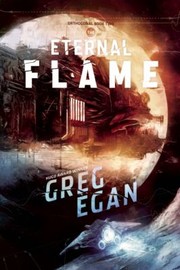
Book two, where the characters develop this universe's quantum mechanics. It requires book one absolutely; the trilogy is one continuous argument split across three volumes.
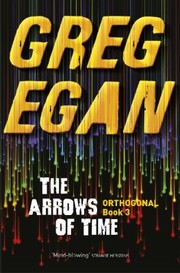
Book three, resolving the trilogy's thermodynamic time problem and its politics together. Egan's supporting diagrams and notes are essential here — this is the most equation-dependent thing on the whole path.
Egan without the mathematics
BeginnerSee the other Egan — near-future, politically engaged, and technically undemanding
▸ Study plan for this stage
Pace: Two weeks, and the lightest reading on the path. Zendegi is 300 pages of near-future realism and Perihelion Summer is a 216-page novella that can be read in a single sitting. Neither asks anything technical of you. Zendegi covers a man's terminal illness and his attempt to leave a partial brain emul
- Egan writing character rather than argument, and the fact that he can — Zendegi is the counter-evidence to the standard charge against him
- Partial emulation as an ethical rather than technical problem: what a fragment of a person owes and is owed
- Zendegi's Iranian setting treated as ordinary rather than exotic, with the politics as background conditions people live inside
- The Human Connectome Project material, and Egan's unusual restraint about what brain mapping would and would not deliver
- Perihelion Summer as adaptation fiction rather than disaster fiction — the interest is in logistics, cooperation and who gets left
- Difficulty as a deliberate setting: these two books prove the Orthogonal trilogy's density was a choice about subject matter, not a limit of the writer
- The recurring Egan question in its plainest form — if a copy of you is not you, what exactly is it that a dying person can leave behind?
- What does Martin actually want the Proxy to be, and at what point in Zendegi does the novel decide he is wrong?
- How does Zendegi's treatment of an incomplete mind emulation differ from Permutation City's treatment of a complete one, and which does Egan seem to find more serious?
- Perihelion Summer is built around a physical event and a social response. Which of the two is the book actually about?
- Having read the whole path, where would you now tell a new reader to start, and why not Axiomatic?
- Egan's reputation rests on the hardest books. Does this stage change your view of what he is best at?
- Read Zendegi immediately after The Arrows of Time with no gap. The tonal drop is the point of putting it last, and it is only available if you do not decompress first.
- Write a paragraph comparing the ending of Zendegi with the ending of Permutation City. Both concern a person choosing what version of themselves continues, and the two answers are close to opposite.
- Read Perihelion Summer in one sitting. At 216 pages it is designed for that, and its effect depends on the compression.
- Finally, order the fourteen books by how much you enjoyed them rather than by difficulty, and see whether your list matches the path's order. Egan readers divide sharply on this, and the disagreement is the interesting part.
Next up: This closes the path. The natural next move is not another author but Egan's later novels and his continuing short fiction, read now with a settled sense of which register of his you actually want.
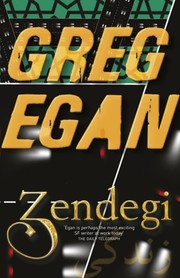
Near-future Iran, brain emulation, and a dying father trying to leave a copy of himself for his son. The most emotionally direct novel he has written, with no mathematics at all — a genuine surprise after the Orthogonal books.
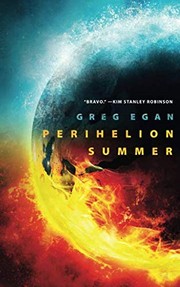
A short novel about a black hole flyby destabilising Earth's orbit, read as a climate-adaptation story. Brief, accessible and a good closing note: proof that the difficulty elsewhere is a deliberate choice, not the only setting he has.