Start with Axiomatic. It collects eighteen stories from Egan's first decade, each of which takes a single hard idea — a neural implant that lets you choose your beliefs, a technology for jumping between bodies, a treatment that removes the fear of death — and follows it to the end without flinching. Each story is short enough that you find out in one sitting whether this writer is for you, and the collection contains no mathematics you cannot skip.
The obvious alternative is Permutation City, which is the famous one and the book most often recommended. It is a better novel than it is an entry point: its central proposition, that a simulated mind can be run in arbitrary chunks and in arbitrary order and will still experience continuity, is a genuinely strange philosophical argument that people spend years disagreeing about. Read it second.
What Egan actually demands, book by book
This is the useful part, because the range is enormous and the covers do not warn you.
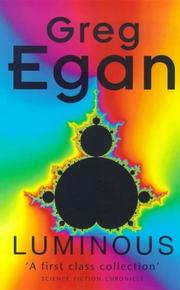
Undemanding, in the sense that the ideas are conceptual rather than technical: Axiomatic, Luminous and Oceanic are the three collections and they are the most reliably readable things he has written. Zendegi is his most conventional novel — a near-future Iran, a journalist, a brain-mapping project, real political texture — and would work as a first book for a reader who wants a novel rather than stories. Perihelion Summer is a short novella about the Earth's orbit being disrupted, and it is genuinely accessible.
Conceptually hard but mathematically light: Quarantine runs on the measurement problem in quantum mechanics and treats wavefunction collapse as something a trained human can perform; Permutation City on computation and personal identity; Distress on the search for a final physical theory, wrapped around a journalist covering a physics conference on an artificial island.
Genuinely mathematical: Diaspora is where the wall is. Its famous early sequence walks through the construction of a mathematical proof as a landscape, and its cosmology involves higher-dimensional topology explained at length and meant seriously. Many readers regard it as his masterpiece and many stop there. Schild's ladder goes further, replacing spacetime with a quantum graph and expecting you to keep up.
Incandescence is the hardest book in the list and it is worth saying so plainly. Half of it follows aliens living inside a body orbiting a black hole who work out general relativity from scratch, and the reader is expected to follow the derivation as they do it. Readers who love it love it precisely for that; readers who abandon Egan usually abandon him here.
The Orthogonal trilogy — The Clockwork Rocket, The Eternal Flame and The Arrows Of Time, read in that order — is set in a universe whose geometry differs from ours in one specific respect, and everything else in the books follows from that change: how light works, how life works, how a rocket can work. There are diagrams and appendices. This is not decoration; the physics is the plot.
The order to read them in
There is no continuity between the novels, so this is a difficulty ordering rather than a chronology. A sensible run is Axiomatic, then Permutation City, then Quarantine and Distress, then Diaspora. Take Luminous and Oceanic whenever you want more stories. Zendegi and Perihelion Summer sit outside the sequence entirely and can be read at any point.
If Diaspora worked for you, continue to Schild's ladder and then the Orthogonal trilogy. If it did not, stop; Incandescence will not change your mind.
Where to stop
Most readers stop after Diaspora, and that is a defensible place to end: you will have read the collections, the identity novels and the one most people call his best. Nothing after it is easier. The Orthogonal trilogy is best treated as a separate project rather than the next thing on a list — it rewards a reader who wants to do the work, and punishes one who does not. More science fiction reading orders are on Discover.
Follow the full ordered path here: Greg Egan books in order: where to start with hard science fiction.