Grady Hendrix books in order: where to start
Every Grady Hendrix novel stands alone, so the order here is about register rather than chronology. He writes two things that look alike on the shelf: comic horror that runs a joke premise absolutely straight, and straight horror with jokes in it — and the second sort will hurt you if you arrive expecting the first. This path opens with the two funniest books, moves to the two where the comedy is a delivery system for something bleaker, then takes the later novels and finishes with his non-fiction history of the genre, which explains what he thinks he is doing.
Start with the funny ones
BeginnerSee what Hendrix does best — a joke premise played completely straight until it stops being funny
▸ Study plan for this stage
Pace: 2 weeks, about 580 pages. Horrorstör is 241 pages and reads in two or three sittings, partly because it is typeset as a furniture catalogue with product pages between chapters. My Best Friend's Exorcism is 336 pages and slower. Every Hendrix novel stands alone, so the order on this path is about reg
- Hendrix writes two things that look identical on the shelf: comic horror that runs a joke premise absolutely straight, and straight horror with jokes in it. Arriving at the second expecting the first is how readers get hurt.
- Horrorstör's premise — a haunted big-box furniture store — is entirely on the surface, which makes it the clearest demonstration of the method: take the gag seriously enough for long enough and it becomes a haunting.
- The catalogue apparatus in Horrorstör is structural. The products degrade page by page in step with the novel, so the paratext is telling the story alongside the prose.
- Retail work is the actual subject of Horrorstör: shift patterns, surveillance, corporate language and the specific exhaustion of a job that describes itself as a family.
- My Best Friend's Exorcism is comic in register and completely straight about the friendship, which is why it is the book where readers first realised Hendrix was not only joking.
- The 1980s setting is used for specifics — mixtapes, brand names, the moral panic of the period — rather than as nostalgia wash, and the chapter titles are period song titles.
- The horror in both books lands on someone who is not believed. That is the throughline of the whole bibliography and it starts here.
- At what page does Horrorstör stop being funny? Name it, because the transition is engineered and locatable.
- What does the catalogue conceit do that ordinary chapter breaks could not?
- In My Best Friend's Exorcism, is the possession real or is the novel ambiguous? What does the text actually commit to?
- How does the eighties setting change what the adults in the book are able to see?
- Both books put a young woman in a situation nobody believes. What is different about how each community responds?
- Read the catalogue product pages of Horrorstör in sequence, skipping the chapters, and note where the copy starts going wrong. The paratext tells the whole arc on its own, which is the neatest formal trick in Hendrix's work.
- Mark the last genuinely comic scene in each of the two novels and write down what immediately follows it. The pairing is his standard move and seeing it twice makes it predictable, which is useful for the rest of the path.
- List the specific eighties references in My Best Friend's Exorcism that are doing plot or character work rather than set dressing. The list is shorter than the total and that ratio is the answer to whether the period is decoration.
- Write one sentence on what Horrorstör thinks a workplace is. Keep it; the later novels have opinions about families and about industries that rhyme with it.
Next up: You have seen the method with the joke on the surface; the next two are where the comic premise is carrying something that will not stay under it.
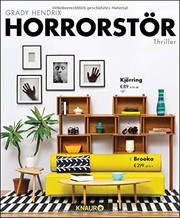
A haunted IKEA, designed and typeset as a furniture catalogue. The best entry point because the gag is entirely on the surface, and because watching a retail satire turn into a genuine haunting is the clearest demonstration of his method.

Eighties Charleston, two teenage girls, one demonic possession. Comic in register but the friendship is written straight, and it is the book where readers first realised he was not only joking. Read it second so the shift is visible.
When the joke stops covering for it
BeginnerRead the two novels where the comic premise is doing serious work, and understand why these are his best-known books
▸ Study plan for this stage
Pace: 2 to 3 weeks, about 770 pages. The Southern Book Club's Guide to Slaying Vampires is 415 pages and is his most sustained novel — give it a fortnight. The Final Girl Support Group is 352 and moves faster. The Southern Book Club contains an extended sequence of harm done to children, an on-page assaul
- The Southern Book Club's premise is a joke and almost nothing else in it is. Suburban housewives against a predator nobody will believe in is straight horror about disbelief, wearing a comic title.
- The novel is specific about who is believed and who is not: the women are dismissed by their husbands, and the harm the predator does in the Black neighbourhood is dismissed by everyone. Hendrix builds the plot on that asymmetry rather than mentioning it.
- The book club itself is the structure — true-crime paperbacks read for entertainment by women who then have to live one — and the novel's chapter epigraphs use real titles.
- The Final Girl Support Group is slasher metafiction: the surviving final girls of six film franchises in group therapy, decades on, with the franchises treated as real events that were then filmed.
- It is funnier than the Southern Book Club and structurally the more ambitious book, and it assumes you know the genre furniture the earlier novels taught you.
- The premise lets Hendrix write about what survival costs after the credits, which is the question the slasher form is structurally unable to ask.
- Both novels take a genre convention that treats women as material and hand the convention back to the women. That is the argument the middle of this path is making.
- The Southern Book Club is set in a community that ignores harm to Black children. How does the novel make that fact structural rather than decorative?
- Patricia is disbelieved by her husband and by her friends in turn. What does the novel say about why, and does it let anyone off?
- In The Final Girl Support Group, what does the conceit of the films being made from real events buy Hendrix?
- Which of the six final girls is the book actually about, and when did you realise?
- Both novels are told from inside a character under sustained pressure. How does the prose change when the pressure rises?
- Track, in The Southern Book Club, every occasion on which a woman is told she is imagining something, and by whom. The list is the novel's plot summarised, and building it is a better reading than any thematic note.
- Read the book club's reading list as given in the epigraphs and check how many of the real titles you can find. Hendrix is pointing at a whole shelf of 1990s true crime and the pointing is deliberate.
- For The Final Girl Support Group, identify which real slasher franchise each of the six is derived from, then note where Hendrix departs from the source. The departures are where the argument is.
- Compare the opening chapter of The Southern Book Club with the opening of Horrorstör and write a paragraph on how differently the two books signal what kind of thing they are. One is honest about it and one is not.
Next up: The comic register has been doing serious work; in the later novels it thins out and the historical material takes over.

The premise is a joke and almost nothing else in it is. Suburban Charleston housewives against a predator nobody will believe in — this is straight horror about being disbelieved, and it is his most sustained novel. Come to it after the lighter two.

Slasher metafiction: the surviving final girls of six film franchises in group therapy. Funnier than Southern Book Club but structurally the more ambitious book, and it assumes you know the genre furniture the earlier novels taught you.
The later novels
IntermediateFollow Hendrix as the comic register thins out and the historical material takes over
▸ Study plan for this stage
Pace: 4 weeks, about 1,250 pages. We Sold Our Souls is 336 pages, How to Sell a Haunted House 413, and Witchcraft for Wayward Girls 496 and worth its own fortnight. Read them in this order rather than by publication interest, because it is the order in which the comedy recedes. Witchcraft for Wayward Girl
- We Sold Our Souls is a heavy metal Faust story and his angriest book — much less comic than the run before it, and the transition point of the later career.
- It is still built on a genre gag, which is why it comes first here: recognisably the same writer, with the proportions changed.
- How to Sell a Haunted House gives its haunting to a house full of puppets and its plot to a sibling fight over a dead parent's estate. The puppets are a joke; the grief and the fight are not.
- That novel is where the balance tips furthest toward the serious, because the estate fight would work as a novel with no supernatural element at all.
- Witchcraft for Wayward Girls has the comedy almost entirely gone. It is his most straightforwardly historical novel and the least like the book that will have brought a reader here.
- The 1970s maternity home is a documented institution, and the novel's power comes from the fact that the coercion needs no supernatural amplification to be frightening.
- Across all three the constant is an institution — the music industry, the family, the maternity home — that claims to be looking after someone while extracting something from them.
- The trajectory is not a decline in comic ability but a decision. Reading them in this order makes the decision visible.
- What is We Sold Our Souls angry about specifically? The answer is more precise than the music industry.
- In How to Sell a Haunted House, would the sibling plot work without the puppets? What do they add that grief alone would not?
- Witchcraft for Wayward Girls uses witchcraft in a book about girls with no power at all. Is the magic a solution, a temptation, or a trap?
- Where in these three does Hendrix still let himself be funny, and what does each of those moments cost the surrounding scene?
- What does each of the three institutions want from the person at its centre?
- For each of the three novels, write one line naming the institution and one line naming what it extracts. The three pairs read as a single argument, which is not obvious while reading them separately.
- Count the jokes in the first fifty pages of each of the three. The declining number is the clearest evidence for reading them in this order rather than any other.
- In Witchcraft for Wayward Girls, mark every point at which an adult offers help with a condition attached. The pattern is the novel's structure.
- Return to the sentence you wrote in stage one about what Horrorstör thinks a workplace is, and test it against How to Sell a Haunted House's view of a family. The two are closer than the ten years between them suggests.
Next up: You have the whole run of novels; the last stage explains what tradition he thinks he is writing inside, and shows where the bibliography actually starts.
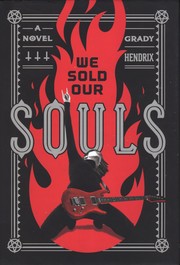
A heavy metal Faust story, and his angriest book — much less comic than the run before it. Read it first of the later three because it is the transition, still recognisably built on a genre gag.
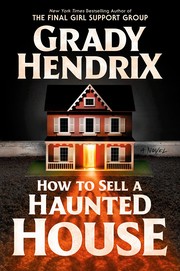
Siblings clearing out a dead parent's house full of puppets. The puppets are a joke; the grief and the sibling fight are not, and this is the novel where the balance tips furthest toward the serious side.
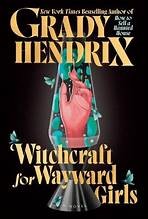
A 1970s home for unwed mothers, with the comedy almost entirely gone. His most recent and most straightforwardly historical novel — read it last, because it is the least like the book that will have brought you here.
The critic, and the deep cut
IntermediateUnderstand the paperback horror tradition Hendrix is working inside, and see where he started
▸ Study plan for this stage
Pace: 1 to 2 weeks, about 250 pages and the shortest stage by a wide margin. Paperbacks from Hell is a heavily illustrated non-fiction history of 1970s and 80s mass-market horror and is browsed as much as read — a week of dipping into it is better than a single sitting. Occupy Space is a 122-page early sm
- Paperbacks from Hell is effectively the source code for every novel on this path — the cover art, the subgenres, the publishing economics and the specific silliness Hendrix is rewriting rather than parodying.
- It is written as an enthusiast's history by a participant in the current genre, not as detached scholarship. Hendrix is arguing for the value of books critics dismissed, and the advocacy is open.
- The subgenre taxonomy it lays out — haunted houses, killer animals, satanic panic, medical horror, real estate — maps directly onto the novels, and the mapping is the exercise of this stage.
- The book also documents the commercial collapse of the mass-market horror paperback in the early 1990s, which is the reason the tradition needed recovering at all.
- Reading the criticism after the fiction, rather than before, means the influences become recognisable rather than announced.
- Occupy Space predates the horror books and was written with a co-author, so it is evidence about where he started rather than about what he does.
- Taken together the two books show a writer who is also a historian of his own genre, which is unusual and explains the density of reference in the novels.
- Which subgenre from Paperbacks from Hell is each of the seven novels rewriting? Some take two.
- What does Hendrix admire in the paperbacks he catalogues, and is the admiration ironic?
- The book is an argument that dismissed popular fiction deserves attention. Does it convince you, and on what evidence?
- What happened to the mass-market horror paperback in the early 1990s, and what does that history explain about Hendrix's career?
- Reading Occupy Space, what is recognisably his and what is not?
- Make a two-column table: the seven novels on one side, the Paperbacks from Hell subgenre each descends from on the other. Doing this after reading all seven turns the criticism into a key.
- Pick three covers reproduced in Paperbacks from Hell and write a one-paragraph plot for each from the cover alone. Then read Hendrix's summary. The exercise is the book's own implicit argument about how these things were sold.
- Find one novel described in Paperbacks from Hell that you can still obtain, read it, and set it beside the Hendrix book that most resembles it. This is the only exercise on the path that leaves the path, and it is the most useful.
- After Occupy Space, write two sentences on why this path puts it last rather than first. Owning that judgement is the point of reading it at all.
Next up: This is the last stage: the novels are read in the order that makes their shifts visible, and the tradition behind them is documented in his own words.

His illustrated history of 1970s and 80s mass-market horror, and effectively the source code for every novel above. Read it after the fiction and the influences become obvious — this is the shelf he is rewriting.

An early, small-press novel written with Eric Mueller, long before the horror books. Included for completists only: it is not representative and should not be anyone's first Hendrix, but it is the actual beginning of the bibliography.