Start with My best friend's exorcism. Nothing Grady Hendrix has written is part of a series, so the order is purely about which book gives the truest sense of what he does — and this is it: a 1980s South Carolina friendship between two teenage girls, a possession played completely straight, and a comic surface that turns out to be carrying a genuinely serious book about loyalty and about who adults choose to believe.
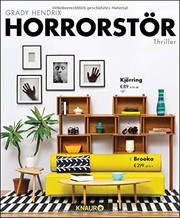
The book people name first is Horrorstör, the debut about a haunted big-box furniture store, typeset and illustrated as a retail catalogue complete with product pages. The design is a real achievement and the print edition is worth owning for it. As a first read it undersells him: the joke is the strongest thing in the book, the characters are thinner than in anything after, and an ebook strips out half of what makes it work.
The one everyone has heard of
The Southern Book Club's Guide to Slaying Vampires is his biggest seller and the one most likely to be recommended to you. It is a 1990s Charleston book club against a predator who has moved into the neighbourhood, and the horror is structural rather than atmospheric: the women identify the threat immediately and spend the novel not being believed. It goes much nastier than the cover design suggests, including sustained body horror and one extended set piece readers regularly warn each other about.
Read it second. It lands harder once you know the register he works in.
The high-concept ones
We sold our souls is a Faustian road novel about a washed-up metal guitarist, and it is the most propulsive thing he has written. The Final Girl Support Group puts the survivors of slasher films into group therapy decades later and is the most formally playful — chapters interrupted by fake screenplays and case notes — and also the most divisive, because the plotting is deliberately as frantic as the films it is about.
The recent novels
How to Sell a Haunted House is about two estranged siblings clearing out their dead parents' house, and about puppets. Underneath the puppets it is the most direct book he has written about family estrangement and about grief.
Witchcraft for Wayward Girls is set in a 1970 home for unwed mothers and is the angriest thing on this list. The supernatural element arrives late and the institutional cruelty is the real subject.
The nonfiction, which may be the best book here
Paperbacks from Hell is not a novel. It is a large-format illustrated history of the 1970s and 1980s horror paperback boom, reproducing the original cover art in colour and tracking how the genre moved from Satanic panic to killer animals to splatterpunk before the market collapsed. It won a Bram Stoker Award for non-fiction.
It is also the key to his novels. Everything Hendrix writes is in conversation with those paperbacks — the premises, the pacing, the willingness to be ridiculous and vicious at once. Read it and the fiction reads differently.
The outlier
Occupy Space is an early, hard-to-find item co-credited with Eric Mueller, predating the horror novels. It is not representative of the work and is for completists only.
Honest warnings
The register is consistent and it is not for everyone. Every novel opens funny, turns cruel somewhere in the middle, and ends sincere — sometimes very sincere. Readers who want sustained dread rather than tonal swings tend to bounce, and readers who came for the comedy are sometimes ambushed by how much grief is in the last fifty pages. That is the intended effect rather than a failure of control, but it is worth knowing.
The animal and body-horror content is genuinely graphic in several of them, particularly the book club novel and How to Sell a Haunted House.
A note on editions
Some of these records are foreign-language or foreign-market printings — the Horrorstör record is a Turkish edition — so check the language and, for that book specifically, buy print rather than digital. If you want more horror after these, the catalogue has plenty.
Follow the full ordered path here: Grady Hendrix books in order: where to start.