George Bernard Shaw in Order: Where to Begin with Sixty Plays
Shaw wrote plays for sixty years and left over fifty of them, most now unread, and the sheer size of the shelf is why people never start. The way in is not chronological: begin with the two comedies that still work on their own terms, then go back to the deliberately unpleasant early plays, then take the great middle-period arguments, and finish with the late work and the criticism. One warning that applies throughout — every Shaw play comes with a preface, often longer and angrier than the play itself, and the prefaces are half the reason to read him.
The Two Comedies to Start With
BeginnerDiscover that Shaw is genuinely funny before meeting him as a polemicist, and learn to spot the move he makes in every play: a romantic convention set up, then dismantled by economics.
▸ Study plan for this stage
Pace: Two weeks. Both plays are short — Pygmalion around 135 pages, Arms and the Man under 100 — and each can be read in an evening, but read each twice: once for the story, once for the prefatory and appended material, which in Shaw is never optional. Pygmalion in particular should be read with its appen
- The Shavian move, visible in both plays and in every play after: set up a romantic or heroic convention with total confidence, then dismantle it on economic grounds
- Higgins as a comic monster rather than a romantic lead, and the fact that the play is careful never to make him lovable in the way the adaptations do
- What Eliza actually gains — not a husband, but a marketable accent and therefore an income. Shaw's appended sequel exists because audiences kept refusing to see this
- The dustman Doolittle as the play's real economist, and his speech on middle-class morality as the clearest statement of Shaw's method in two pages
- Bluntschli's chocolates in Arms and the Man: the professional soldier who carries food instead of cartridges because he knows what a battle is actually like
- Sergius and the cavalry charge — heroism recast as a lucky accident, and the play's demonstration that a reputation and a fact are different objects
- That Shaw performs the same demolition on class in one play and on war in the other, which is why they belong together at the start
- The preface habit: almost every Shaw volume opens with an essay, often longer and angrier than the play, and the prefaces are half the reason to read him
- Why does Shaw insist Eliza does not marry Higgins, and why did he have to say so twice? What is the play's argument that the romantic ending would destroy?
- Doolittle's fortune arrives as a joke and functions as a thesis. What is he actually claiming about morality and money, and does the play endorse him?
- In Arms and the Man, is Bluntschli a cynic or a realist? Shaw seems to think the distinction matters — where in the text can you see him drawing it?
- Both plays give a character a set of noble beliefs and then show the beliefs costing someone money. Find the moment in each and compare how bluntly it is done.
- Which is the better play, and are you judging it by construction or by argument? Shaw would have had a strong view about which criterion you should be using.
- Read Doolittle's middle-class-morality speech aloud. It is roughly two pages, it is the funniest thing in the play, and hearing it at speaking pace is the fastest way to understand what Shaw's dialogue is for.
- Write 200 words on what happens to Eliza after the curtain, using only the play — then read Shaw's appended sequel and compare. The gap between what a reader wants and what Shaw supplies is the whole argument.
- In Arms and the Man, list every time a character states something as heroic and the play immediately supplies the practical fact underneath. Six or seven instances is a normal count and the pattern is the play's engine.
- Read the preface to whichever volume you have before the second play and after the first. You will feel the difference in how the second play reads, which is a useful demonstration of what the prefaces do.
Next up: Both of these are comedies that let the audience leave happy; the next three are the plays Shaw grouped himself under the heading Unpleasant, and they perform the same operation without the anaesthetic.
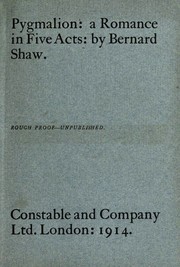
The obvious starting point and the correct one. It is short, it is his most perfect comic structure, and Shaw's own ending — which he had to defend in a furious appended sequel — is the first sign that he is doing something other than romance.
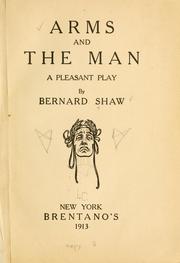
The earlier and lighter twin: a soldier who carries chocolates instead of ammunition demolishes a household's ideas about heroism. Read second because it shows the same demolition performed on war rather than class.
The Plays Unpleasant
IntermediateMeet the Shaw who set out to make audiences uncomfortable about money, and understand why he grouped these plays under that title himself.
▸ Study plan for this stage
Pace: Two to three weeks. Widowers' Houses is 73 pages and crude enough to read in one sitting; do not linger on it. Mrs. Warren's Profession is around 110 pages and needs two — the fourth act especially should be read in a single unbroken run. Candida is under 80 pages. Read them in this order, since Wid
- Shaw's own grouping — he published these as Plays Unpleasant and meant it as a description of their effect on an audience, not their quality
- Widowers' Houses on slum landlordism: nobody in the play has clean hands, including the young man who discovers where the money comes from and marries into it anyway
- The point of reading a crude first play deliberately: the argument is fully formed and the technique is not, so you can see the two separately in a way the later plays never allow
- Mrs. Warren's Profession's actual argument — prostitution treated as a rational economic response to what women could earn otherwise, which is why the censor kept it off the English stage for decades
- Vivie Warren as a genuinely new kind of stage character: educated, financially independent, and uninterested in being reconciled to anyone
- The fourth-act confrontation between Vivie and her mother, in which Shaw gives Mrs. Warren an unanswerable case and then refuses to let it settle the matter
- Candida as the counterweight — the one play here where Shaw is not in a hurry to score points, and where the woman chooses on grounds neither man in the room has anticipated
- The Morell-Marchbanks contest as a test of what strength means, with the play's answer deliberately withheld until the last exchange
- In Widowers' Houses, at what point does Trench understand where the rent comes from, and what does he do? Is the play harder on him or on the landlord?
- State Mrs. Warren's defence of her career in your own words, at its strongest. Then state Vivie's rejection of it, also at its strongest. Does the play give either of them the last word?
- Mrs. Warren is entirely persuasive about her past and much less so about her present. Where exactly does the play separate the two, and why does that distinction matter to Vivie?
- In Candida, what does Candida actually choose, and on what grounds? Most first readings get this wrong; check yours against the final page.
- Shaw called these plays unpleasant. Which of the three is genuinely uncomfortable to read now, and which has been overtaken by the world changing around it?
- All three plays turn on where an income comes from. Is that a limitation of Shaw's imagination or the point of his whole project?
- Read the last act of Mrs. Warren's Profession in one unbroken sitting. It is a sustained argument between two people and it loses most of its force if interrupted.
- Write out Mrs. Warren's case as a 300-word first-person statement. Then write Vivie's reply in 300 words. Doing both is the only reliable way to find out which one you have been quietly siding with.
- Compare the opening ten pages of Widowers' Houses with the opening ten of Pygmalion. Same writer, fifteen years apart — list three specific things the later play does that the earlier one cannot.
- In Candida, mark every line in which someone tells another character what they are. Shaw builds the whole play out of these attributions and the final reversal depends on one of them being wrong.
- Read the preface to Mrs. Warren's Profession alongside the play. It is one of the sharpest pieces of argument on this path and it makes explicit what the play only dramatises.
Next up: You have now seen Shaw make an economic argument inside a short play; the middle period is what happens when he decides a play can be long enough to hold a full philosophical position and a debate about it.

His first play, a blunt piece about slum landlordism in which nobody has clean hands. Crude next to what follows, and worth reading precisely for that — it shows the thesis arriving before the craft did.
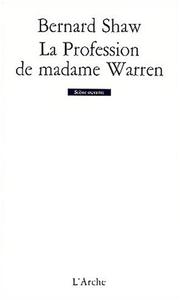
Banned for decades, and still the sharpest thing he wrote: prostitution treated as a rational economic response to women's wages. The mother-daughter confrontation in the final act is Shaw at his most unsentimental.

The domestic counterweight, and the play where Shaw is least in a hurry to score points. A clergyman's wife chooses between him and a young poet on grounds neither man anticipates.
The Great Middle-Period Arguments
IntermediateTake on the full-length plays of ideas at their most ambitious, and learn to read a Shaw debate scene as the main event rather than a digression.
▸ Study plan for this stage
Pace: Six to eight weeks — the longest stage on this path and the one where the plays stop being an evening each. Caesar and Cleopatra runs around 145 pages, Major Barbara 150, The Doctor's Dilemma 150, and Man and Superman 245 including the appended Revolutionist's Handbook. Read Caesar first as the ligh
- Shaw writing Caesar and Cleopatra explicitly against Shakespeare's Antony and Cleopatra: a middle-aged, pragmatic, almost avuncular Caesar tutoring a teenage queen, in place of a tragedy of passion
- Myth rewritten on rational grounds as a standing Shavian method — the same operation performed on Joan in the final stage
- The Life Force: Shaw's evolutionary philosophy, in which the world's purpose works through individuals who mostly do not know it, stated most fully in Man and Superman
- Ann Whitefield as the Life Force in person, pursuing Tanner while he believes he is the one with the ideas — the play's central comic inversion
- The hell scene as a free-standing philosophical dialogue between Don Juan, the Devil, the Statue and Doña Ana, which is the actual argument the surrounding comedy is wrapped around
- Major Barbara's genuine difficulty: Undershaft the armaments manufacturer wins the argument, and Shaw's sympathies are visibly with his daughter. It is the rare Shaw play where the side he likes loses
- The Salvation Army's acceptance of tainted money as the play's crisis, and the fact that Shaw declines to let it be a simple hypocrisy
- The Doctor's Dilemma as a play about a profession with a monopoly, and a preface of sustained invective against the medical establishment of Shaw's own day — read as period polemic and argument, not as any guide to medicine now
- How does Shaw's Caesar differ from Shakespeare's Antony, and what is Shaw claiming about what a great man is actually like?
- State the Life Force in four sentences without using the phrase. If it will not go into plain prose, is that a fault in the philosophy or in the summary?
- In the hell scene, the Devil is given a long and genuinely strong speech. What is his case, and why does Shaw give the opposition such good material?
- Undershaft wins Major Barbara. What exactly does he prove, and what does Barbara concede? The ending is much less clear-cut than either summary suggests.
- Is Major Barbara an argument that money is good, or an argument that poverty is the worst crime? Shaw thought the difference was everything — can you show it in the text?
- In The Doctor's Dilemma, Ridgeon's choice is presented as medical and turns out to be personal. Where in the play does that substitution happen, and does the play admit it?
- Read Man and Superman's third act as a separate work, in one sitting, with the rest of the play set aside. Then read it again in place. It is a genuinely different experience and the ordering question — whether it belongs in the play at all — is the standard argument about Shaw's construction.
- Write a 400-word summary of the Devil's position that a reader would find persuasive. Shaw wrote it to be persuasive; a summary that makes it look silly has missed the design.
- For Major Barbara, build a two-column ledger of every argument Undershaft makes and every reply Barbara or Cusins offers. Score it honestly. Most readers find the columns do not balance, which is the play's real subject.
- Read the preface to The Doctor's Dilemma and mark three places where the invective is doing genuine argumentative work and three where it is performance. Learning to tell them apart is the main skill the prefaces teach.
- Take the appended Revolutionist's Handbook and read the maxims. Note the ones that read as Tanner's and the ones that read as Shaw's own. The two are not identical and the distance is deliberate.
- After all four plays, write down which one you would revive and why. The four are usually ranked differently by readers and by directors, which is itself informative about what Shaw's plays do on a stage as opposed to a page.
Next up: The middle-period plays all assume that a clever person arguing well can settle something; the late work is written by a man who has watched a war and no longer believes it, and the tonal drop only registers if you arrive from here.
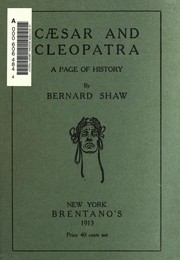
Written explicitly against Shakespeare's Antony and Cleopatra — a middle-aged, pragmatic, almost avuncular Caesar tutoring a teenage queen. The best demonstration of Shaw rewriting a myth on rational grounds.
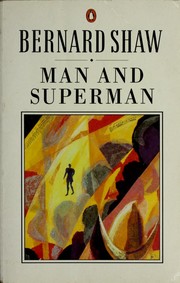
The central statement of the Life Force philosophy, and structurally strange: the third act is a free-standing dream debate in hell, usually cut in performance. Read it complete, including the appended Revolutionist's Handbook.

A Salvation Army officer against her armaments-manufacturer father, and the rare Shaw play where the side he sympathises with loses the argument. Probably his best-constructed full-length work.
Medicine as a trade with a monopoly on life and death, and a doctor who must decide which of two patients to save. Its preface is one of the great pieces of Shavian invective and is worth the volume on its own.
Late Shaw and the Criticism
IntermediateFollow Shaw past the Great War, when the comedy darkens, and read the critical writing that explains what he thought a play was for.
▸ Study plan for this stage
Pace: Four to five weeks. Heartbreak House and Saint Joan are around 160 pages each and both want two or three sittings — Saint Joan's trial scene in particular should be read whole. The Quintessence of Ibsenism is 188 pages of criticism rather than drama and reads slower than any play here; give it two w
- Heartbreak House as Shaw's Chekhov play and his war play simultaneously — a houseful of clever, charming, entirely ineffectual people drifting while the bombs approach
- The tonal collapse from the middle period: the same Shavian wit, deployed by characters whose cleverness now buys them nothing. This only registers if Major Barbara is recent in your memory
- Captain Shotover and the ship of state metaphor, made explicit at the end in a way Shaw would earlier have thought too obvious to write
- Saint Joan's central and hardest achievement: every one of Joan's judges is given a reasonable case in his own terms, so the trial is not a story about villains
- The Inquisitor's long speech as the most difficult thing Shaw ever wrote — a sustained, coherent defence of a position he detests, delivered without irony
- Joan as Protestantism and nationalism arriving early, which is Shaw's historical thesis about why she had to be destroyed by institutions that were not evil
- The Epilogue's break with the play's own realism, and the standing argument about whether it completes the work or undermines it
- The Quintessence of Ibsenism as the book that made Shaw's name as a critic, arguing for Ibsen as a moral revolutionary — and functioning, read last, as an account of the theatre Shaw wanted to exist before he went and wrote it
- What are the people in Heartbreak House actually doing, and what does Shaw think their cleverness is worth? Compare with what cleverness achieves in Major Barbara.
- Reconstruct the Inquisitor's argument at its strongest. Where does it go wrong, and can you locate the error precisely rather than by disagreeing with the conclusion?
- Saint Joan is a tragedy in which nobody is villainous. What does that cost the play in dramatic force, and what does it buy?
- Does the Epilogue belong? Argue both sides before deciding — this is the standing critical dispute about the play and both positions have serious support.
- In The Quintessence of Ibsenism, what does Shaw claim Ibsen was doing? Now test the claim against Shaw's own plays: is he describing Ibsen, or describing himself in advance?
- Having read across sixty years, what changed in Shaw and what did not? Be specific — the vocabulary is remarkably constant and something underneath it is not.
- Read the trial scene of Saint Joan in one unbroken sitting, then reread only the Inquisitor's speech the following day, alone. It is the passage on this path most worth a second isolated pass.
- Write 300 words defending the burning of Joan using only arguments the play itself supplies. It is an unpleasant exercise and it is the exact thing Shaw set himself; doing it is the fastest way to see how hard it was.
- Put the last page of Heartbreak House beside the last page of Major Barbara and write a paragraph on what the war did to this writer. The two endings are separated by about a dozen years and the difference is visible in the stage directions alone.
- After The Quintessence of Ibsenism, go back to your notes on Mrs. Warren's Profession and mark the places where Shaw is doing what he says Ibsen did. There will be several, and they are the clearest evidence for reading the criticism as a manifesto.
- Choose the play on this path you would give someone who has never read Shaw, and write one paragraph defending it against Pygmalion, which is the default answer. A reasoned alternative is the best proof that you have read the shelf rather than sampled it.
Next up: This is the end of the path. There are still forty-odd plays left, and the sensible way into them is now by preface rather than by title — read the essays until one of them makes you want the play attached to it.

His Chekhov play and his war play at once — a houseful of clever people drifting while the bombs approach. The tone shift from the middle-period comedies is startling, which is why it must come after them.
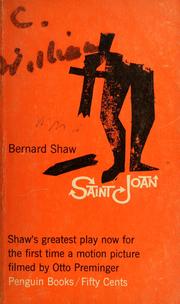
The late masterpiece and the work that secured the Nobel: Joan tried by people who are all, in their own terms, reasonable. Shaw gives the Inquisition its best possible case, which is the most difficult thing he ever did.
The critical book that launched him, arguing for Ibsen as a moral revolutionary. Read last, as an account of the theatre Shaw wanted to exist and then went and wrote himself.