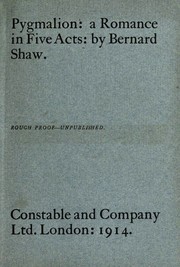
Start with Pygmalion, and when you finish the last scene, keep going into the prose sequel Shaw appended to it. He wrote that afterword specifically because audiences kept sending Eliza back to Higgins, and he wanted it on record that she does not. Every adaptation you have seen ignores him. Reading his ending first inoculates you against the version that made the play famous.
The obvious alternatives are Saint Joan, the play that got him the Nobel, and Man and Superman, his most ambitious. Both are better places to arrive than to begin. Pygmalion wins because it is short, genuinely funny, and its argument — that class in England is an accent, a wardrobe and a set of manners, all of them teachable — lands within twenty minutes and needs no context at all.
The early plays
Widowers' Houses was his first produced play and it is creaky, but it establishes the method he never abandoned: take a respectable character, reveal that their income comes from something indefensible, and make the audience sit with it. Here the money is slum rent.
Mrs. Warren's Profession is the great early one. Shaw argues that prostitution is an economic phenomenon rather than a moral failing, and stages the argument as a confrontation between a mother and the educated daughter her earnings paid for. The censor banned public performance in Britain for years. It still works.
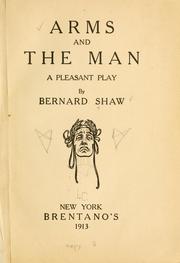
Arms and the Man is the funniest of the early plays and the best comic entry point after Pygmalion — a soldier who carries chocolate instead of ammunition, deflating military romance in a single prop. Candida is the quieter one, a domestic triangle in which the woman does the choosing and gives her reasons.
The major plays
Caesar and Cleopatra is Shaw's answer to Shakespeare, with a Caesar who is patient, practical and a teacher rather than a colossus. Man and Superman is the largest thing he attempted: a romantic comedy with a philosophical dream sequence, Don Juan in Hell, embedded in the third act. That sequence is usually cut in performance and is the actual point of the play, so read it even though it is a long argument in an empty space. Fair warning: the appended Revolutionist's Handbook contains Shaw's enthusiasm for selective breeding of human beings, which is not a footnote his admirers can wave away.
Major Barbara is the best of the argument plays. A Salvation Army officer, her armaments-manufacturer father, and a debate about whether money earned from weapons can do good that Shaw refuses to resolve in the obvious direction. The Doctor's Dilemma turns the same machinery on the medical profession and on who deserves to be saved.
Heartbreak House is the bleak one, written around the First World War, with a country house full of clever people who cannot act. Saint Joan is the late peak: a Joan who is a nuisance to everyone because she is right, and a trial scene in which nobody behaves like a villain. If you read one Shaw play after Pygmalion, read this.
The criticism, and the caveats
The Quintessence of Ibsenism is not a play. It is Shaw's manifesto for Ibsen and, more usefully, the clearest statement of what he thought drama was for — argument rather than sentiment. Read it once you have five plays behind you and much of his practice becomes deliberate rather than eccentric.
Two honest notes. The prefaces are frequently longer than the plays and range from brilliant to unreadable; skipping them costs you nothing on a first pass. And Shaw's political enthusiasms in the 1920s and 1930s — including admiring public remarks about authoritarian rulers, and his lifelong interest in eugenics — are a real part of the record. Scholars disagree about how much they were provocation and how much conviction, and that disagreement is not resolved by liking the plays.
Six plays is enough: Pygmalion, Arms and the Man, Mrs. Warren's Profession, Major Barbara, Heartbreak House and Saint Joan. The rest of the sixty are for completists. More drama paths sit on Discover.
Follow the full ordered path here: George Bernard Shaw in Order: Where to Begin with Sixty Plays.