Fullmetal Alchemist Reading Order: Where to Start and What Order to Read It In
Read Fullmetal Alchemist in publication order, volume 1 through 27, and read the manga rather than picking between the two anime — Hiromu Arakawa's original is a single complete story with no filler and no alternate ending. The 2003 anime diverges partway through and invents its own conclusion because the manga was still running; the 2009 series, Brotherhood, follows the books closely. This path covers the first 14 volumes, which carries you from the opening premise through the reveal of what the antagonists are and well into the endgame. Stay in the single-volume edition and do not mix it with the 3-in-1s, which renumber everything.
The Brothers and the Rule
BeginnerLearn what equivalent exchange is, what the Elric brothers did, and what the series is going to charge them for it.
▸ Study plan for this stage
Pace: 1 week for volumes 1 to 3, about 570 pages of manga — one or two sittings per volume. Settle the edition before you buy: stay in the numbered single volumes throughout and do not mix them with the 3-in-1 omnibus, which counts chapters differently. Volume 3 contains the Nina chapter, in which a child
- The premise and the cost are both stated in volume 1: two brothers attempt human transmutation to bring their mother back, and pay with an arm, a leg and a body.
- Equivalent exchange is the moral rule of the world as well as its physics, and Arakawa never once softens it. Watch how often characters invoke it and how often events actually obey it.
- Edward's automail and Alphonse's armour are permanent conditions, not costumes. The series treats the injuries as ongoing rather than as an origin story already paid for.
- The military that employs Edward comes into focus in volume 2, and with it the first sign that the state's interest in alchemy is not academic.
- The early volumes look episodic and are not. Each self-contained case is laying political groundwork that pays out ten volumes later.
- Scar's introduction in volume 3 brings the first character whose grievance against state alchemists is entirely justified, which is the series' method in miniature.
- Read the manga rather than choosing between the anime adaptations. The 2003 series diverges partway through and invents its own ending because the manga was still running; the 2009 Brotherhood follows the books closely.
- State the law of equivalent exchange as volume 1 gives it. Where in these three volumes does an event fail to obey it, and is the failure acknowledged?
- What did the brothers actually get back from the transmutation, and why does that matter to everything that follows?
- What does the Nina chapter demonstrate about the kind of story this is going to be, and could the series have made the same point with a less final outcome?
- Why is Scar introduced immediately after that chapter rather than before it?
- What has the reader been told about the Philosopher's Stone by the end of volume 3, and how much of it comes from a reliable source?
- Write out the law of equivalent exchange on a card and keep it in the book. Every time a character states it, note the page and who is speaking; by volume 14 the list of speakers is the argument.
- Read volume 1's opening chapter and then reread it after volume 3. The false priest and the fake stone are doing setup work that is invisible the first time.
- Track the Elrics' stated goal — restoring their bodies — and mark every point in three volumes where a different goal quietly displaces it.
- Note the Nina chapter's page count against a typical chapter's. Arakawa gives it no extra length, and what she does with the same space is the craft lesson of these three volumes.
Next up: The rule and the cost are established; the next four volumes take the two brothers out of the episodic frame and hand the story to an ensemble and a state.

Two brothers attempt to bring their mother back and pay for it with an arm, a leg and a body. Arakawa states the premise, the cost and the moral rule of the world in one volume and never softens any of them — the correct and only starting point.

The military that employs Edward comes into focus, and with it the first sign that the state's interest in alchemy is not academic. Read straight on; the early volumes are episodic on the surface and are laying the political groundwork underneath.
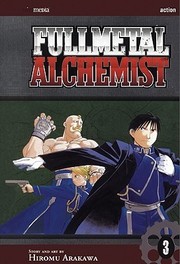
The Nina chapter, which is where most readers stop treating this as an adventure comic, and the introduction of Scar. From here the series' willingness to follow its own rules to their conclusion is established.
The State Alchemists
BeginnerMeet the military cast, understand what Amestris is, and see the first outline of the conspiracy running it.
▸ Study plan for this stage
Pace: 1 to 2 weeks for volumes 4 to 7, about 770 pages. These are denser than the opening three because the cast expands sharply and the plotting starts running on several threads at once. The Ishval war is discussed here by people who fought in it, and volume 7 contains the death that sets Mustang's enti
- Volume 4 turns a two-hander into an ensemble: Roy Mustang, Riza Hawkeye and the officer cast take on real weight and their own motives.
- Amestris is a military state, and the series is careful to show its ordinary functioning — ranks, postings, paperwork — before showing what it is for.
- Ishval is introduced as memory before it is shown as event. Arakawa withholds the depiction for nine more volumes, and the withholding is deliberate.
- Volume 5 is load-bearing: the homunculi become an organised faction rather than isolated threats, and the Stone acquires a specific and unpleasant recipe.
- The Fifth Laboratory sequence in volume 6 is the first direct confrontation with what the military has been building, and the first time the brothers are shown what their own goal would cost.
- Volume 6 also begins paying off jokes planted three volumes earlier — the first visible evidence of how tightly the whole 27-volume structure is plotted.
- Hughes, in volume 7, is the series' first genuine loss, and the point at which the political plot overtakes the brothers' personal one.
- What is a State Alchemist, institutionally? Describe the position in terms of contract, obligation and privilege rather than power.
- What is a Philosopher's Stone made of, and why does that answer reframe every earlier mention of one?
- How does the series distribute knowledge among its cast in these volumes — who knows about the homunculi, and how does each of them find out?
- Hughes's death changes the story's centre of gravity. What specifically does it make possible that could not have happened before?
- Ishval is talked about but not shown. What does the delay accomplish?
- Draw the military chain of command as it stands at the end of volume 7 — names, ranks and who reports to whom. Arakawa keeps it consistent, and having it on paper makes the volume 11 reveal legible.
- Keep a two-column list: what each character knows about the homunculi, and when they learned it. Update it per volume. The lag between characters is where most of the tension in volumes 8 to 14 comes from.
- Go back to a joke or throwaway panel in volumes 1 to 3 that pays off in volume 6, and note both page numbers. Finding even two of these changes how carefully you read the later volumes.
- After volume 5, write down the recipe for a Philosopher's Stone in one sentence and then reread Edward's stated goal from volume 1. The collision between the two is the series' central problem.
Next up: The conspiracy now has members and a method; the next four volumes give it a name, a history and a map.

Roy Mustang, Riza Hawkeye and the rest of the officer cast take on real weight, and the war in Ishval starts being talked about by people who were in it. The volume that turns a two-hander into an ensemble.

The homunculi become an organised faction rather than isolated threats, and the Philosopher's Stone acquires a specific and unpleasant recipe. Do not skip: this is the load-bearing volume for everything after it.

The Fifth Laboratory sequence and the first direct confrontation with what the military has been building. Arakawa also starts paying off jokes planted three volumes earlier, which is the first sign of how tightly the whole thing is plotted.

Hughes, and the consequence that sets Mustang's whole arc running. The series' first genuine loss, and the point where the political plot overtakes the brothers' personal one.
The Homunculi
BeginnerFollow the conspiracy as it is named, and see the map of the country turn out to be part of it.
▸ Study plan for this stage
Pace: 1 to 2 weeks for volumes 8 to 11, about 750 pages. Volume 11 rewards a slower read than the rest — it contains the structural reveal the previous ten volumes were arranged around. Two catalogue notes: volume 10 displays in our catalogue with its title inside square brackets, and it is the ordinary s
- Greed in volume 8 is the first homunculus with his own agenda, which converts the antagonists from obstacles into characters with positions.
- Volume 8 also opens the Xing thread, which runs unbroken to the end of the series.
- Ling, Lan Fan and alkahestry give the story a second magical system deliberately set against Amestrian alchemy. The comparison is doing plot work, not worldbuilding decoration.
- The Briggs material and Olivier Armstrong, introduced in volume 10, add a faction that is loyal to the country rather than to the state — a distinction the endgame depends on.
- Volume 11 reframes every map in the previous ten volumes: the country's borders and its history turn out to be a design rather than an accident. This is the single biggest structural reveal in the series.
- Arakawa's homunculi are each organised around one named vice, and the series tests whether that is a limitation or a diagnosis.
- The reveal in volume 11 is retroactive rather than forward-looking. It does not tell you what happens next; it tells you what has already been happening.
- What does Greed want, and how does that differ from what the other homunculi want? Does the difference make him more or less dangerous?
- How does alkahestry differ from Amestrian alchemy in principle, not just in effect, and what does the contrast reveal about each country?
- What is Briggs's actual loyalty, and how does Olivier Armstrong state it?
- Explain the volume 11 reveal in two sentences without using any proper noun introduced after volume 5. If you cannot, reread it.
- Which earlier events does volume 11 retroactively explain? Name at least three.
- Before reading volume 11, draw the map of Amestris from the panels available in volumes 1 to 10 — cities, borders, where the brothers have travelled. Then read volume 11 with your own map in front of you. The reveal only lands properly if you have drawn it yourself.
- List the homunculi with their names and their known abilities as of volume 11, and mark which have been shown a personal history. The blanks predict the second half.
- Track the Xing characters from volume 8 to 11 and note what each of them is actually in Amestris to obtain. Their goals are stated plainly and are easy to lose among the fighting.
- Reread the Fifth Laboratory sequence from volume 6 after finishing volume 11, and mark every line that means something different now.
Next up: With the design of the country exposed, the last stage of this path watches the separate factions converge on it.
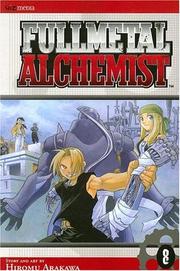
Greed, and the first homunculus with his own agenda — the volume that makes the antagonists into characters rather than obstacles. It also opens the Xing thread that runs to the end.

Ling, Lan Fan and the alkahestry of the eastern kingdom arrive properly, giving the series a second magical system to set against Amestrian alchemy. Read in sequence; the comparison is doing plot work, not worldbuilding decoration.
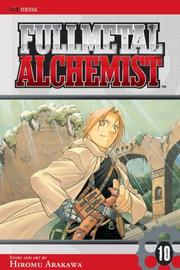
The Briggs and northern-border material begins and Olivier Armstrong is introduced. Our catalogue displays this volume's title inside square brackets; it is the standard single volume 10.
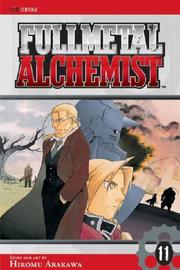
The country's borders and its history turn out to be a design rather than an accident, which reframes every map in the previous ten volumes. The single biggest structural reveal in the series.
Toward the Promised Day
IntermediateWatch the separate threads — military, homunculi, Xing, Ishval — converge, and reach the point where the whole plan is on the table.
▸ Study plan for this stage
Pace: 1 to 2 weeks for volumes 12 to 14, about 580 pages, and volume 13 deserves a slow read: it is the moral centre of the series and the densest volume so far. Volume 13 shows the Ishval war directly for the first time, including the state's use of alchemists to kill civilians, after twelve volumes of r
- Volume 12 delivers the northern campaign and the alliance between characters who spent ten volumes on opposite sides — the first structural convergence of the endgame.
- Volume 13 states Father's design in full. Everything from volume 11 onward has been leading to a plan that is now simply on the table.
- Showing Ishval rather than describing it retroactively explains Mustang, Hawkeye and Scar at once, which is why Arakawa waited thirteen volumes to do it.
- The series treats participation in atrocity as a permanent fact about a character rather than as a redeemable backstory, and it does not resolve the question of what atonement would look like.
- By volume 14 the military, the homunculi, the Xing party and the Ishvalans are all committed and visible to each other, which is a genuine act break even though it is not an ending.
- The remaining thirteen volumes run to a real conclusion with no filler and no alternate version — a fact worth knowing when deciding whether to continue.
- Continue in the same numbered single-volume edition. The 3-in-1 omnibus counts chapters differently and switching mid-series produces gaps or duplicates.
- State Father's plan in your own words. What does he need, and what has he already put in place?
- How does the Ishval material change your reading of Mustang's ambition, of Hawkeye's position, and of Scar's campaign — one sentence each?
- Which alliances formed in volumes 12 to 14 are based on shared goals and which on shared enemies? The distinction matters for how stable they are.
- What does the series say about following orders? Find the panels rather than paraphrasing the theme.
- At the end of volume 14, what does each faction still need in order to win? Answering this is the best test of whether you have followed the plotting.
- Update the who-knows-what table you started in stage two through volume 14. By the end of this stage most of the lag has closed, and seeing exactly when each gap shut is the clearest picture of how Arakawa paces a reveal.
- Reread the Nina chapter in volume 3 immediately after volume 13. The two are the series' clearest statements of the same argument at completely different scales.
- Count how many times equivalent exchange has been invoked across all fourteen volumes using the card you started in stage one, and note who invokes it in volume 13. The change in speaker is the point.
- Write down, before continuing past volume 14, which faction you expect to end the series intact. Volumes 15 to 27 are more interesting with a prediction on the table.
Next up: This is where the path stops, not where the story does: the conspiracy is exposed, the factions are committed, and the remaining thirteen volumes continue directly by number to a genuine ending.
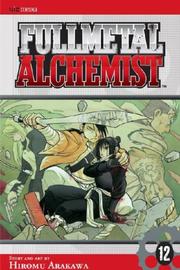
The northern campaign proper, and the alliance between characters who spent ten volumes on opposite sides. Also carries a bracketed display title in our catalogue; it is the ordinary single volume.
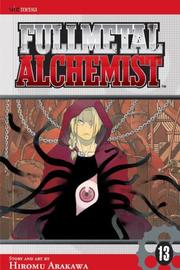
Father's design is stated in full, and the Ishval war is finally shown rather than referred to. The moral centre of the series, and the volume that retroactively explains Mustang, Hawkeye and Scar.
Where this path stops, at 14 of 27, with the conspiracy exposed and every faction committed. The remaining thirteen volumes run to a genuine ending with no filler and no alternate version — continue in the same single-volume edition rather than switching to the 3-in-1 omnibus, which counts chapters differently.