Frida Kahlo: The Best Books to Read, in Order
Almost everything written about Frida Kahlo since 1983 is downstream of one book, so this path starts there and then works outward in a deliberate order: the biography, then Kahlo's own diary and letters so you meet her voice before the interpretations of it, then the paintings in serious catalogues, and finally the marriage, the houses and the study of how she became a global icon after her death. Several of these books display simply as Frida Kahlo in our catalogue; each entry below says which one it is and who made it, because the difference between a Taschen survey, a museum catalogue and a critical monograph matters a great deal here.
The Biography
BeginnerGet the life in order — Coyoacán, the polio, the bus accident, the surgeries, the Communist Party, Rivera, Paris, Detroit, the late years — and one reliable survey of the work alongside it.
▸ Study plan for this stage
Pace: 3 weeks. Hayden Herrera's Frida is 528 pages and carries the whole stage — about 30 pages a day for three weeks. Andrea Kettenmann's Frida Kahlo, the Taschen survey, is 96 pages and is not read straight through: keep it open beside Herrera and look up each painting as the biography names it. Herrera
- Almost everything written about Kahlo since 1983 is downstream of Herrera's biography, which recovered her from near-obscurity. Reading it first means you can recognise later books as agreeing or arguing with it.
- Herrera's method is to read the paintings through the life. That is the standard approach and it is also the one the last book on this path attacks, so notice how it works while you are inside it.
- The chronology to fix: Coyoacán and the Casa Azul, polio in 1913, the bus accident in 1925, the Communist Party, the marriage to Rivera in 1929, Detroit and New York in the early thirties, Paris in 1939, the divorce and remarriage, and the last decade of decline.
- Herrera built the book on interviews with people who knew Kahlo personally, which makes it partly a primary source and partly a work of testimony — with the reliability questions that go with recollection decades after the fact.
- Kettenmann's Taschen volume is a survey, not an argument: the whole career in about a hundred pages with the major paintings reproduced and dated. Its job here is to be the visual index.
- Kahlo painted roughly 200 works, of which about a third are self-portraits. The proportion is a fact worth carrying into every later stage.
- Some biographical specifics — the exact number of surgeries, the medical diagnosis behind the childhood illness — are contested between Herrera and later writers; note where you are reading a settled fact and where a reconstruction.
- What was Kahlo's reputation at the time of her death in 1954, and what does Herrera's 1983 book have to do with what it is now?
- How does Herrera connect a specific injury or operation to a specific painting? Pick one instance and judge whether the connection is demonstrated or asserted.
- What did the Communist Party mean to Kahlo practically, and how does Herrera handle the periods when the politics and the marriage pulled in different directions?
- Which parts of Herrera's account rest on interviews with survivors, and how does that shape what the book can say about the private life?
- Using Kettenmann alongside the biography, can you place five paintings in the right decade without checking the caption?
- Read Herrera with Kettenmann open, and every time the biography names a painting, find it in the Taschen volume before reading on. By the end of the stage you will have a visual chronology you built rather than one you were given.
- Build a two-column timeline: medical events in one column, paintings and their dates in the other. Do it as you read rather than afterwards. The gaps and the clusters are more informative than the correspondences.
- Pick one painting Herrera discusses at length and write down, in your own words, her interpretation of it in three sentences. Keep the note; you will test it against Margaret Lindauer's argument in the final stage.
- Mark every place Herrera cites an interview rather than a document. Reading the density of those marks tells you which parts of the life are best evidenced and which rest on memory.
Next up: You now have the life as one biographer assembled it, which is exactly the right preparation for hearing Kahlo's own voice and noticing where it does not match.
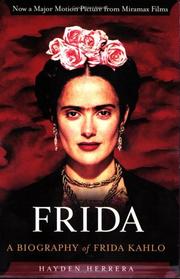
The 1983 biography that recovered Kahlo from near-obscurity and remains the standard life, built on interviews with people who knew her. Everything else on this path assumes it. Note that asking our catalogue for it under the title Frida Kahlo: A Biography returns this same book, so it appears here once.
Kettenmann's compact Taschen survey — the whole career in about a hundred pages with the major paintings reproduced and dated. Read it beside Herrera as the quick visual index; when the biography names a picture, this is where you look at it.
In Her Own Words
BeginnerMeet Kahlo directly through her diary, letters and other writings before any critical reading of them.
▸ Study plan for this stage
Pace: 3 weeks, about 840 pages but far lighter than that sounds. The Diary of Frida Kahlo is 295 pages of facsimile with a translation and Carlos Fuentes's introduction, and is read in short sessions rather than continuously; The Letters of Frida Kahlo, collected by Martha Zamora, is 159 pages and reads q
- These are primary sources, not accounts. Kahlo is writing for herself, for named correspondents, or for the record, and never as an explainer of her own work.
- The diary is not a diary in the ordinary sense: it is drawing, colour, word association and automatic writing as much as it is dated entry. Undated and unglossed, it will mislead a reader who comes to it before the biography.
- Fuentes's introduction and the accompanying commentary are interpretation laid over a facsimile. Read the facsimile pages first and the apparatus second so the readings do not arrive before the object.
- The letters, edited by Zamora, are the best corrective to the diary's intensity — funny, profane, practical about money, doctors and Rivera — and they show an ordinary working voice the paintings do not.
- Raquel Tibol was a Mexican critic who lived in the Rivera household and knew Kahlo personally, so Frida by Frida is a participant's compilation as well as a scholarly one, and her framing is the closest thing on this path to a contemporary Mexican view.
- Tibol's collection overlaps the Zamora letters in places and extends well beyond them; the overlap is worth noticing rather than avoiding, because the two editors select differently from the same life.
- Kahlo's own writing about her work is scarce and mostly deflecting. That scarcity is itself a fact about how much of the standard interpretation is supplied by others.
- Where in the letters does Kahlo sound least like the figure Herrera describes, and what accounts for the difference?
- The diary mixes text and image on the same page. What does that do to the reading, and would a text-only transcription lose the document?
- Kahlo repeatedly deflects when asked what a painting means. What does she offer instead, and how have later writers filled the space?
- Compare a letter selected by Zamora with the same period as represented by Tibol. What is each editor foregrounding?
- Tibol knew her subject personally. Where does that show in the framing, and does it read as access or as advocacy?
- Read twenty consecutive pages of the diary facsimile before reading any of the accompanying translation or commentary, then read the apparatus for those same pages and note where your reading was corrected and where it was merely replaced.
- Take three letters from the Zamora volume and date them from internal evidence alone, then check against the biography's chronology. Getting this wrong is instructive about how little the letters signal their moment.
- Find one passage in Frida by Frida that contradicts, or sits awkwardly with, something Herrera states as fact. Write both versions down side by side and leave the disagreement standing rather than resolving it.
- Pick a painting you noted in stage one and search all three books for anything Kahlo herself said about it. The usual result is nothing or a joke, and that result is the exercise.
Next up: Having heard her deflect about her own work, you are in the right position to look at the paintings as constructed objects rather than as confessions.
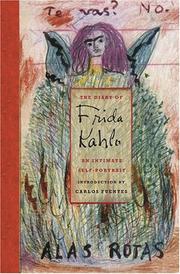
A facsimile of the illustrated journal she kept in her last decade, with a translation and Carlos Fuentes's introduction. It is drawings, word association and pain as much as it is a diary — read it after the biography, because undated and unexplained it can mislead badly.
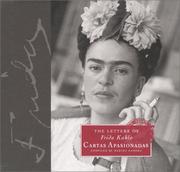
The correspondence collected by Martha Zamora, and much the most direct access to her ordinary voice: funny, profane, practical about money and medicine. The best corrective to the diary's intensity, which is why it comes straight after it.
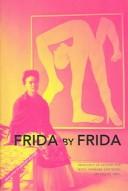
Tibol's gathering of Kahlo's letters, poems and other writings, assembled by a Mexican critic who lived in the Rivera household and knew her. It overlaps the previous volume in places and extends well beyond it, and Tibol's framing is the closest thing here to a contemporary Mexican view.
The Paintings
IntermediateLook at the work as painting — the retablo tradition, the self-portrait as a form, the way the medical imagery is constructed — with proper reproductions and catalogue entries.
▸ Study plan for this stage
Pace: 4 weeks, and slower than the page counts suggest because two of these are large-format books you look at rather than read. One correction before you buy: the record listed here as Frida, a biography of Frida Kahlo is Hayden Herrera's biography again, in a 1983 edition under its fuller title, not a s
- Kahlo's formal sources are specific and local: the retablo or ex-voto, a small votive painting on tin recording a disaster survived and the saint thanked for it. Her medical self-portraits are that form with the saint removed.
- The self-portrait is a construction, not a mirror. The costume, the jewellery, the hair, the animals and the flanking symbols are chosen each time, and they change with what the picture is arguing.
- The Lozano volume is the reference book of this path — every known painting, at size, with the documentation — and the only place here to settle a question about a specific work.
- The V&A catalogue draws on the wardrobe, medicines, corsets and prosthetic leg sealed in a bathroom of the Casa Azul until 2004. It is the first book able to treat the Tehuana dress as evidence rather than as biography.
- Making Her Self Up reframes the self-portraits as deliberate self-presentation — an argument that the disability and the dress were being composed for the viewer, not merely recorded.
- The medical imagery is constructed rather than reported: braces, nails, columns, open bodies and hospital beds are assembled into pictures, and the assembly is where the painting is.
- Herrera and the V&A catalogue represent two different readings of the same evidence — the life explaining the picture, and the picture as a made presentation of a life. Hold both.
- Naming matters here because three of the books on this page display simply as Frida Kahlo: Kettenmann's is the 96-page Taschen survey, Lozano's is the complete-paintings volume, and Locke, Henestrosa and Wilcox's is the V&A exhibition catalogue.
- What does a retablo do, and what does Kahlo keep and discard when she uses the form?
- Take one self-portrait and list every element that was chosen rather than observed. What is left over?
- How does the V&A material — the corsets, the prosthesis, the dress — change the reading of a painting like the ones showing a broken or opened body?
- The Complete Paintings dates and documents each work. Where does the documentation contradict a story you learned from the biography?
- Is Making Her Self Up's argument about self-presentation compatible with Herrera's reading, or do they genuinely conflict?
- Take one painting and read it three times in one sitting: first in Kettenmann's short caption, then in Lozano's fuller entry, then in whatever Herrera says about it. Write down what each source adds and what only one of them claims.
- Using the Lozano volume, lay out the self-portraits by date and note the changes in costume and hair across them. The sequence is a narrative that the individual pictures do not carry.
- Work through the V&A catalogue's object photographs and match at least four physical items — a specific corset, a piece of jewellery, a rebozo — to their appearance in a painting.
- Pick a painting the biography reads as autobiographical and try to describe it for someone who knows nothing about Kahlo's life, using only what is on the canvas. What survives that description is the picture; what does not is the apparatus.
- Count, in the Lozano volume, how many paintings are self-portraits and how many are not, then look hard at three of the non-self-portraits. They are the least discussed part of the work.
Next up: With the pictures examined as pictures, the last stage puts them back into the marriage, the household and the politics — and then asks what the twentieth century did with them.
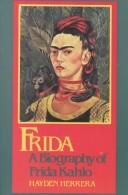
Our catalogue holds this under Herrera's fuller title, but the record is the same biography as the one earlier on this path — not her separate volume on the paintings. It is listed here because the biography is where her account of individual pictures actually lives; do not buy it twice. For picture-by-picture reading, the Lozano and V&A volumes on this path are what you want.

The catalogue raisonné-scale volume produced by Lozano with Andrea Kettenmann and Marina Vázquez Ramos — every known painting, large, with the documentation. The reference book of this path, and the only place to settle a question about a specific picture.

The V&A's Frida Kahlo: Making Her Self Up, edited with Circe Henestrosa, drawing on the wardrobe and medical objects sealed in the Casa Azul until 2004 — the Tehuana dress, the corsets, the prosthetic leg. The catalogue that reframed the self-portraits as constructed self-presentation, and the argument the last stage picks up.
The Marriage, the House, the Myth
IntermediateSet Kahlo among Rivera, Mexican muralism and post-revolutionary politics, then examine critically how she became global iconography after 1980.
▸ Study plan for this stage
Pace: 4 weeks, about 1,080 pages across five short-to-medium books. Isabel Alcántara and Sandra Egnolff's Frida Kahlo and Diego Rivera is 118 pages and can be read in two evenings; Patrick Marnham's Dreaming with His Eyes Open, the major English biography of Rivera, is 350 and carries the stage; Suzanne B
- Kahlo is routinely read in isolation, and that is the standard distortion in the popular literature. Alcántara and Egnolff's parallel account is the shortest available correction.
- Rivera's world is largely Kahlo's world: muralism, post-revolutionary state patronage, the Mexican Communist Party, and the international left's quarrels of the 1930s.
- Marnham is writing a life of Rivera, so the marriage appears from his side. Reading it after Herrera is a deliberate change of vantage point, not a second opinion on the same book.
- Guadalupe Rivera Marín, who wrote Frida's Fiestas, is Rivera's daughter and lived with the couple as a teenager. It is a participant's memoir and genuinely a cookbook, and it is the only book on this path that shows the household as ordinary daily life.
- Barbezat's book fixes the physical settings — the Casa Azul, the San Ángel studio, the specific rooms, courtyards and gardens — that every other book on this path keeps referring to.
- Devouring Frida is the critical study of Fridamania itself: how the biographical reading took hold, what it suppresses in the paintings, and how the market and the merchandise followed.
- Lindauer is arguing a position, not surveying one. She holds that reading the paintings as records of personal suffering has actively obscured their political and feminist content, and the book is written to make that case.
- That argument lands directly on Herrera's method, which is why this path puts the two at opposite ends rather than side by side.
- What did Rivera's career give Kahlo access to, and what did it cost her professionally?
- How does the marriage look different told from Rivera's side in Marnham than from Kahlo's in Herrera? Name two specific episodes where the emphasis shifts.
- Trotsky's asylum in the Casa Azul is a household fact and a world-historical one at the same time. How does each book on this stage handle that double status?
- What does Frida's Fiestas show that no biography on this path shows, and what does a participant's memoir written decades later reliably preserve?
- State Lindauer's central objection to biographical readings of Kahlo in one sentence. Does the interpretation you wrote down in stage one survive it?
- Kahlo's face is now on merchandise worldwide. Which parts of the work does that popularity carry, and which does it leave behind?
- Read the Rockefeller Center mural episode in Marnham and then find how Herrera tells the same episode. Write down the two accounts' differences in a paragraph — this is the clearest available demonstration of how much a biography's subject shapes its facts.
- Take the painting interpretation you wrote in stage one and rewrite it after reading Devouring Frida, keeping the original. The pair of paragraphs is the most useful thing you will produce on this path.
- Using Barbezat's photographs, identify three specific locations in the Casa Azul or the San Ángel studio that appear in paintings you looked at in stage three, and note what the actual room adds or removes.
- Cook one recipe from Frida's Fiestas. It sounds like a joke exercise and is not: the book is organised around the household's calendar of parties, and following one of them is the only concrete way this path gives you access to ordinary domestic life in that house.
- Write a short list of the Kahlo images you had already seen before starting this path, and mark which are paintings, which are photographs of her, and which are neither. Lindauer's argument is largely about what that list looks like for most people.
Next up: This is the last stage: with the marriage, the household and the myth-making all accounted for, the path has turned back on itself and asked what the previous twelve books were doing.

A short parallel account of the two careers and the marriage, written with Sandra Egnolff. The most efficient way to stop reading Kahlo in isolation, which is the standard distortion in the popular literature.
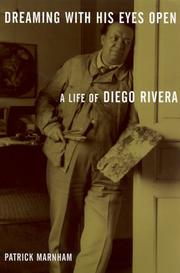
The major English biography of Rivera — the muralist, the Party expulsions, the Rockefeller Center commission, Trotsky's asylum in the Casa Azul. Read it here because Kahlo's political and social world is very largely his, and because the marriage looks different from his side.

The Casa Azul, San Ángel and the specific rooms and gardens that recur in the paintings, photographed and described. Concrete and unpretentious, and it fixes the physical settings the previous books keep referring to.
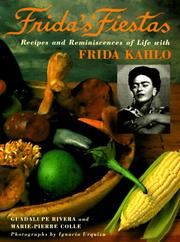
A memoir with recipes by Rivera's daughter, who lived with the couple as a teenager. Genuinely a cookbook, and included because it is the only book here that shows the household as ordinary daily life rather than as biography or iconography.
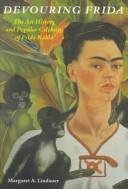
The critical study of Fridamania itself — how the biographical reading of the paintings took hold, what it obscures, and how the market and the T-shirts followed. The right last book: it turns the path back on itself and asks what the previous twelve have been doing.