Frederik Pohl books in order: where to start with the Heechee saga
Start with Gateway. It won the Hugo, the Nebula, the Locus and the Campbell in the same year, it is the only novel on this list that everybody agrees about, and it needs no prior reading. From there the shelf splits three ways: the Heechee sequence that Gateway begins, the satirical novels written with Cyril Kornbluth in the 1950s, and the standalone novels of Pohl's remarkable late-1970s run. This path takes them in that order, then ends with the short fiction — where Pohl was arguably better than at novel length — and the memoir, which doubles as a first-hand history of American science fiction from the 1930s on.
Start with Gateway
BeginnerRead the novel Pohl is remembered for, and the direct sequel that opens the sequence out.
▸ Study plan for this stage
Pace: 2 weeks. Gateway is 313 pages and Beyond the Blue Event Horizon 327, so about 45 pages a day covers both. Gateway alternates its asteroid chapters with therapy sessions and classified-ad interludes, which makes it read faster than the page count suggests; the sequel is slower and more conventionally
- The Heechee premise: a hollowed asteroid full of working alien ships whose destinations are preset and unreadable, so every launch is a lottery between wealth and death.
- Gateway is two books braided together — the prospector's story told forward, and Robinette Broadhead's sessions with the computer psychoanalyst Sigfrid von Shrink told after the fact. What the frame is protecting you from is the plot.
- The economics are the horror. Prospectors sign away everything for a share of what they find, and the Corporation's payout schedule is a piece of characterisation.
- Pohl's guilt is not decorative: Gateway won the Hugo, the Nebula, the Locus and the Campbell in one year largely because it makes an adventure premise carry an adult psychological argument.
- Beyond the Blue Event Horizon converts the Heechee from an absence into a subject, and in doing so trades mystery for answers — a deliberate choice, and the series' central bargain.
- The two novels together complete one emotional action. Stopping after Gateway leaves that action unfinished; the payoff for the therapy frame is in the second book.
- Why does Pohl withhold what happened on Robinette's last flight until the end, and what does the therapy frame let him do that a straight chronological account could not?
- What is the Corporation actually selling, and how does its contract shape who volunteers for a Gateway mission?
- By the end of Gateway, what has the reader been told about the Heechee themselves, and how much of that is inference rather than evidence?
- In Beyond the Blue Event Horizon, what changes about the reading experience once the Heechee become characters rather than a vacancy?
- Robinette is rich when the novel opens. Does the book treat that as a reward, a punishment, or neither?
- Read Gateway's first fifty pages twice: once straight through, and once reading only the Sigfrid von Shrink sections in sequence. The second pass makes the shape of the withheld event visible before the novel discloses it.
- Keep a list of the classified ads, mission reports and Corporation documents Pohl drops between chapters. Note which ones foreshadow something in the main narrative and which are pure worldbuilding — the ratio is a lesson in how the book is built.
- Write down, before you finish Gateway, your own guess at what Robinette did. Then check it against the disclosure and see which clue you had actually been given.
- After Beyond the Blue Event Horizon, go back to the last chapter of Gateway and reread it knowing what the Heechee are. The scene reads as a different kind of scene, which is the whole reason to read the two as a pair.
Next up: You now have the emotional core of the sequence closed; the next two volumes take the same setting and spend it on explanation, which is a different and lesser pleasure worth knowing about in advance.
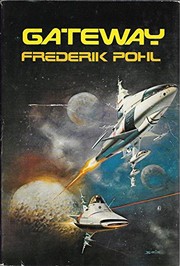
Prospectors ride abandoned alien ships from a hollow asteroid to destinations they cannot choose and mostly do not survive. The frame — a rich survivor arguing with a computer psychoanalyst about what he did — is what lifts it above its premise, and it is the correct entry point to everything Pohl wrote.

The direct sequel, and where the Heechee stop being an absence and start being a subject. Read it straight after Gateway; the emotional business of the first book is completed here, and the two together are the part of the sequence that is not optional.
Finishing the Heechee Saga
BeginnerFollow the sequence to its end, and know in advance that it becomes more expository as it goes.
▸ Study plan for this stage
Pace: 4 weeks, roughly 1,070 pages. Heechee Rendezvous (320) and The Annals of the Heechee (316) run about two weeks together at 45 pages a day; The Boy Who Would Live Forever (430) is a late return published nearly twenty years after the fourth book and is best given its own fortnight rather than read st
- The mystery that powered the first two novels is deliberately spent here. These books are written to answer questions, not to sustain them, and reading them for tension is reading them wrongly.
- Heechee Rendezvous puts the aliens on the page face to face, which resolves the series' governing enigma and changes what kind of story it can be afterwards.
- The Annals of the Heechee widens the frame to galactic scale, and its narrator is no longer straightforwardly a person — Pohl is following the logic of stored consciousness he introduced earlier.
- Stored personalities are the sequence's real long-term idea: what a human being becomes once the substrate changes, and whether the answer counts as survival.
- The Boy Who Would Live Forever is readable more or less standalone and functions as a coda rather than an instalment; whether it earns its length is a genuine reader's judgement.
- A fifth book is the point where diminishing returns become a decision rather than a surprise. Many readers stop after The Annals of the Heechee and lose nothing essential.
- What does the series gain, and what does it lose, at the moment the Heechee are shown directly in Heechee Rendezvous?
- How does Pohl solve the problem of a protagonist who is no longer biologically a person, and does the solution work as narration?
- The Annals of the Heechee introduces an antagonist on a cosmological scale. Does the sequence's original human-sized material survive that scaling up?
- If you had to stop the sequence at one book, which would you pick, and what argument would you make for the two you dropped?
- The Boy Who Would Live Forever arrives after a two-decade gap. What has changed in how Pohl writes the setting?
- Chart the series formula across all four volumes: for each one, note in a line how much page space goes to incident, how much to explanation, and how much to Robinette's interior life. The curve is the argument about where to stop.
- Take the Heechee's stated reason for abandoning the Galaxy, as given in Heechee Rendezvous, and check it against the physical evidence described back in Gateway. Note what the earlier book had already implied and what is new invention.
- Reread the closing pages of The Annals of the Heechee immediately before opening The Boy Who Would Live Forever, and mark which threads the later book picks up and which it quietly abandons.
- Write two sentences on whether The Boy Who Would Live Forever would work for someone who had read only Gateway. Your answer is a useful test of how much the middle volumes actually carry.
Next up: Having seen Pohl at his most expansive, you can now go back thirty years to the tight, savage satires that built his reputation before the Heechee existed.
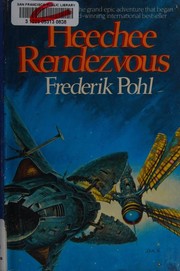
Third in the sequence, and the book where the aliens are finally met face to face. The mystery that powered the first two books is spent by design here, so read it for the answers rather than for the tension.
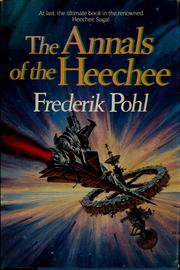
Fourth, and the widest in scope — the series' scale goes galactic and its narrator is no longer quite a person. The natural stopping point for most readers, and the last of the original quartet.

A late return to the setting, published nearly twenty years after the fourth book and readable more or less on its own. Worth it if the sequence has worked for you; skippable if the third and fourth books were already a step down. The related collection The Gateway Trip is a companion volume rather than a further instalment.
The Satires with Kornbluth
BeginnerRead the 1950s collaborations that made Pohl's early reputation, and see the strain of consumer-capitalist satire that runs through his whole career.
▸ Study plan for this stage
Pace: 2 weeks, about 500 pages total and all three books short by modern standards. The Space Merchants is 176 pages, Search the Sky 165, Wolfbane 160 — a week for the first two, a week for the third. Note that our catalogue's record for The Space Merchants carries a German edition's identifiers behind th
- Cyril Kornbluth is a genuine co-author here, not an assistant. These are collaborations, and the sourness in them is generally credited to him as much as to Pohl.
- The Space Merchants is satire from inside the system: Mitch Courtenay is a copywriter who believes in the advertising world, and the book never gives him an outside vantage point to preach from.
- The consumer-capitalist target — sponsored governments, engineered addiction, Venus sold as a campaign — is the strain that runs through Pohl's entire career, including Gateway's Corporation.
- Search the Sky applies the same method loosely: a tour of failed colonies each broken in a different social direction, episodic where The Space Merchants is tight.
- Wolfbane is the strangest of the three — the Earth stolen from the sun, humanity gone quiescent — and Kornbluth died before publication, which is part of why it reads as it does.
- 1950s satirical science fiction dates in a specific way: the technology ages badly, the social mechanism does not. Watching which is which is the point of reading these now.
- Kingsley Amis called The Space Merchants the best science fiction novel there was. What is he praising — the invention, the prose, or the satirical construction?
- Why does Pohl and Kornbluth put a believer rather than a dissident at the centre of The Space Merchants, and what would the book lose with a sceptical narrator?
- Search the Sky visits several broken societies. What is the shared diagnosis underneath them, and is it the same diagnosis as The Space Merchants'?
- Which mechanisms in The Space Merchants have actually arrived, and which were wrong? Be specific rather than general.
- What does Wolfbane do that neither of the other two attempts, and does its oddness read as ambition or as an unfinished collaboration?
- Read the opening chapter of The Space Merchants and mark every place Courtenay states a value the book expects you to reject. Count them. The density is the technique.
- Set the Corporation's contract terms in Gateway beside Fowler Schocken Associates' treatment of its staff in The Space Merchants and write a paragraph on what Pohl thinks employment is.
- For each of the failed societies in Search the Sky, write one line naming what has gone wrong. Then order them by how plausible you find them — the weak ones tell you where the episodic structure let the authors off.
- Read Wolfbane's premise chapter and then its ending, and note how much of the middle you could reconstruct from the two. That test is a fair account of the book's shape.
Next up: The satires show Pohl attacking a system from outside a character; the solo novels of the 1970s fold the same anger inside one person and are the better books for it.
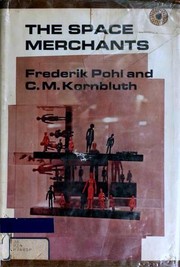
With Cyril Kornbluth, and the most durable satire the genre produced in the 1950s: advertising agencies run the world, Venus is a marketing campaign, and the copywriter narrator is entirely inside the system. Kingsley Amis thought it the best science fiction novel there was, and it has dated far less than it should have.
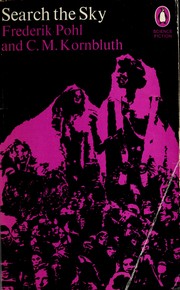
The second Pohl and Kornbluth novel, a tour of failed colony worlds each broken in a different social direction. Lighter and more episodic than The Space Merchants — read it as the satirical method applied more loosely.

Their last collaboration, and the strangest: Earth has been stolen from the sun by an alien machine and humanity has adapted by becoming quiescent. Kornbluth died before publication, and the book's oddness is a large part of its interest.
The Standalone Novels
IntermediateCover the solo novels of Pohl's strongest decade, where the satire is folded into character rather than played for laughs.
▸ Study plan for this stage
Pace: 3 weeks, about 920 pages. Man Plus is 215 and reads quickly, Jem 312, The World at the End of Time 393 and formally the most demanding of the three because it runs two incompatible timescales at once. Man Plus is largely about surgery performed on a conscious participant and describes the procedures
- Man Plus won the Nebula the year before Gateway and rehearses Gateway's question at smaller scale: what is done to a person in order to make a mission possible.
- The narration of Man Plus is doing something specific that the novel does not announce until late. Notice who is telling it and how they know what they know.
- Jem takes three Earth power blocs, gives them one planet and three native species, and shows terrestrial politics reproducing itself unchanged. Pohl's thesis is that the future belongs to whoever is already in charge.
- The World at the End of Time runs a human colony story against intelligences living inside stars, so the same events occur across timescales that cannot see each other — the structural experiment of Pohl's late career.
- Across all three, satire has been internalised as character rather than played for laughs, which is the difference between the Kornbluth books and these.
- Pohl was in his fifties and sixties for this run and kept getting formally more ambitious, which is unusual enough to be worth noticing as a fact about the career.
- Who is narrating Man Plus, and at what point did you realise it? What does the answer do to everything you have already read?
- Roger Torraway is rebuilt piece by piece. Where in the book does the novel stop treating him as the same person, and does it agree with him about that?
- In Jem, which of the three blocs does the novel treat most harshly, and is that judgement earned or assumed?
- How does The World at the End of Time keep two timescales legible at once, and where does the technique strain?
- Man Plus and Gateway were written a year apart. What question are they both asking, and which one answers it better?
- Read Man Plus with a note of every physical modification made to Torraway in the order it is made, and mark the point at which you stopped reading the list as medicine and started reading it as loss.
- Reread the final two pages of Man Plus and then its first chapter. The novel is constructed so that the opening reads differently; check whether it actually does.
- In Jem, track one native species across the whole novel and write down what each of the three blocs does to it. Three parallel columns is enough — the pattern is the book's argument.
- For The World at the End of Time, keep a two-column timeline, human years on one side and the stellar intelligences' subjective time on the other, and mark the points of contact. Doing this by hand is the only way to see how carefully the joins are placed.
Next up: The novels show Pohl's ideas at full length; the short fiction shows them at the length several critics think actually suited him, and the memoir explains where the whole shelf came from.
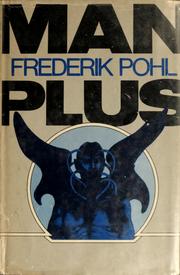
A man surgically rebuilt to survive on Mars, told largely from inside the rebuilding. It won the Nebula the year before Gateway and is the better novel to read first among the standalones, because its concerns — what is done to a person to make a mission possible — are Gateway's concerns in a smaller frame.
Three Earth power blocs colonise one planet and export their politics to three native species. The bleakest thing Pohl wrote, and the clearest statement of his view that the future will be shaped by whoever is already in charge.
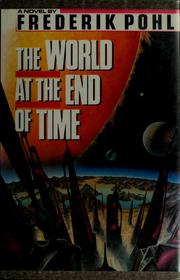
A colony novel running on two timescales at once, one human and one belonging to intelligences living inside stars. The best of the later solo work and a good demonstration that Pohl kept getting more ambitious about structure into his seventies.
Short Fiction and the Memoir
IntermediateRead Pohl at the length several critics think suited him best, and then his account of the field he spent seventy years inside.
▸ Study plan for this stage
Pace: 3 weeks, about 960 pages, but paced quite differently from a novel stage. The Gold at the Starbow's End is 192 pages and can be read in a few sittings; Platinum Pohl is 464 pages of thirty-odd stories across five decades and is better at two or three stories a night than in long stretches; The Way T
- Pohl's reputation among editors and critics rests at least as much on the short fiction as on the novels; the novella was arguably his natural length.
- The Gold at the Starbow's End's title novella — a crew sent on a deliberately fake mission who make something extraordinary of it — is the single best demonstration of that claim.
- The Merchants of Venus, collected in Platinum Pohl, is where the Heechee sequence actually begins. Reading it after the four novels shows how much of the setting was fixed from the start.
- Day Million is a famous short experiment in refusing to dramatise: it tells you a love story while explicitly declining to make you feel it, and the refusal is the effect.
- The Way The Future Was is a primary source, not a neutral history. Pohl was a Futurian in the 1930s, editor of Galaxy, and a literary agent for a large share of the field, so he is describing events he helped cause.
- Reading the memoir last means you can catch the moments where the person recounting the history is also one of its interested parties.
- What does The Gold at the Starbow's End do with its premise that a novel-length treatment would have spoiled?
- Read The Merchants of Venus against Gateway. What did Pohl already know about the Heechee, and what did he invent later?
- Day Million refuses ordinary emotional access to its characters. Why, and does the refusal work on you?
- Where in The Way The Future Was is Pohl writing as a witness, and where is he writing as a participant with a stake in how the story is told?
- Across the two collections, what subject does Pohl return to most often at short length, and is it the same one the novels pursue?
- Read the title novella of The Gold at the Starbow's End and then immediately reread its first three pages. The setup contains the ending; find where.
- Read The Merchants of Venus in Platinum Pohl and list every fact about the Heechee it establishes. Check each against Gateway and mark which were kept, which were quietly revised, and which were dropped.
- Pick five stories in Platinum Pohl from five different decades and date them by internal evidence alone before checking the copyright page. What gives each decade away is a useful account of how the field changed around him.
- While reading The Way The Future Was, keep a running list of the writers Pohl edited or represented, then go back to Platinum Pohl's introduction and note where his professional position may be shaping the account.
- Write a one-paragraph answer to the question the path opened with: is Pohl a better novelist or a better story writer? Cite one novel and one story.
Next up: This is the last stage; with the short fiction and the memoir read, you have the whole career and the field it was made inside.

The 1972 collection whose title novella — a crew sent on a fake mission to keep them busy, who make something extraordinary of it — is among the best things he did. Start the short fiction here rather than with a career retrospective.

The big career-spanning collection, thirty-odd stories across five decades, including Day Million and The Merchants of Venus, which is the Heechee sequence's own starting point. The single most efficient way to see the range.
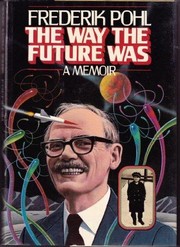
The memoir, and a genuinely important document: Pohl was a Futurian teenager in the 1930s, an editor of Galaxy, a literary agent for half the field, and a novelist through all of it. Read it last, when you know the work well enough to catch how much of the history he was personally responsible for.