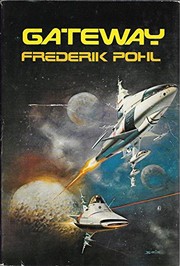
Start with Gateway. It won the Hugo, the Nebula, the Locus and the Campbell in the same year, it needs no prior reading, and it is the only Pohl novel that everybody agrees about. Prospectors ride abandoned alien ships out of a hollow asteroid to destinations they cannot choose and mostly do not survive.
The obvious alternative is The Space Merchants, the 1950s satire that made his name two decades earlier and is the book he is cited for in histories of the field. Read it third or fourth. It is very good and it is a period piece; Gateway is the one that will tell you whether you want the rest. What lifts it above its premise is the frame — a rich survivor arguing with a computer psychoanalyst about what he did — which withholds the central event until the end.
The Heechee sequence
Gateway, then Beyond the Blue Event Horizon, then Heechee Rendezvous, then The Annals of the Heechee. The first two are the part that is not optional: the sequel completes the emotional business of the first book and is where the Heechee stop being an absence and start being a subject.
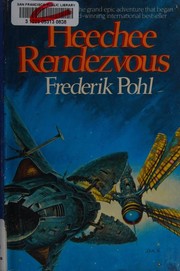
Then be warned about the shape of the rest. Heechee Rendezvous meets the aliens face to face, which spends by design the mystery that powered the first two books, and The Annals of the Heechee goes galactic with a narrator who is no longer quite a person. The exposition-to-incident ratio rises sharply across both. They are worth reading for the answers rather than for the tension.
Where to stop
Most readers should stop at The Annals of the Heechee, which closes the original quartet. The boy who would live forever is a late return published nearly twenty years afterwards and reads more or less on its own — take it if the sequence has worked for you, skip it if the third and fourth books already felt like a step down. The Gateway Trip is a companion volume rather than a further instalment, so do not buy it expecting book five.
The satires with Kornbluth
The Space Merchants, written with Cyril M. Kornbluth, is the most durable satire the genre produced in the 1950s: advertising agencies run the world, Venus is a marketing campaign, and the copywriter narrator is entirely inside the system rather than dissenting from it. Kingsley Amis thought it the best science fiction novel there was, and it has dated far less than it should have. One buying note — our catalogue's record for it carries a German edition's identifiers behind the English title, so check the edition before ordering.
Search the Sky is the second collaboration, a looser and more episodic tour of failed colony worlds. Wolfbane, their last, is the strangest: Earth has been stolen from the sun by an alien machine and humanity has adapted by becoming quiescent. Kornbluth died before it was published.
The standalone novels
Man Plus is the one to read first among these. A man is surgically rebuilt to survive on Mars, told largely from inside the rebuilding, and it took the Nebula the year before Gateway did. Its subject — what is done to a person to make a mission possible — is Gateway's subject in a smaller frame, and the surgery is described directly.
Jem has three Earth power blocs colonise one planet and export their politics to three native species. It is the bleakest thing Pohl wrote. The world at the end of time runs two incompatible timescales at once, one human and one belonging to intelligences living inside stars; it is the best of the later solo work.
Short fiction and the memoir
Several critics think short length suited Pohl best, and the case is easy to test. The Gold at the Starbow's End is the 1972 collection whose title novella — a crew sent on a fake mission to keep them busy, who make something extraordinary of it — is among the best things he did. Platinum Pohl is the career retrospective, thirty-odd stories across five decades, including Day Million and The Merchants of Venus, which is where the Heechee actually began. It reprints work from the earlier collection, so check its contents list rather than treating the two as separate purchases.
End with The Way The Future Was. Pohl was a Futurian teenager in the 1930s, the editor of Galaxy, a literary agent for half the field and a novelist throughout, so the memoir doubles as a first-hand history of American science fiction. Read it last, when you know the work well enough to catch how much of that history he was personally responsible for. More sits on the Frederik Pohl hub.
Follow the full ordered path here: Frederik Pohl books in order: where to start with the Heechee saga.