Frederick Forsyth books in order: where to start
Start with The Day of the Jackal. It is Forsyth's first novel, it invented the form he spent fifty years working in, and nothing he wrote later improves on it. The books are standalones, so there is no series order to follow — the order that matters is quality, and it declines fairly steadily after about 1984. This path takes the three that made his name, then the Cold War novels at his peak, then the short fiction, and ends with the journalism the whole method came out of. It also says plainly where to stop.
Start Here — The Three That Made Him
BeginnerRead the novels that created the documentary thriller, and learn to recognise the technique: a real event, a fictional professional, and a procedure described accurately enough to be checkable.
▸ Study plan for this stage
Pace: 5–6 weeks, about ten days to a fortnight each. The Day of the Jackal runs to around 400 pages and moves fast once the procurement sequences start; The Odessa File and The Dogs of War are similar lengths. Read them in publication order — 1971, 1972, 1974 — because the technique visibly hardens across
- The documentary thriller: a verifiable public event, an invented professional inside it, and procedure described at a level of detail that can be checked
- Suspense without uncertainty of outcome — de Gaulle demonstrably was not assassinated, and the tension is entirely in method
- The dual-track structure: the operative preparing, the investigator closing, alternating until they meet
- The professional as protagonist — competent, unideological, characterised by what he knows rather than by what he feels
- Research as the actual content: forged documents, weapons procurement, shipping and arms-dealing paperwork, given at length
- The famous passport method in The Day of the Jackal, real enough at the time that the procedure it exploits was later changed
- Journalism converted into fiction: Forsyth reported on Germany for Reuters and on Biafra for the BBC and then independently, and both novels are built on that reporting
- Forsyth's political temperature, which is highest in The Odessa File and coldest in The Dogs of War
- How does The Day of the Jackal generate suspense when the historical outcome is known? Name the three devices doing the work.
- What proportion of The Dogs of War is procurement and logistics rather than action, and what does that tell you about what Forsyth thinks the reader wants?
- In The Odessa File, where does the novel stop being a thriller and become an argument? Is it a better book at that point or a worse one?
- Which of the three has the weakest characterisation, and does the form require characterisation at all?
- What did Forsyth have to know to write the shipping and arms sections of The Dogs of War, and where would a journalist learn it?
- Chart The Day of the Jackal chapter by chapter as two columns — the Jackal's preparation, Lebel's investigation — and mark where the two tracks first touch. The structure is the invention, and seeing it as a diagram is the fastest way to understand every later book.
- Take the passport sequence and the gunsmith sequence and count the pages of pure procedure in each. Then find the equivalent set-piece in The Dogs of War and count again. The trend across three years is the whole argument about his method.
- Pick one technical claim from The Dogs of War — an end-user certificate, a ship charter, a weapons price — and check it against what you can establish about the period. Where Forsyth is right, note it; where he is not, note that too.
- Rewrite the opening two pages of The Odessa File in the register of The Day of the Jackal, stripping the moral heat out. Then decide which version you would rather read, and why the answer differs from book to book.
Next up: The technique is established and hardening; the next stage is Forsyth applying it at the scale of whole geopolitical systems rather than a single operation.
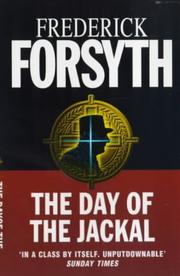
The right first book by a distance. An assassin is hired to kill de Gaulle, a president who demonstrably was not killed, and the suspense survives anyway because the interest is entirely in method. Written in about five weeks by a broke ex-Reuters correspondent, and still the model for the genre.

A young reporter chases a former SS camp commandant through the network of ex-Nazis in 1963 Germany. Read it second: it is the same machinery applied to a subject Forsyth had actually reported on, and it is the book where his moral temperature is highest.
Mercenaries hired to overthrow a West African government so a mining company can get at the ore — drawn directly from what Forsyth saw covering Biafra. The long procurement sequences are the purest expression of his method, and the closing pages are the most cynical thing he wrote.
The Cold War Peak
BeginnerFollow the technique at full scale, across Soviet grain failures, nuclear politics and the intelligence services.
▸ Study plan for this stage
Pace: 5–6 weeks. The Devil's Alternative is the longest of the three at well over 500 pages and sprawls — a fortnight. The Fourth Protocol is tighter and faster, about ten days. The Deceiver is four linked novellas and can be read one at a sitting over a week or two. Read The Devil's Alternative before Th
- The widening of scale: from one operation to a board of simultaneous crises with a decision-maker at the centre
- The insoluble-choice structure of The Devil's Alternative, and what it costs in momentum
- Procedure at state level — grain markets, tanker handling, nuclear device assembly, MI5 surveillance protocol
- The Fourth Protocol's core plot problem: a device assembled from separately imported components, and an investigator working from an inventory
- Forsyth's politics becoming explicit rather than implied, which is new in the Cold War books
- The Deceiver as a retrospective: an officer being retired, and a writer taking stock of a subject that is ending
- The tradecraft that came from somewhere real, which the memoir at the end of the path lets you check
- What are the two unacceptable outcomes in The Devil's Alternative, and why does the plot need both to be genuinely unacceptable?
- How does The Fourth Protocol keep its investigation legible when the reader already knows what is being assembled?
- What does Forsyth's technique lose when the subject is a whole geopolitical system rather than one man's preparation?
- Where does the politics of The Fourth Protocol shape the plot rather than merely colour it?
- In The Deceiver, what is the officer being retired for, and what is Forsyth saying about his own subject matter in retiring him?
- Apply the two-column chart you built for The Day of the Jackal to The Fourth Protocol, then try to apply it to The Devil's Alternative. Where the chart fails is precisely where the second book sprawls.
- List every separately imported component of the device in The Fourth Protocol and the route by which each enters. Then write the counter-inventory an investigator would need. That exercise is the novel's plot, done from the other side.
- Take one of the four novellas in The Deceiver and identify which of the earlier novels it is a compressed version of. At least two of them are.
- Read the Soviet grain chapters of The Devil's Alternative against a factual account of the actual Soviet harvest failures of the period, and mark where Forsyth extrapolates and where he reports.
Next up: Having seen the technique at maximum scale, the short fiction shows what is left when there is no room for research at all.
A Soviet harvest failure, a hijacked supertanker and a choice between two unacceptable outcomes. The first of the big geopolitical novels, and the point where Forsyth widens from one operation to a whole board of them — read it before The Fourth Protocol, which does the same thing better.
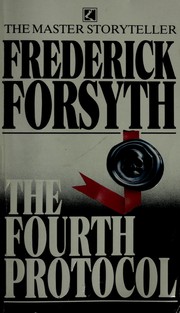
The high point of the Cold War books: a Soviet plan to assemble a small nuclear device inside Britain, and an MI5 officer with a procedural problem. Tightly plotted where The Devil's Alternative sprawls, and the last novel where the research and the story are equally strong.
Four linked novellas about an SIS officer being retired at the end of the Cold War, which is also Forsyth taking stock of his own subject matter. Read it after The Fourth Protocol as the coda to that whole period, and as a bridge to the short fiction in the next stage.
The Short Fiction
BeginnerSee what Forsyth does at short length, where the research has to be compressed and the twist does the work.
▸ Study plan for this stage
Pace: 3 weeks, and this is the lightest stage on the path. The Shepherd is a novella of about a hundred pages and reads in one sitting on a winter evening, which is how it is meant to be read. No Comebacks is ten stories and takes a week at one or two a night; The Veteran is five longer pieces and takes s
- Economy: the same competence and procedure, delivered in a tenth of the space
- The sting in the tail as a structural commitment — the story exists to arrive at its last paragraph
- The Shepherd as the outlier: almost no research, no politics, one pilot and one aircraft, and the piece most readers remember
- Genre range at short length — crime, revenge, ghost story, courtroom — that the novels never attempt
- The Veteran's title story as evidence that the writing did not decline even where the novels did
- Why a technique built on accumulating verified detail should not work at this length, and how Forsyth makes it
- Reading a collection as a set of experiments rather than as a book
- What does The Shepherd have that none of the novels do, and is its effect achieved by the writing or by the situation?
- Take three No Comebacks stories: what is the shared structure, and how early can you see the ending coming?
- How does the title story of The Veteran use the reader's expectations of a courtroom to set up its reversal?
- Which story in these two collections would have made a novel, and what would it have gained and lost?
- If the writing in The Veteran is as strong as anything in the 1970s novels, what exactly declined in the later fiction?
- Read The Shepherd in one sitting and then write down every fact Forsyth actually gives you about the aircraft and the weather. It is a very short list, which is the point when set against the procurement chapters of The Dogs of War.
- For each of the ten No Comebacks stories, mark the sentence at which you first knew how it would end. Then check whether Forsyth planted that sentence deliberately.
- Take the title story of The Veteran and reverse-engineer its structure: what the reader is told, what is withheld, and the exact paragraph in which the withholding pays off.
- Rewrite one No Comebacks story as the opening chapter of a novel, then say what you would have to research to continue it. The answer is the difference between the two forms in his hands.
Next up: The fiction has now been read at every scale; the last stage takes the one strong late novel and then the reporting that the whole method came out of.

A novella: a pilot flying home on Christmas Eve 1957 loses all electrics over the North Sea. Almost no research and no politics, which makes it the odd one out in this whole list and the one most readers remember longest.
His first story collection, ten pieces with the sting-in-the-tail construction he does very well at this length. Read it after The Shepherd to see the same economy applied to crime and revenge plots.

The later collection, and stronger than most of the novels around it — the title story on a London street killing and its court aftermath is among his best work. Proof that the decline in the novels was not a decline in the writing.
After the Cold War — and the Journalism Behind It
IntermediateRead the one strong late novel, and then the reporting the entire method came out of, which explains the fiction better than any of the fiction does.
▸ Study plan for this stage
Pace: 6–7 weeks. The Fist of God is a long novel and takes a fortnight. Icon is around ten days. The Biafra Story is short reporting and reads in a few evenings; it is advocacy as well as journalism — Forsyth left the BBC over its coverage of the war, stayed in Biafra, supported the secessionist side, and
- The Fist of God as the technique's last full success: a real war rendered in near-documentary detail with one invented agent inside it
- Icon as political guesswork — a novel valuable for what it thought would happen rather than for what did
- Where to stop, and why: the consensus that the books after Icon repeat the method without the research
- The Biafra Story as the origin document — the war, the blockade, the famine, and the arms and mercenary economy that fed The Dogs of War
- Advocacy journalism: Forsyth is a partisan for one side of the conflict he is reporting, and the book is stronger read with that in view
- The memoir's account of Reuters, the RAF, Biafra and the errands he says he ran for SIS, and how much of the novels' tradecraft it can and cannot corroborate
- The method stated plainly: report first, invent one person, and let the procedure carry the plot
- That a memoir written at seventy-seven about clandestine work is a source about its author's account of events, not an independent record
- What makes The Fist of God work where the later novels do not — the research, the war, or the single invented agent?
- Icon guessed at a fascist takeover of post-Soviet Russia. What did it get right about the pressures, and what did it get wrong about the outcome?
- Which passages of The Dogs of War are directly traceable to The Biafra Story? Find at least three.
- Where in The Biafra Story is Forsyth reporting, and where is he arguing a case? Can the book be used as a source on the war without the second?
- What does The Outsider claim about Forsyth's intelligence work, and what kind of evidence is a memoir for such a claim?
- Having read the journalism, do the novels look more impressive or less?
- Read The Biafra Story and The Dogs of War with a two-column sheet: reported fact on the left, its fictional counterpart on the right. That sheet is the most direct demonstration available of how a documentary thriller is actually built.
- Take the mercenary and arms sections of The Biafra Story and check them against a general history of the Nigerian civil war. Mark where Forsyth is the source everyone uses and where he is one partisan account among several.
- Chart the whole career on one page: novel by novel, with year, subject, and your own score for how much verifiable research the book contains. The curve you get is the argument this path opened with.
- Read the Jackal chapters of The Outsider — how the novel was written, sold and nearly not published — then reread the first chapter of the novel. Write half a page on what the memoir explains and what it does not.
- Write your own final recommendation: the four Forsyth books you would keep, in order, with one sentence each. The exercise is deciding where the line falls, which is what the whole path has been arguing about.
Next up: This closes the path: the three novels that made the form, the Cold War peak, the short fiction, the one strong late book, and the reporting that explains all of it better than any of the fiction does.
The first Gulf War, with a real conflict rendered in near-documentary detail and an invented agent inside Baghdad. The best of the post-1990 novels and the last one worth reading before the returns diminish sharply.

A fascist takeover of post-Soviet Russia, and the most interesting of the late books as a political guess rather than as a thriller. Include it if you want to see where he thought the world was going; the ones after it — Avenger, The Cobra, The Kill List, The Fox — are where most readers agree the series should be left.

His 1969 reporting on the Nigerian civil war, written after he left the BBC over its coverage and stayed on. This is the book The Dogs of War came out of, and it is where the documentary technique was actually learned — read it as the source rather than the appendix.

The memoir, covering the RAF, Reuters, Biafra, the writing of the Jackal, and his acknowledged errands for SIS. The right last book: it lets you check how much of the tradecraft in the novels came from anywhere real, and Forsyth is more candid than expected about which parts did not.