Francisco Goya: The Best Books to Read, in Order
Goya spent forty years as a successful court painter and then produced, mostly in private, the prints and paintings that made him look like the first modern artist. The literature splits along that seam, so this path does too: a readable critical biography and a survey first, then the scholarship on the court years and the Enlightenment world he worked in, then the print series themselves — which are where most of the argument about him lives — and finally the critical studies and exhibition catalogues that fight over what the late work means. Each entry says what kind of book it is, because several of these display under the bare title Goya and are otherwise indistinguishable on a shelf.
The Way In
BeginnerGet the life, the century and the shape of the work in one pass, from a writer who will argue with you.
▸ Study plan for this stage
Pace: 4–5 weeks. Hughes's Goya is a long critical biography of around four hundred pages and is a fortnight of enjoyable, argumentative reading. Symmons's Goya is a compact illustrated survey and takes a week, but read it beside Hughes rather than after him — the point is to check one against the other. B
- The shape of the career: Zaragoza apprenticeship, the tapestry cartoons, first court painter, the 1793 illness and deafness, the war, the Quinta del Sordo, Bordeaux
- The court painter and the private artist as two bodies of work produced simultaneously, not sequentially
- The 1793 illness and the deafness that followed — a documented fact of the biography whose causal role in the late work is an interpretation, not a finding
- The four media Goya worked in — oil, fresco, etching and aquatint, drawing — and why the prints carry the reputation
- Hughes as a critic with a position: he is arguing about Spain, about modernity and about Goya's politics, and says so
- Symmons as reference: dates, attributions, patrons and descriptions, which is what lets you test Hughes
- The difference between a critical biography and an illustrated survey, and what each is for
- What is Hughes's actual thesis about Goya, stated in one sentence? What would count against it?
- Where do Hughes and Symmons disagree about a date, an attribution or a patron? Find at least two.
- What did a first court painter's job consist of, and how much of Goya's output was it?
- Which works does Hughes treat as the centre of the achievement, and which does Symmons give equal weight to that he does not?
- How much of the standard Goya story — the deafness producing the darkness — rests on documents, and how much on inference from the pictures?
- Take three works Hughes writes about at length — the Third of May, the Family of Charles IV, and one Black Painting — and read Symmons's entry on each immediately afterwards. Write down every point where interpretation has been presented as fact.
- Build a one-page chronology of your own from Symmons: dates, posts, patrons, illnesses, publications. Every later stage will hang on it, and building it yourself is how the dates stick.
- Look at the Family of Charles IV at the highest resolution you can find and check Hughes's reading of the faces against what you actually see. Then read Symmons on how the picture was commissioned and received. Decide whether Hughes's account survives.
- Write half a page on what Hughes cannot demonstrate. He is at his best when he is arguable, and identifying where he is arguing rather than reporting is the skill this stage teaches.
Next up: With the life and the catalogue in place, you can stop reading Goya as a lone genius and read him as an employee of a specific court in a specific political crisis.
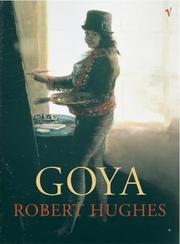
A critical biography by the best-known art critic of his generation, written late and personally, and the standard recommendation for a first Goya book. Hughes is opinionated about the Black Paintings and about Spain, which makes him arguable rather than authoritative — read him first for exactly that reason.

A compact illustrated survey covering the full career with the works reproduced alongside the text. Read it beside Hughes as the sober reference: where he interprets, Symmons dates, attributes and describes, which is what you want when you start checking his claims.
The Court and the Enlightenment
IntermediateUnderstand Goya as a working court painter in a Spain being pulled between Bourbon reform and the Inquisition, and the patronage that produced the portraits.
▸ Study plan for this stage
Pace: 6–7 weeks. Tomlinson's Goya is the art-historical monograph and is the most demanding reading here — a fortnight to three weeks with the documentary apparatus. Goya in the Twilight of Enlightenment is an academic study of a single decade and repays three weeks read closely. Goya and the Spirit of En
- The Bourbon reform programme, the ilustrados, and the specific circle — Jovellanos, Ceán Bermúdez, Moratín — Goya painted and knew
- The Inquisition as a live institution in the 1790s, with the power to suppress a print series
- The tapestry cartoon as a genre with its own constraints, and the shift out of it around 1791–92
- Patronage mechanics: royal commissions, aristocratic portraits, the Academy, and what each paid for
- The 1790s as the decisive decade — illness, deafness, the Caprichos drawings, the small cabinet pictures
- How an exhibition catalogue works: entries with provenance, exhibition history and technical notes, which is a different kind of evidence from an argument
- That reading the politics before the prints changes what the prints look like, which is why this stage precedes the next
- Who were the ilustrados, what did they want, and which of Goya's portraits are of them?
- What changed in Goya's practice between the last tapestry cartoons and the cabinet pictures of 1793–94, and what does he himself say about it in the letter to the Academy?
- What could the Inquisition actually do to an artist in the 1790s, and what had it recently done?
- In the Spirit of Enlightenment catalogue, take one entry and list every kind of information it gives you. Which of them could a monograph not supply?
- How does Tomlinson's use of the documentary record change the standard story you got from Hughes?
- Take five portraits of named sitters and, using Tomlinson and the catalogue entries, write for each: who the sitter was, what they wanted from the picture, and what Goya gave them. Political portraiture becomes legible only when you do this five times.
- Read Tomlinson's account of the 1790s and mark on your stage-one chronology every event she documents that Hughes narrated without a source. The marks are the difference between the two books.
- Compare one tapestry cartoon with one cabinet picture of the mid-1790s side by side — subject, scale, patron, freedom — and write a paragraph on what the change of client changed in the painting.
- Use the exhibition catalogue as it is designed: pick three works and read their full entries, including provenance and technical notes. Write down one thing about each that no interpretive book would have told you.
Next up: Knowing what could and could not be said in Spain in 1799, you can read the print series as acts within that situation rather than as timeless statements.
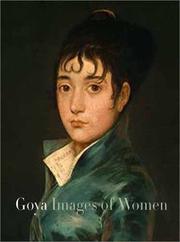
The art-historical monograph by the leading English-language Goya scholar, covering the whole career with the documentary record kept in view. Our catalogue collapses several of Tomlinson's titles onto this one record, so she appears here once; her separate biography and her study of Goya's images of women are the same author, not further volumes on this page.

Her academic study of the 1790s, the decade in which the tapestry cartoons stop and the Caprichos begin. It is the best account of the specific political and intellectual world Goya was working inside, and it should be read before the prints rather than after them.
The catalogue of the landmark Boston, New York and Madrid exhibition, edited with Eleanor Sayre, with essays that set individual works against the reform politics of the period. A catalogue rather than a monograph, which means the entries are the point — use it as the reference for particular pictures.
The Prints and Drawings
IntermediateRead the three great print series and the private albums, which is where Goya's reputation as a witness actually rests.
▸ Study plan for this stage
Pace: 8–10 weeks, and this stage is looked at rather than read. Work through Los Caprichos plate by plate over three weeks, reading the captions in Spanish alongside the translations. The Disasters of the War is eighty-odd plates and should take a month, at a handful a sitting — the series depicts mutilat
- Etching and aquatint as a medium — what aquatint does tonally, and why it made these series possible
- The Caprichos as a published, advertised, priced object withdrawn within days, and what that withdrawal tells you about the risk
- Caption and image as a unit: the Caprichos legends are part of the work and are frequently ironic
- Plate order and state: series exist in numbered sequences with preparatory drawings and altered proofs, so 'the work' is a set of decisions
- The Disasters made privately with no prospect of publication, and published only in 1863, thirty-five years after Goya's death
- The Disasters' internal divisions — war scenes, the famine, and the closing allegorical caprichos enfáticos
- The private albums as the place ideas first appear, without a patron, which is why the drawings are the best evidence of intention
- That a print series read as a sequence says something a single famous image does not
- What does the caption to plate 43 of the Caprichos actually say, and how do the two standard readings of it differ?
- Why was the Caprichos withdrawn, and what is the evidence for each of the competing explanations?
- How do the three sections of the Disasters differ in subject and in tone, and where does the series stop being reportage?
- Goya did not witness most of what the Disasters depict at first hand. What difference does that make to calling them a documentary record?
- Which images in the print series appear first in the album drawings, and what changed between drawing and plate?
- Why did neither series appear in his lifetime in the form he made it?
- Work the Caprichos in order, writing one line per plate on what the caption adds to the image. At the end, group the eighty plates into your own thematic sets and compare with the standard groupings.
- Take five Disasters plates and find the corresponding preparatory drawing in the Prado catalogue. Write, for each, what Goya changed on the way to the plate — the changes are almost always toward less explanation, not more.
- Set the Third of May beside the execution plates of the Disasters and write half a page on what the painting does that the print cannot, and vice versa. This comparison is the core of the argument you meet in the next stage.
- Read the closing caprichos enfáticos of the Disasters as a group, apart from the war plates, and write a paragraph on what kind of statement they are making. That question is genuinely open in the literature.
- Go back to stage two's political material and match specific Caprichos plates to specific reform-era controversies — clerical wealth, arranged marriage, the Inquisition. Some match cleanly and some do not; note which.
Next up: With the prints seen as sequences and the drawings as their origin, you can take up the argument that this body of work is where modern art begins.
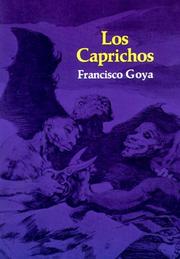
The 1799 series of eighty aquatints on superstition, clerical power and human folly, including the sleep-of-reason plate. Published while he was still first court painter and withdrawn within days — read the images first and the previous stage's politics second, and the withdrawal explains itself.

The Peninsular War series, made privately and not published until thirty-five years after his death, and the work that turns Goya from a court painter into the artist everyone means. Catalogued here with a slightly different display title; it is the eighty-plate Desastres series.

The Prado's catalogue of the private album drawings, where the ideas behind the print series first appear and where Goya had no patron to satisfy. The record for this English edition carries a French bookseller's suffix in its title; the book itself is the Museo del Prado drawings catalogue.
The Argument About What He Was
IntermediateEngage the critical case that Goya invented modern art, and the late work — the Black Paintings and the Bordeaux years — that the case rests on.
▸ Study plan for this stage
Pace: 8–10 weeks. Licht's Goya: The Origins of the Modern Temper in Art is a critical study and takes three weeks read closely. Stoichita and Coderch's book — catalogued under the bare title Goya, and published as Goya: The Last Carnival — is dense theoretical art history assuming some familiarity with ca
- Licht's thesis: Goya as the first artist working without a shared framework of meaning, making the Third of May and the Black Paintings the founding works of a modern condition
- The counter-reading Stoichita and Coderch offer: carnival, masquerade and inversion as a Spanish popular framework Goya was inside, not outside
- What is actually at stake between them — whether the late work is a loss of tradition or the deployment of one
- The Quinta del Sordo: the paintings as wall decoration in a private house, in a room-by-room arrangement, before they were canvases in a museum
- The physical history of the Black Paintings — transfer, loss, retouching — and why arguments from their surface are arguments about a nineteenth-century intervention as much as about Goya
- The Bordeaux years: lithography, the miniatures on ivory, the Bulls of Bordeaux, and a late output that does not fit the ending the modernity argument wants
- Thematic versus chronological organisation, which is what Order and Disorder is testing as a method
- That the Black Paintings' attribution has been challenged in the scholarship, a dispute worth knowing about and not worth adjudicating from a reading list
- State Licht's argument and the strongest objection to it. Which specific works does each rest on?
- What do Stoichita and Coderch mean by carnival, and how does it explain an image the modernity reading treats as meaningless?
- How does knowing the Quinta arrangement — which paintings faced which — change what the Black Paintings are?
- What do the Bordeaux works do to the tidy narrative that the Black Paintings were the final statement?
- What did the transfer to canvas do to these paintings, and how much of what we discuss is Goya's surface?
- After Order and Disorder, is thematic hanging a better way to see this artist than chronology? Argue from a specific section.
- Take one Black Painting — Saturn or the Dog is the usual choice — and write three readings of it: Licht's, Stoichita's, and the one Hughes gave you in stage one. Then say what evidence could distinguish them, and whether any exists.
- Reconstruct the Quinta del Sordo room plan from the catalogue material and place each painting where it hung. Then look at the pairs that faced each other and write a paragraph on what the pairing suggests.
- Find a photograph of the Black Paintings before the transfer, or the earliest reproductions, and compare with the current state. List the differences you can see; that list is the caution the whole stage needs.
- Work one section of Order and Disorder — a single theme across paintings, prints and drawings — and write on what the thematic grouping shows that your stage-one chronology hid.
- Read Goya's Last Works and then rewrite the last paragraph of your own account of Goya's career so that it ends in Bordeaux rather than in the Quinta. Note what you have to give up to do it — that is the exercise, and it is the honest end of the path.
Next up: This closes the path: the life, the court and its politics, the print series in sequence, and the two competing accounts of what the late work means — enough to read the current exhibition and scholarly literature on your own terms.

The critical study that made the modernity argument the standard one: Licht reads Goya as the first artist for whom no shared framework of meaning survives, and treats the Third of May and the Black Paintings as the evidence. Contestable, influential, and the book most later writers are answering.

Stoichita and Anna Maria Coderch's Goya: The Last Carnival, a dense critical study reading the work through carnival, masquerade and inversion rather than through biography. Our catalogue displays it under the bare surname title; it is the Reaktion volume, and it is the strongest alternative to Licht's reading.

The 2014 Museum of Fine Arts Boston exhibition catalogue, organised by theme instead of chronology, with Janis Tomlinson among the contributors. The most useful single volume for seeing paintings, prints and drawings on one subject side by side.
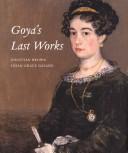
The Frick catalogue on the Bordeaux years, when a deaf man in his late seventies took up lithography and miniature painting in exile. It ends the path where the artist did, and quietly complicates the tidy story that the Black Paintings were his final statement.