Start with Robert Hughes. Goya is one of the few painters whose work genuinely requires background before it becomes legible: the print series are responses to specific events in Spanish politics between the 1790s and the 1820s, and without that scaffolding they read as free-floating nightmare imagery. A narrative biography first, primary material second, specialist scholarship third — that is the order this path takes.
The confusing part is bibliographic. Four different books on this list appear under the bare display title Goya: one by Robert Hughes, one by Sarah Symmons, one by Janis Tomlinson, and one by Victor Stoichita. They are not variants of the same book and they do not do the same job, so this article names the author every time.
The four books called Goya
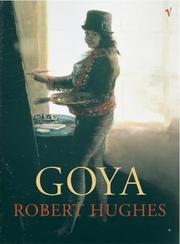
Robert Hughes's Goya is a critical biography by a working art critic, written late in his life and openly personal in places. It is the best narrative entry point: strong on the political context of the Peninsular War, unembarrassed about making judgements, and readable at speed.
Sarah Symmons's Goya is a compact illustrated art-historical monograph — more plates, less argument, and a good companion volume if you want the images to hand while reading Hughes.
Janis Tomlinson's Goya is the documentary biography by the leading Anglophone specialist on the painter, built on archival evidence and consistently deflationary about the romantic stories that have attached to him. Where Hughes narrates, Tomlinson checks. Read Hughes for momentum and Tomlinson to find out which of it survives the documents.
Victor Stoichita's Goya, written with Anna Maria Coderch, is a theoretical study organised around carnival and inversion. It is the hardest of the four and assumes you already know the work; leave it until last.
The primary material
Los caprichos is the 1799 series of eighty aquatints satirising superstition, the clergy, arranged marriage and the Inquisition. Goya withdrew it from sale within weeks. The disasters of the war records the Peninsular War and the famine that followed it: mutilated bodies, summary executions, rape, and the starving dead of Madrid. That is the subject matter, stated plainly — the plates are documentary in intent and unrelieved. Goya did not publish them; the series first appeared in 1863, thirty-five years after his death. Goya Drawings collects the private albums, where much of the same material was worked out first.
The same holds for the fourteen so-called Black Paintings, made on the walls of his house outside Madrid around 1819 to 1823 and later transferred to canvas. They include cannibalism, a witches' sabbath, and a drowning dog, and they were painted for no audience at all.
Scholarship and catalogues
Tomlinson's Goya in the twilight of enlightenment is a focused academic study of the 1790s, the decade in which his illness, his deafness and the collapse of Spanish reform politics all landed at once. Goya and the spirit of enlightenment is the catalogue of the major Boston and Madrid exhibition, and remains one of the best single volumes of reproductions with scholarly entries. Fred Licht's Goya, the origins of the modern temper in art makes the influential case that Goya is the first modern artist rather than the last old master — an argument that shaped how the twentieth century read him, and one that later scholars have pushed back on as anachronistic.
Two more catalogues close the path. Goya: Order & Disorder accompanied the Boston exhibition that arranged the work thematically rather than chronologically, which turns out to be a genuinely revealing way to see it. Jonathan Brown's Goya's last works covers the Bordeaux years after he left Spain in 1824, including the miniatures on ivory and the late drawings — the part of the career most often skipped.
Follow the full path in sequence and the prints stop being atmospheric and start being specific, which is the only way they are worth looking at.
Follow the full ordered path here: Francisco Goya: The Best Books to Read, in Order.