Best Books on Fractals and Fractal Geometry, in Order
Fractal geometry has two almost separate literatures, and reading them in the wrong order is why people bounce off it. One is popular and pictorial, built around the Mandelbrot set and the phrase 'self-similarity'; the other is real analysis, built on Hausdorff measure and dimension, and it assumes metric spaces and measure theory. This path takes the popular books first and deliberately, then Mandelbrot's own founding volume and the illustrated course that grew out of it, then the mathematics proper, and finally the applied physics and finance work. Expect the popular titles to be easy to find and the graduate texts to be a genuine step up.
The Popular Way In
BeginnerGet the pictures, the vocabulary and the historical story — self-similarity, scaling, the coastline problem — before any measure theory.
▸ Study plan for this stage
Pace: About 3 weeks, and none of it needs mathematics beyond school algebra. Gleick's Chaos (364 pp) is the long one — a week at 50 pp a day. The Introducing volume (174 pp, mostly illustration) is an afternoon and Falconer's Very Short Introduction (132 pp) is a weekend. The Colours of Infinity is an ess
- Self-similarity, exact versus statistical, and why natural objects only ever have the second kind
- Scaling and power laws: a measurement that depends on the size of the ruler
- The coastline problem — length diverges, but the exponent stays stable
- Iteration of z to z squared plus c, and the difference between a Julia set and the Mandelbrot set that indexes them
- Fractional dimension as a number you can estimate long before you can define it
- Strange attractors and where fractal geometry sits inside nonlinear dynamics
- The two literatures: pictorial-popular and analytic, with Falconer's Very Short Introduction as the deliberate hinge between them (he wrote the graduate text as well)
- Why does the measured length of a coastline grow as the dividers close, and which quantity stays put while the length runs away?
- What is the difference between the Julia set of a map and the Mandelbrot set, and in what sense does one index the other?
- In Gleick's cast, who was doing fractal geometry and who was doing dynamical systems — where does Mandelbrot sit relative to Lorenz, Feigenbaum and Smale?
- Falconer's Very Short Introduction defines dimension by how a measurement scales. State that definition in your own words and apply it to the Koch curve and the Sierpinski gasket.
- The Colours of Infinity essays claim fractals in music, biology and markets. Which of those claims are measurements and which are analogies?
- Do the Richardson experiment Falconer's Very Short Introduction describes: step dividers along a printed coastline at four different settings, plot log length against log divider width, and read the slope as a dimension estimate.
- Take the Koch snowflake and the Sierpinski gasket exactly as the Introducing volume constructs them and compute log N over log (1/r) by hand for each; check your two numbers against Falconer's.
- Iterate z to z squared plus c by hand for c = 0, c = -1, c = 0.3 + 0.5i and c = -0.75 + 0.2i, a dozen steps each, and classify each as bounded or escaping; then find those points on the Mandelbrot plates in The Colours of Infinity.
- Read Gleick's Mandelbrot chapter and list every claim it makes about fractal dimension measured in the real world; mark which ones Falconer's Very Short Introduction supports and which it simply does not mention.
- Treat The Colours of Infinity as a 1990s period document and write half a page on which of its claims for fractals survived the following thirty years.
Next up: You now have the vocabulary and the pictures, which is exactly what is needed to read the man who assembled them into an argument and the thousand-page course that turns those pictures into procedures.
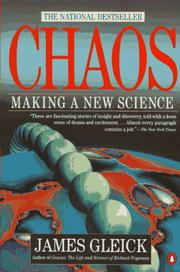
Not a fractals book strictly, but the reason most readers arrive at one: Gleick's chapters on Mandelbrot at IBM and on strange attractors give the field its context inside nonlinear dynamics. Start here so you know why fractal dimension mattered to anyone outside pure mathematics.
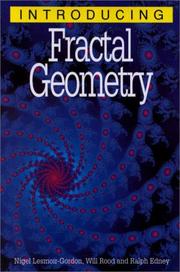
The illustrated Introducing-series primer, done with Will Rood and Ralph Edney. It is the shortest honest account of iteration, the Mandelbrot and Julia sets and fractional dimension, and it takes an afternoon — read it second to fix the vocabulary.

Falconer's Very Short Introduction, and the best short bridge between the popular and the mathematical treatments, written by the author of the standard graduate text. Our catalogue stores its title with the series name run into it; the book is the Oxford Very Short Introduction to fractals.
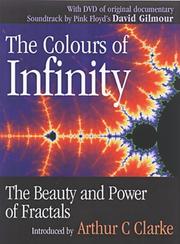
The essay collection built around the Arthur C. Clarke film, with contributions from Mandelbrot, Barnsley, Ian Stewart and others. A useful survey of what people claimed fractals were good for at the height of the enthusiasm — read it as a period document as much as an introduction.
The Founding Book and Its Pictures
IntermediateRead Mandelbrot's own argument that natural forms are better described by fractional dimension than by Euclidean idealisation, and work through the standard illustrated course.
▸ Study plan for this stage
Pace: Two to three months, and most of it is one book. Mandelbrot's The Fractal Geometry of Nature (491 pp) is discursive rather than sequential — a fortnight, and chapter-hopping is intended. The Beauty of Fractals (199 pp) is a plate book with the generating mathematics set beside each image; a week. Pe
- Mandelbrot's central argument: coastlines, clouds, turbulence and price records are better described by fractional dimension than by smooth Euclidean idealisation
- Self-similarity versus self-affinity, and why a Brownian record needs the second
- Feedback and iteration as the generating mechanism, which is Chaos and Fractals' organising idea
- Iterated function systems and the chaos game as an algorithm you can run
- Box-counting dimension computed rather than defined
- The escape-time algorithm: what is iterated, what the escape criterion is, and what the colour in a Beauty of Fractals plate encodes
- Brownian motion, fractional Brownian motion and the Hurst exponent as random fractals
- Where Mandelbrot's book is polemic and autobiography rather than exposition — it is the founder arguing his own case
- What does Mandelbrot mean by 'fractal' in the 1982 book, and where does he himself say the definition fails?
- What is the difference between self-similar and self-affine, and why must a price chart be the second kind?
- Describe the escape-time algorithm that produces the Beauty of Fractals plates, naming what is iterated, the escape criterion, and what the colouring means.
- Why does the chaos game converge to the Sierpinski gasket regardless of the sequence of random draws?
- What does Chaos and Fractals establish about the box-counting dimension of a self-similar set built from N pieces at contraction ratio r?
- Implement the escape-time algorithm from the Chaos and Fractals chapter on Julia sets and reproduce two Beauty of Fractals plates at the exact c values given in their captions.
- Run the chaos game as Chaos and Fractals sets it out — three vertices, midpoint rule — then change the affine maps until you get Barnsley's fern, and record which contraction ratios you had to alter.
- Take the coastline data Mandelbrot tabulates in The Fractal Geometry of Nature and redo his log-log fit yourself; confirm the dimension figure he quotes.
- Work the Chaos and Fractals exercises computing the Koch curve's box-counting and similarity dimensions and check that the two agree.
- Generate fractional Brownian traces by the midpoint-displacement method as Chaos and Fractals specifies, at H = 0.3, 0.5 and 0.8, and describe how roughness changes with H.
Next up: Everything so far has computed dimensions; the next stage defines them, which needs exactly the measure theory these three books were built to avoid.
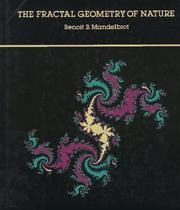
The book that created the subject and named it, and still the only place his whole case is made at once — coastlines, clouds, turbulence, Brownian motion, the Julia sets. It is idiosyncratic and discursive rather than systematic, which is why it goes after the primers and before the textbooks.

Peitgen and Peter Richter's images of the Mandelbrot and Julia sets, with the mathematics that generates each one set beside it. The volume that made the pictures famous, and the natural companion to Mandelbrot's own book.

Peitgen, Jurgens and Saupe's thousand-page illustrated course, and the pivot of this whole path — it starts at feedback and iteration and reaches Hausdorff dimension, iterated function systems and Julia sets without assuming a graduate background. If you only read one book here, this is the one, and it is what makes the next stage possible.
Doing the Mathematics
IntermediateWork with Hausdorff and box-counting dimension as defined objects, prove things about self-similar sets, and handle iterated function systems properly.
▸ Study plan for this stage
Pace: Four to six months, and this is a genuine step up in kind, not just in difficulty. Falconer's Fractal Geometry: Mathematical Foundations and Applications (352 pp) is a graduate analysis text and assumes real analysis — sequences, compactness, and enough measure theory to be at ease with outer measur
- s-dimensional Hausdorff measure, and Hausdorff dimension as the critical exponent where it jumps from infinity to zero
- Box-counting dimension: when it agrees with Hausdorff dimension and the countable sets where it fails badly
- The mass distribution principle and Frostman-type arguments as the standard way to get lower bounds
- The open set condition and the similarity-dimension theorem for self-similar sets
- Self-affine sets, and why their dimension is much harder than the self-similar case
- The Hausdorff metric on compact sets, contraction mappings on that space, and the attractor of an iterated function system (Barnsley)
- The collage theorem and the inverse problem — specifying a fractal by finitely many contraction maps
- Multifractal spectra, tangent measures, dimensions of graphs and of dynamical repellers (Falconer's Techniques)
- Give the definition of s-dimensional Hausdorff measure and show why Hausdorff dimension is well defined as the value at which it jumps.
- State the open set condition, and explain concretely what goes wrong for a self-similar set that violates it.
- Where do box dimension and Hausdorff dimension disagree, and what is Falconer's standard counterexample?
- What does the collage theorem actually guarantee, and why is that the useful direction to run the theory for applications?
- What is the multifractal spectrum f(alpha) measuring, and how is that different information from a single dimension number?
- Prove the similarity-dimension theorem for the Sierpinski gasket from Falconer's chapter, doing the mass-distribution lower bound in full rather than quoting it.
- Work Edgar's construction of Hausdorff measure on the Cantor set beside Falconer's, and write out every measure-theoretic step Edgar supplies that Falconer assumes.
- Run Barnsley's collage theorem in the direction it is meant to go: photograph a leaf or a fern, fit four affine maps by hand until the collage covers it, then run the IFS and compare against the photograph.
- Do Falconer's exercises on the box dimension of the graph of the Weierstrass function, then check the value against the derivation in Techniques in Fractal Geometry.
- Compute the multifractal spectrum of the binomial measure on the unit interval with weights p and 1-p, following Techniques, and verify that it degenerates at p = 1/2.
Next up: With dimension defined rather than estimated, the last stage asks the harder practical question: how anyone extracts one of these numbers from noisy experimental data.
The standard text — Fractal Geometry: Mathematical Foundations and Applications. It builds Hausdorff measure and dimension from scratch, then the classical results on self-similar and self-affine sets. Assumes real analysis; this is where the subject stops being pictorial.
The gentler route to the same material: Edgar builds the metric-space and measure-theoretic machinery as he goes, so a reader without a measure theory course can still follow the dimension arguments. Read it alongside Falconer, or instead of him first if the analysis is unfamiliar.
The book on iterated function systems and the collage theorem, from the person who made them a practical tool. Its subject is how to specify a fractal by a finite set of contraction maps, which is what the earlier books' images are actually doing — worth reading directly after the dimension theory.
Falconer's second, harder volume: multifractal analysis, tangent measures, dimensions of graphs and of dynamical repellers. Only worth opening once the first book is comfortable, and the right place to go for the multifractal formalism the goal of this path mentions.
Where It Is Actually Used
IntermediateSee fractal methods applied — to physical measurement, to image synthesis, and to a domain where the claims are contested.
▸ Study plan for this stage
Pace: About six weeks. Jens Feder's Fractals (283 pp) is a physics monograph at roughly graduate statistical-mechanics level and is the book to work slowly — three weeks. Note that two books on this page display simply as Fractals: this is Feder's physics monograph, not Falconer's short introduction back
- Estimating a dimension from real data: box counting, sandbox and correlation methods, and the systematic bias each carries
- Percolation clusters and the fractal dimension of the cluster at threshold
- Diffusion-limited aggregation and viscous fingering as experimentally realised fractals
- Fractional Brownian motion, the Hurst exponent, and R/S analysis as its estimator
- Midpoint displacement and Fourier filtering for terrain and cloud synthesis, and the difference between visually and statistically correct output
- Heavy tails and long memory as two separate claims about price series, often conflated
- The gap between a fractal model that fits data and a fractal mechanism that generates it
- How does Feder recommend extracting a dimension from a finite noisy image, and what are the two systematic biases he warns about?
- What is the Hurst exponent, how does R/S analysis estimate it, and what does H = 0.5 mean?
- What does percolation theory predict for the incipient cluster at threshold, and how is that prediction measured in a laboratory?
- Mandelbrot and Hudson make two claims about markets — heavy tails and long dependence. Which is better supported, and what does each imply for risk measurement?
- Why does midpoint displacement produce convincing-looking but statistically wrong terrain, and what does The Science of Fractal Images propose instead?
- Reproduce one of Feder's dimension estimates using his own tabulated experimental data, including the log-log fit and an error estimate, and compare with the figure he prints.
- Code both the midpoint-displacement and the Fourier-filtering terrain generators exactly as The Science of Fractal Images specifies, at the same H, and compare the two outputs statistically rather than by eye.
- Run a lattice DLA simulation as Feder describes, estimate the cluster dimension by box counting, and compare with the accepted value he quotes.
- Take a daily price series and perform R/S analysis on it as The (Mis)behavior of Markets describes, then check whether the Hurst exponent Mandelbrot claims actually shows up in your own data.
- Write one page separating the geometric claims in The (Mis)behavior of Markets from its policy claims about risk regulation; Mandelbrot is advocating his own framework here, and the two kinds of claim carry different weight.
Next up: This is where the path ends: from here the live work is in journals, and the reference lists in Feder and in Falconer's Techniques are the two doors into it.

The physics treatment: percolation, aggregation, viscous fingering, and above all how to measure a fractal dimension from real experimental data, which none of the mathematics texts address. Note that two books on this page display the title Fractals — this is Feder's physics monograph, not Falconer's short introduction.

Peitgen and Saupe's algorithmic companion, with Richard Voss and Michael Barnsley among the contributors: fractional Brownian motion, midpoint displacement, and the terrain and cloud synthesis methods that went straight into computer graphics. The most concrete answer to what fractals were ever used for.
Mandelbrot with Richard Hudson, arguing that financial returns have heavy tails and long memory and that Gaussian models systematically understate risk. The path ends here deliberately: it is the most disputed application of the whole framework, and by this point you can judge which parts of the argument are geometry and which are extrapolation.
Discussion
Keep reading
Paths that share books, cover the same subject, or open a related topic.